• 2026.11.04 (Wed)
  • All articles
  • LOGIN
  • JOIN
Global Economic Times
[등록] 2026-09-01 15:48:31
  • Synthesis
  • World
  • Business
  • Industry
  • ICT
  • Distribution Economy
  • Well+Being
    • Pet Life
    • Halal Horizon
  • Travel
  • Eco-News
  • Education
  • Korean Wave News
  • Opinion
  • Arts&Culture
  • Sports
  • People & Life
    • International Student Report
    • With Ambassador
  • Column
    • Cho Kijo Column
    • Cherry Garden Story
    • Ko Yong-chul Column
    • Kim Seul-Ong Column
    • Lee Yeon-sil Column
  • Photo News
  • New Book Guide
MENU
 
Home > World

South Korea’s HBM Chips Flow into China via Smuggling Networks Amid US Export Controls

Eugenio Rodolfo Sanabria Reporter / Updated : 2026-11-04 08:33:53
  • -
  • +
  • Print


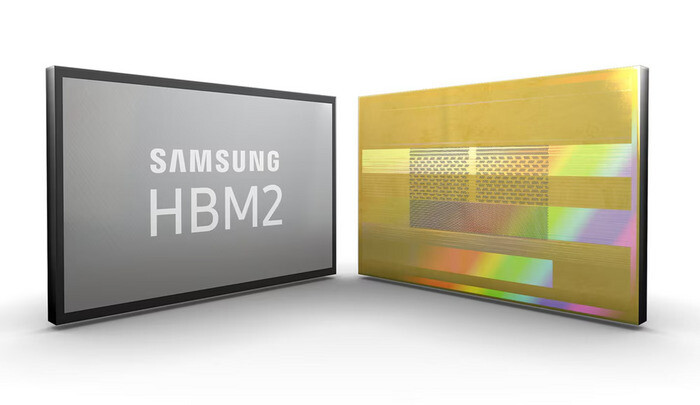
SEOUL — Despite rigorous U.S. export restrictions, high-bandwidth memory (HBM) chips manufactured by South Korean tech giants Samsung Electronics and SK Hynix are reportedly finding their way into China through sophisticated smuggling channels.

According to foreign media reports, underground supply chains have emerged to bypass sanctions designed to curb Beijing’s artificial intelligence development. As domestic shortages intensify within China, a single HBM chip is now commanding a steep price of roughly $4,000 on the illicit market.

Circumventing Regulations via Hybrid Packaging

The smuggling operation relies on a clever technical workaround. Brokers package HBM chips alongside inexpensive server processors onto a single substrate before export. Because U.S. export control criteria primarily evaluate processing performance rather than memory specifications at the package level, these shipments pass customs categorized merely as server processors.

Once the hybrid components arrive in China, underground technicians use heat to melt the solder and meticulously separate the HBM stacks from the accompanying server processors, which are subsequently discarded.

While heating carries a high risk of warping or cracking the delicate vertical memory stacks, the astronomical profit margins make the gamble worthwhile. Industry sources note that a year ago, an HBM3E chip sold for a few hundred dollars in China, but prices have skyrocketed tenfold due to soaring demand. Building a typical AI accelerator package requires six to eight HBM chips, translating to $24,000 to $32,000 in raw memory costs alone, excluding the processor, server hardware, and operational power expenses.

Huawei’s Supply Chain and Domestic AI Aspirations

The primary recipients of these smuggled components are reportedly tied to Chinese telecommunications giant Huawei and its clientele. Industry insiders indicate that Huawei has briefed clients on its next-generation AI accelerator, the Ascend 960DT, which relies heavily on South Korean HBM architecture to double the processing performance of its predecessors. Lacking direct channels to South Korean semiconductor makers, Huawei has allegedly instructed certain buyers to procure the necessary memory components independently.

As Chinese AI leaders—including DeepSeek and Moonshot—race to scale up large language models, their high-performance processors remain bottlenecked without sufficient HBM supply. With Samsung and SK Hynix commanding over 80% of the global HBM market, Chinese firms continue to rely heavily on South Korean technology to power their advanced systems.

Regulatory Risks for South Korean Manufacturers

Analysts warn that Samsung and SK Hynix could face heightened regulatory scrutiny from Washington if their components are repeatedly discovered inside restricted Chinese hardware.

A precedent was set when Taiwan’s TSMC faced an immediate U.S. ban on supplying certain AI chips to China after its components were found inside Huawei hardware. Both Samsung and SK Hynix maintain strict adherence to international export laws, with SK Hynix explicitly stating it has not supplied products to Huawei since U.S. regulations took effect in 2020.

Meanwhile, opinions among smugglers remain mixed. While some view their operations as a patriotic contribution to domestic technological self-reliance, others are exiting the business. With a surge of new market entrants using identical smuggling pathways, brokers warn that increased visibility will likely invite harsher crackdowns from U.S. and South Korean authorities moving forward.

[Copyright (c) Global Economic Times. All Rights Reserved.]

  • #Cherry Garden
  • #HalalFood
  • #Halal
  • #Petlife
  • #Halalhorizone
  • #Hormuz Impasse
  • #globaleconomictimes
  • #micorea
  • #mykor
Eugenio Rodolfo Sanabria Reporter

Popular articles

  • Nearly 900 Schools Temporarily Closed as 'Flu' Epidemic Sweeps Japan

  • AMD CEO Lisa Su Meets with Samsung and SK Hynix Chiefs, Sparking HBM Partnership Hopes

  • AI Companies Rush to Go Public, But Face Sudden Brakes Amid Cooling Investor Sentiment

I like it
Share
  • Facebook
  • X
  • Kakaotalk
  • LINE
  • BAND
  • NAVER
  • https://globaleconomictimes.kr/article/1065569570721388 Copy URL copied.
Comments >

Comments 0

Weekly Hot Issue

  • "Even a Cough Can Break the Spine?" — Back Pain After Kimchi-Making Season
  • Nourishing the Body, Savoring Every Day: The Power of Healthy Diets After Cancer Recovery
  • The Hidden Power of Cucumbers: Low in Calories and Great for Detox
  • Barley: The Simple Grain That Helps Clean Cholesterol and Protect Your Heart
  • "The Rediscovery of Bananas": 4 Health Benefits You Should Know
  • When Snoring Ends with a Gasp: A Warning Sign of Sleep Apnea in Your 30s

Most Viewed

1
Why Can't We Use 'Muse' in Korea?… Zuckerberg Says, "Due to a Lack of Data Centers"
2
US Army Conducts Rare Temporary Burial Drills to Prepare for Worst-Case Large-Scale War Scenarios
3
"Germany’s Nuclear Exit Should Serve as a Warning… Let's Solve the Power Crisis in AI & Advanced Industries through SMR Commercialization"
4
Bank Stocks Hold Firm Amid KOSPI Slump... "Defensive Appeal Strong, but Continued Rally Unlikely"
5
Global Credit Spreads Widened to 17-Month High Amid AI Investment Concerns
체리가든 스토리
nutri huevos
로타리
동포저널

Hot Issue

Japanese Hotel Prices Surge Nearly 9% Amid Booming Korean Tourism

Climate Change Melting Glaciers and Threatening Peru’s Andes: Why a Local Farmer is Suing a German Energy Giant

South Korea’s HBM Chips Flow into China via Smuggling Networks Amid US Export Controls

Fashion Runway Show 2026

Let’s recycle the old blankets in Jeju Island’s closet instead of incinerating them.

Global Economic Times
korocamia@naver.com
CEO : LEE YEON-SIL
Publisher : KO YONG-CHUL
Registration number : Seoul, A55681
Registration Date : 2024-10-24
Youth Protection Manager: KO YONG-CHUL
Singapore Headquarters
5A Woodlands Road #11-34 The Tennery. S'677728
Korean Branch
Phone : +82(0)10 4724 5264
#304, 6 Nonhyeon-ro 111-gil, Gangnam-gu, Seoul
Copyright © Global Economic Times All Rights Reserved
  • 향기네무료급식
  • APEC2025
  • 반달곰 프로젝트
Search
Category
  • All articles
  • Synthesis
  • World
  • Business
  • Industry
  • ICT
  • Distribution Economy
  • Well+Being 
    • 전체
    • Pet Life
    • Halal Horizon
  • Travel
  • Eco-News
  • Education
  • Korean Wave News
  • Opinion
  • Arts&Culture
  • Sports
  • People & Life 
    • 전체
    • International Student Report
    • With Ambassador
  • Column 
    • 전체
    • Cho Kijo Column
    • Cherry Garden Story
    • Ko Yong-chul Column
    • Kim Seul-Ong Column
    • Lee Yeon-sil Column
  • Photo News
  • New Book Guide
  • Overseas Koreans
  • Multicultural News