• 2026.11.25 (Wed)
  • All articles
  • LOGIN
  • JOIN
Global Economic Times
한인동포뉴스(상단)
  • Synthesis
  • World
  • Business
  • Industry
  • ICT
  • Distribution Economy
  • Well+Being
    • Pet Life
    • Halal Horizon
  • Travel
  • Eco-News
  • Education
  • Korean Wave News
  • Opinion
  • Arts&Culture
  • Sports
  • People & Life
    • International Student Report
    • With Ambassador
  • Column
    • Cho Kijo Column
    • Cherry Garden Story
    • Ko Yong-chul Column
    • Kim Bong-seon's Photo Column
    • Kim Seul-Ong Column
    • Lee Yeon-sil Column
    • Professor Lee Soo-young’s Life Essays
  • Photo News
  • New Book Guide
MENU
 
Home > Well+Being > Halal Horizon

Sadia Halal Scales Middle East Operations with Saudi Sovereign Backing and J.P. Morgan Advisory

Eugenio Rodolfo Sanabria Reporter / Updated : 2026-11-25 18:22:31
  • -
  • +
  • Print

SÃO PAULO & RIYADH — Sadia Halal, the Middle Eastern protein subsidiary of Brazilian food giant MBRF, is accelerating its shift from a traditional export business into a localized regional powerhouse, backed by a landmark partnership with Saudi Arabia’s sovereign wealth fund and global financial advisory from J.P. Morgan.

Formed in 2025 through the blockbuster merger of Brazilian meatpacking and poultry leaders Marfrig Global Foods and BRF, parent company MBRF restructured its regional assets in April 2026 to launch Sadia Halal. The spin-off consolidated MBRF’s Middle Eastern production plants, distribution centers, and commercial offices into a dedicated multiprotein platform designed to capture surging global demand for halal-certified food. 

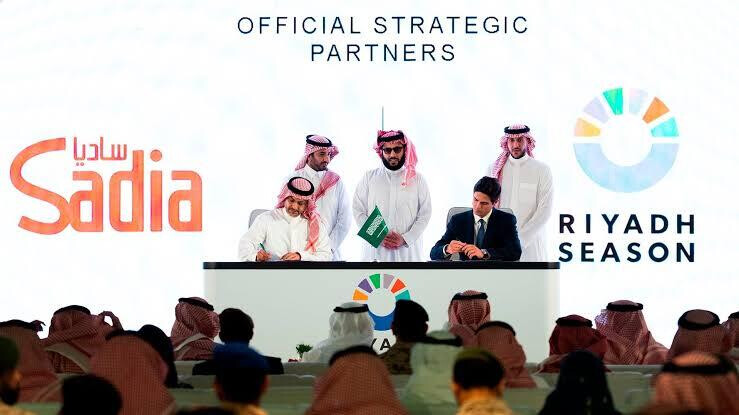
The expansion is underpinned by a major strategic investment from the Halal Products Development Company (HPDC), a wholly owned subsidiary of Saudi Arabia’s Public Investment Fund (PIF). Finalized in May 2026, the SAR 8 billion (approximately $2.1 billion) deal raised HPDC’s minimum equity stake in the venture from 10% to 20%, with an option to increase its holding to 40% ahead of a planned initial public offering (IPO) on Saudi Arabia's Tadawul stock exchange targeted for 2027. 

As part of the restructuring, Sadia Halal is relocating its regional headquarters to Saudi Arabia and has secured a 10-year renewable supply agreement with MBRF to source poultry and beef from Brazilian facilities, ensuring supply chain resilience alongside local manufacturing. The move aligns closely with Saudi Arabia's Vision 2030 food security objectives, which prioritize domestic production and regional distribution hubs to insulate the Gulf from maritime supply chain disruptions.

The push comes amid rapid expansion in the global halal economy. Driven by a global Muslim population that expanded by 21% between 2010 and 2020 to reach two billion people, total halal consumer spending is nearing $2 trillion annually, with the food and beverage segment projected to surpass $1.5 trillion by 2027. 

"Now is the time to invest in the halal markets," said Fabio Mariano, CEO of Sadia Halal and MBRF Vice President for the Halal Market, noting that the brand has leveraged over five decades of consumer recognition in the Persian Gulf to become the region's leading chicken supplier. 

While Sadia began transitioning away from pure exports toward local Middle Eastern production in 2014—operating facilities across Saudi Arabia and the United Arab Emirates—the 2026 corporate overhaul marks a significant escalation in scale. According to Sadia Halal Chairman Marquinhos Molina, the company’s competitive edge lies in pairing Brazil’s large-scale poultry and protein processing expertise with deep familiarity with Middle Eastern culinary traditions.

Navigating cross-border operations more than 7,000 miles from MBRF’s Brazilian headquarters has required complex financial structuring. J.P. Morgan has served as a core banking partner throughout the transition, advising MBRF and Sadia Halal across mergers and acquisitions, debt restructuring, and equity capital markets.

"Brazilian companies that have scaled internationally tend to combine strong competitive advantages in their home market with the ability to localize their business model," said Thiago Carvalho, Deputy Head of Investment Banking for Brazil at J.P. Morgan. With regional operations integrated and institutional backing secured, Sadia Halal is positioning itself not only as a dominant supplier across the Gulf Cooperation Council (GCC), but as an export hub for halal proteins worldwide.

[Copyright (c) Global Economic Times. All Rights Reserved.]

  • #Cherry Garden
  • #HalalFood
  • #Halal
  • #Petlife
  • #Cats
  • #Dogs
  • #Halalhorizone
  • #Hormuz Impasse
  • #Joseon
  • #globaleconomicti
Eugenio Rodolfo Sanabria Reporter

Popular articles

  • At a Crossroads: Robotaxis Caught in the Crossfire of Job Security and Innovation

  • From "Kneeling" Suppliers to the AI Era: Will Long-Term Agreements Redefine Tech’s Power Dynamics?

  • Crude Oil Prices Breach $117 Amid Middle East Tensions, Stoking Year-End Inflation Fears

I like it
Share
  • Facebook
  • X
  • Kakaotalk
  • LINE
  • BAND
  • NAVER
  • https://globaleconomictimes.kr/article/1065604912184907 Copy URL copied.
Comments >

Comments 0

Weekly Hot Issue

  • Hugging Your Cat After a Bad Day Might Backfire, Study Suggests — While Petting a Dog Builds Resilience
  • South Korea Weighs Low-Power Signal Jamming and stricter Device Rules to Curb AI Exam Cheating
  • South Korea Pushes for Overdue Media Law Overhaul as OTT Blurs Traditional Broadcast Lines
  • From Classroom and Lab to Smart Farms: Siblings Cultivate a Second Act in Rural Korea
  • Busan Tourism Organization Takes the Lead in Local Co-prosperity Again This Year with the ‘Good-Cycling’ Campaign
  • Leaked Data Reveals 349 Russian Fatalities in Mali Over Three Years

Most Viewed

1
South Korean Burger Chain Lotteria Expands Singapore Footprint with Halal Certification and New Teriyaki Lineup
2
AI Semiconductor Stocks Plummet: Philadelphia Index Drops 5.28% and Micron Plunges 7.59% Amid Executive Shakeup and Export Restrictions
3
"Stay Out, Get Paid, or Have Police Stay With You": Shenzhen Imposes Strict Security Ahead of APEC Summit
4
Taiwan Bans Short-Selling Below Previous Close Starting Nov. 23, Raises Margin Ratio to 150%
5
AI Music Tops Melon Chart: Is the K-Pop Production Formula Changing?
체리가든 스토리
nutri huevos
로타리
동포저널

Hot Issue

Trump Faces Rare Bipartisan Backlash Over Jensen Huang’s Return to Nvidia

Beyond the Click: How Agentic AI is Quietly Dismantling the App Economy

Jeju Tests Solar-Powered Greenhouses to Grow Carbon-Free ‘RE100’ Tangerines

Fashion Runway Show 2026

Let’s recycle the old blankets in Jeju Island’s closet instead of incinerating them.

Global Economic Times
korocamia@naver.com
CEO : LEE YEON-SIL
Publisher & Editor : KO YONG-CHUL
Registration number : Seoul, A55681
Registration Date : 2024-10-24
Youth Protection Manager: KO YONG-CHUL
Singapore Headquarters
5A Woodlands Road #11-34 The Tennery. S'677728
Korean Branch
Phone : +82(0)10 4724 5264
#304, 6 Nonhyeon-ro 111-gil, Gangnam-gu, Seoul
Copyright © Global Economic Times All Rights Reserved
  • News K
  • 반달곰 프로젝트
  • 광고문의
Search
Category
  • All articles
  • Synthesis
  • World
  • Business
  • Industry
  • ICT
  • Distribution Economy
  • Well+Being 
    • 전체
    • Pet Life
    • Halal Horizon
  • Travel
  • Eco-News
  • Education
  • Korean Wave News
  • Opinion
  • Arts&Culture
  • Sports
  • People & Life 
    • 전체
    • International Student Report
    • With Ambassador
  • Column 
    • 전체
    • Cho Kijo Column
    • Cherry Garden Story
    • Ko Yong-chul Column
    • Kim Bong-seon's Photo Column
    • Kim Seul-Ong Column
    • Lee Yeon-sil Column
    • Professor Lee Soo-young’s Life Essays
  • Photo News
  • New Book Guide
  • Overseas Koreans
  • Multicultural News