UISEONG, South Korea — Trading whiteboards and laboratory equipment for high-tech greenhouses, a sister-and-brother duo is proving that modern agriculture can be a lucrative career path in South Korea’s shrinking rural heartland.
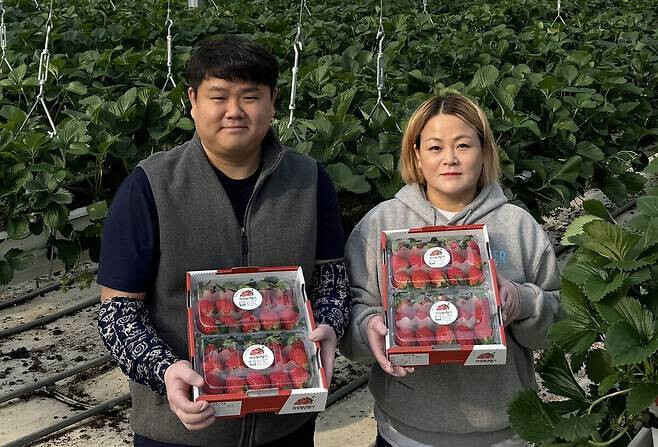
Lee Hye-jeong, 46, a former private academy instructor, and her younger brother Lee Heon-woo, 37, a former corporate researcher, jointly operate 6,245 square meters (approx. 1.54 acres) of smart strawberry farms in Uiseong, North Gyeongsang Province. Their transition highlights how Information and Communications Technology (ICT) is lowering the barrier to entry for a new generation of farmers.
A Sister’s Pivot Sparks Success
Lee Hye-jeong’s agricultural journey began in 2009 when she married a local farmer and started cultivating garlic. Seeking higher profitability and less labor-intensive methods, she turned to ICT-integrated smart farming.
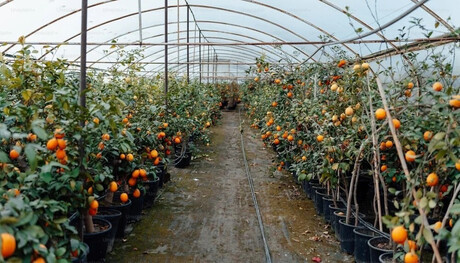
After completing a municipal smart farm training program in 2023, she established a 2,600-square-meter greenhouse dedicated to Seolhyang, South Korea’s premier strawberry variety. Today, her farm yields 17 metric tons of strawberries annually. By diversifying her sales channels—ranging from direct-to-consumer shipping to local cafes and agricultural cooperatives—she generates roughly 150 million KRW ($110,000 USD) in annual revenue.
"Rural areas offer genuine opportunities for both financial growth and personal fulfillment," Lee said, noting that her next goal is to launch an independent strawberry brand and develop processed goods while mentoring fellow young farmers.
Following in Her Footsteps
Watching his sister’s success convinced Lee Heon-woo that data-driven agriculture could offer career stability comparable to the corporate sector. In 2024, he resigned from his research position, relocated to Uiseong, and completed the same smart farming academy. After spending a year gaining hands-on experience managing operations and distribution at his sister’s farm, he launched his own 3,645-square-meter smart farm this year and is currently preparing for his inaugural harvest.
Municipal Backing Fuels Youth Influx
The siblings’ rapid establishment was heavily bolstered by Uiseong County’s aggressive push to counter rural depopulation by subsidizing young agri-entrepreneurs.
To offset high initial capital costs and lack of experience, the county offers a comprehensive support pipeline:
Living Stipends: Farmers aged 18 to 39 receive monthly settlement allowances for up to three years—starting at 1.1 million KRW in the first year, 1.0 million in the second, and 900,000 in the third.
Low-Interest Loans & Land Subsidies: Successor farmers can access up to 500 million KRW in loans at a 1.5% fixed interest rate (with a 5-year grace period and 20-year repayment plan), alongside a 50% subsidy on farmland lease fees for three years.
Upcoming 2027 Expansion: Next year, Uiseong will roll out a new initiative covering 70% of smart farm construction and equipment costs (up to 500 million KRW per site) for farmers under 45, alongside grants for food processing and agritourism.
Combating Rural Extinction
Local veteran farmers have welcomed the influx of younger, tech-savvy peers as vital to sustaining the aging community. However, industry observers note that volatile produce prices and high facility maintenance costs remain ongoing hurdles that require sustained policy support.
"Agriculture is a future growth industry powered by advanced technology," said Uiseong County Mayor Choi Yu-cheol. "We are committed to building a systematic support network so young people from across the nation can settle here stably and grow alongside veteran farmers."
[Copyright (c) Global Economic Times. All Rights Reserved.]