• 2026.11.25 (Wed)
  • All articles
  • LOGIN
  • JOIN
Global Economic Times
한인동포뉴스(상단)
  • Synthesis
  • World
  • Business
  • Industry
  • ICT
  • Distribution Economy
  • Well+Being
    • Pet Life
    • Halal Horizon
  • Travel
  • Eco-News
  • Education
  • Korean Wave News
  • Opinion
  • Arts&Culture
  • Sports
  • People & Life
    • International Student Report
    • With Ambassador
  • Column
    • Cho Kijo Column
    • Cherry Garden Story
    • Ko Yong-chul Column
    • Kim Bong-seon's Photo Column
    • Kim Seul-Ong Column
    • Lee Yeon-sil Column
    • Professor Lee Soo-young’s Life Essays
  • Photo News
  • New Book Guide
MENU
 
Home > World

Leaked Data Reveals 349 Russian Fatalities in Mali Over Three Years

Pedro Espinola Special Correspondent / Updated : 2026-11-25 18:00:34
  • -
  • +
  • Print


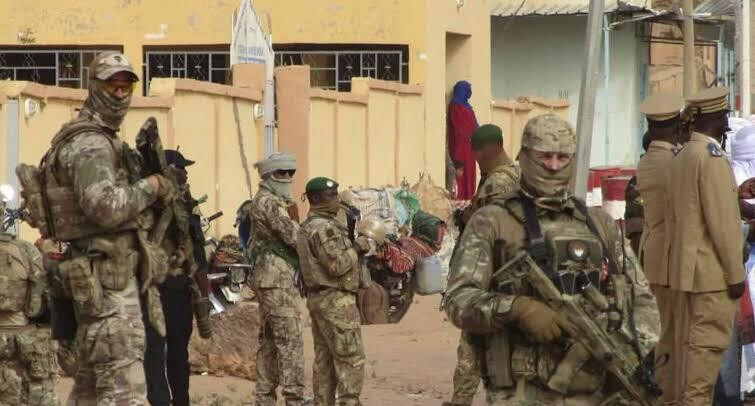
MOSCOW / BAMAKO — Newly leaked Russian state statistics indicate that Moscow has suffered significantly higher casualties than previously estimated while backing Mali’s military junta, with 349 Russian nationals dying in the West African nation over a three-year period.

According to an analysis of confidential files from Russia’s Federal State Statistics Service (Rosstat)—obtained by the Belarusian opposition hacktivist group Cyber Partisans and the Ukrainian collective Silent Crow, and reviewed by The Guardian—the deaths occurred between September 2023 and September of this year. Most of the fatalities were reportedly tied to ongoing clashes with local insurgent factions.

Escalating Clashes and Heavy Single-Day Losses

Mali, alongside neighboring Burkina Faso and Niger, forms a bloc of military-led nations in the Sahel that have pivoted toward Moscow following a wave of coups. Since seizing power in 2020, Bamako’s junta has relied heavily on Russian security assistance to battle both the al-Qaeda-affiliated Jama'at Nasr al-Islam wal Muslimin (JNIM) and Tuareg separatists under the Azawad Liberation Front (FLA).

Russia initially deployed mercenaries from the now-disbanded Wagner Group in late 2021 before transitioning operations in June of last year to the Africa Corps, a paramilitary force directly controlled by Russia’s Defense Ministry. Roughly 2,000 Africa Corps personnel are believed to be stationed in the country.

The leaked records highlight devastating single-day losses for Russian forces:

July 27, 2024: In what The Guardian identified as Russia’s deadliest day in Africa to date, 70 Russians were killed—69 of them in the northeastern Kidal region—when joint Malian and Russian troops were ambushed by Tuareg rebels near Tinzaouaten along the Algerian border.
April 25, 2026: Amid a broad militant offensive across Kidal and Gao, 43 Russians died in a single day, including six in Kidal and others aboard a Russian military helicopter shot down in Gao. The losses forced a temporary retreat, leaving Kidal in rebel hands until a Malian-Russian counteroffensive reclaimed the strategic northern city early last month.

Ukrainian Involvement and Regional Spillover

The mounting Russian toll may also reflect covert Ukrainian support for Malian insurgents. Two sources confirmed Kyiv has aided Tuareg fighters, while CNN previously reported that roughly 15 Ukrainian specialists were deployed to assist rebels fighting Russian troops in the region.

The leaked Rosstat files also documented Russian casualties elsewhere on the continent, including 30 deaths in the Central African Republic and one combatant killed in Niger two days after an Islamic State attack on Niamey’s airport in January.

Eroding Image of Invincibility

Western officials noted that the leaked figures exceed prior intelligence estimates, representing a casualty rate of more than 10 percent of Russia's deployed force—a figure that could still be an undercount due to reporting delays.

While Moscow retains substantial political and military sway in Bamako, a Western diplomat operating in the region told The Guardian that April’s setbacks shattered Russia’s carefully cultivated aura of invincibility, adding that local patience with Moscow's battlefield performance is wearing thin.

[Copyright (c) Global Economic Times. All Rights Reserved.]

  • #Cherry Garden
  • #HalalFood
  • #Halal
  • #Petlife
  • #Cats
  • #Dogs
  • #Halalhorizone
  • #Hormuz Impasse
  • #Joseon
  • #globaleconomicti
Pedro Espinola Special Correspondent

Popular articles

  • AI Tsunami: Cutting Jobs Despite Record Profits—Microsoft Announces Third Round of Laydowns This Year

  • Asian Semiconductor Hubs Shaken as Taiwan’s TAIEX Slumps 9% Amid AI Sell-Off

  • China’s First AI-Generated Film Bombs at the Box Office, Failing to Recover Even a Fraction of Its Budget

I like it
Share
  • Facebook
  • X
  • Kakaotalk
  • LINE
  • BAND
  • NAVER
  • https://globaleconomictimes.kr/article/1065603490682525 Copy URL copied.
Comments >

Comments 0

Weekly Hot Issue

  • Busan Tourism Organization Takes the Lead in Local Co-prosperity Again This Year with the ‘Good-Cycling’ Campaign
  • Armed with a Pistol, Colombia’s President Oversees Cartagena Hostage Rescue and Vows ‘Iron-Fist’ Crackdown
  • Washington Targets South Korea in Section 301 Overcapacity Probe, Citing Trade Surpluses and Petrochemical Glut
  • South Korea’s 33GW Offshore Wind Ambition Stalls at 2.8% Execution Rate Amid Supply Chain Bottlenecks
  • Gunpo City Wins ‘Administration Grand Prize’ for Climate Crisis Response via Solar Soundproof Panels and Resource Circulation
  • Automotive Greenhouse Gas Regulations Expand Beyond Tailpipe Emissions to Entire Supply Chain

Most Viewed

1
South Korean Burger Chain Lotteria Expands Singapore Footprint with Halal Certification and New Teriyaki Lineup
2
AI Semiconductor Stocks Plummet: Philadelphia Index Drops 5.28% and Micron Plunges 7.59% Amid Executive Shakeup and Export Restrictions
3
"Stay Out, Get Paid, or Have Police Stay With You": Shenzhen Imposes Strict Security Ahead of APEC Summit
4
Taiwan Bans Short-Selling Below Previous Close Starting Nov. 23, Raises Margin Ratio to 150%
5
AI Music Tops Melon Chart: Is the K-Pop Production Formula Changing?
체리가든 스토리
nutri huevos
로타리
동포저널

Hot Issue

Trump Faces Rare Bipartisan Backlash Over Jensen Huang’s Return to Nvidia

Beyond the Click: How Agentic AI is Quietly Dismantling the App Economy

Jeju Tests Solar-Powered Greenhouses to Grow Carbon-Free ‘RE100’ Tangerines

Fashion Runway Show 2026

Let’s recycle the old blankets in Jeju Island’s closet instead of incinerating them.

Global Economic Times
korocamia@naver.com
CEO : LEE YEON-SIL
Publisher & Editor : KO YONG-CHUL
Registration number : Seoul, A55681
Registration Date : 2024-10-24
Youth Protection Manager: KO YONG-CHUL
Singapore Headquarters
5A Woodlands Road #11-34 The Tennery. S'677728
Korean Branch
Phone : +82(0)10 4724 5264
#304, 6 Nonhyeon-ro 111-gil, Gangnam-gu, Seoul
Copyright © Global Economic Times All Rights Reserved
  • News K
  • 반달곰 프로젝트
  • 광고문의
Search
Category
  • All articles
  • Synthesis
  • World
  • Business
  • Industry
  • ICT
  • Distribution Economy
  • Well+Being 
    • 전체
    • Pet Life
    • Halal Horizon
  • Travel
  • Eco-News
  • Education
  • Korean Wave News
  • Opinion
  • Arts&Culture
  • Sports
  • People & Life 
    • 전체
    • International Student Report
    • With Ambassador
  • Column 
    • 전체
    • Cho Kijo Column
    • Cherry Garden Story
    • Ko Yong-chul Column
    • Kim Bong-seon's Photo Column
    • Kim Seul-Ong Column
    • Lee Yeon-sil Column
    • Professor Lee Soo-young’s Life Essays
  • Photo News
  • New Book Guide
  • Overseas Koreans
  • Multicultural News