As autonomous driving technology enters a phase of maturity, it is beginning to clash with existing socioeconomic systems. At the epicenter of this friction is the robotaxi—the driverless taxi.
Nowhere is this conflict more pronounced than in the United States, where the elimination of driving jobs has become a major flashpoint. Citing safety concerns and economic fallout, several local municipalities are moving to restrict or halt robotaxi operations. As other nations race to adopt driverless technology, the brewing storms in America offer a clear preview of the global challenges ahead. While fears that artificial intelligence (AI) will threaten human employment have largely remained abstract, the robotaxi has turned those theoretical concerns into an immediate, physical reality.
Pushback Across the U.S.
Resistance in the United States has manifested in a patchwork of regional battles. According to local media on the 27th, New York City has chosen not to renew Waymo’s testing permit for robotaxis, which had run from August 2025 through last March. Although operations were capped at a maximum of eight vehicles across Manhattan and Brooklyn, all testing is currently suspended. With New York City Mayor Zohran Mamdani offering no clear stance on a renewal, the resumption of test drives remains uncertain. Earlier in February, New York Governor Kathy Hochul also scrapped plans to introduce robotaxis to the city’s outer boroughs.
In Minnesota, the Minneapolis City Council passed a regulatory ordinance on the 1st requiring safety monitors to be mandatorily onboard all operating robotaxis. Although the ordinance was neutralized when Mayor Jacob Frey exercised his veto, the city council remains adamant about reintroducing the regulation. Similar sentiments echo in Boston, Massachusetts, where the city council is demanding a thorough impact review. Lawmakers are advancing an ordinance that would require human safety operators to be present whenever autonomous vehicles transport passengers or cargo.
In some cases, robotaxis are driving wedges between state and local governments. Last month, the San Diego City Council unanimously passed a resolution demanding that regulatory authority over autonomous vehicles be handed over to local municipal governments. The move seeks to reclaim powers currently held by the California Public Utilities Commission and the Department of Motor Vehicles, and it is hardly coincidental that it comes just as Waymo launched official services in San Diego last month—signaling stiff local opposition to the rollout.
Other cities are opting to permit operations while placing strict limitations. Portland, Oregon, is pursuing regulations that allow robotaxis to operate while capping the fleet size at 225 vehicles. Meanwhile, Washington, D.C. has become a major battleground. The U.S. capital is set to vote on a robotaxi deployment bill next month. Spearheaded by Councilmember Charles Allen, the bill mirrors Portland’s approach by capping initial deployment at 200 vehicles while pushing full commercialization past a testing phase to 2028.
The robotaxi dispute is now crossing U.S. borders. In London, England, where robotaxis were commercialized last month, public backlash has already flared up. Operated by the global ride-hailing platform Uber and British AI startup Wayve, the service currently utilizes 15 Ford Mustang-based electric vehicles. Though still in the trial phase, resistance from the traditional taxi industry has been fierce. A public opinion survey of over 1,000 citizens released by the London Assembly Transport Committee in July revealed that 42% of respondents opposed the service, compared to just 29% in favor.
The Job Competition Catalyst
At the core of these widespread conflicts is the threat to livelihoods. As driverless transport services expand, traditional jobs—ranging from conventional taxi drivers to gig workers—face extinction. While traditional cab drivers are vulnerable, the larger issue lies with the millions who rely on platforms like Uber to make a living. Global Uber drivers are estimated at 9.9 million this year, a figure combining weekly ride-hailing and delivery work, with a significant portion relying on passenger transport to survive. The United States accounts for the largest share of these drivers.
This economic reality fueled the Minneapolis City Council's legislative push, given that roughly 10,000 people earn their living through Uber within the city alone. Furthermore, a Pew Research Center survey of 4,631 American adults earlier this year found that approximately 85% believe the widespread adoption of autonomous vehicles will lead to a reduction in jobs.
A parallel dynamic can be seen in South Korea's past conflicts over ride-hailing platforms like Tada. Though distinct from robotaxis, Tada vividly illustrated how job security friction can escalate. When the traditional taxi industry fiercely protested Tada as an "illegal call taxi," the National Assembly and judicial authorities stepped in. Representative Park Hong-keun of the Democratic Party—currently serving as Minister of Economy and Finance—even sponsored the so-called "Anti-Tada Bill." Although Tada's service was eventually ruled legal, Tada Basic, launched in October 2018, was ultimately shut down in March 2020.
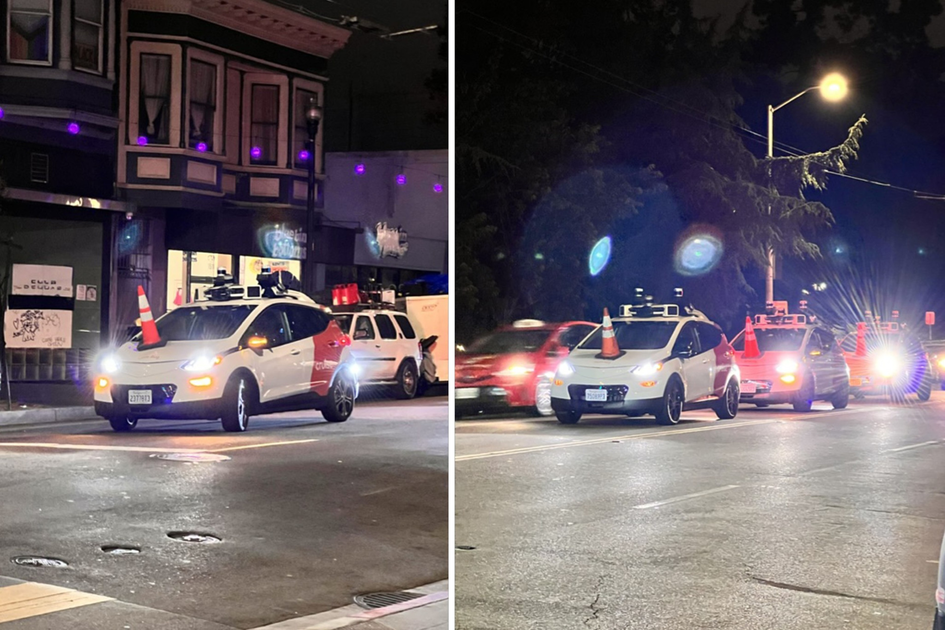
Adding to the complexity of the robotaxi debate are safety concerns. Because this is not merely a labor dispute between humans, safety controversies have further poisoned the well. Incidents such as the fatal accident involving General Motors' Cruise robotaxi or Waymo’s illegal school bus passing have added fuel to the fire. An investigation by the U.S. National Transportation Safety Board (NTSB) into the school bus incident remains ongoing.
AI vs. Jobs: Just the Beginning
The most critical takeaway from these multi-city disputes is that the friction of "AI taking human jobs" has finally surfaced in the physical world. Unlike generative AI, where employment impacts can feel abstract and difficult to quantify, the robotaxi presents a tangible, visible target: the human driver. Experts note that resolving this conflict will require finding sustainable ways for human workers and AI to coexist.
Some U.S. cities are already experimenting with coexistence models. The bill up for a vote next month in Washington, D.C., includes provisions for a 15-cent-per-mile vehicle-mile tax on robotaxis. Meanwhile, Santa Monica, California, is negotiating a deal to lease public parking spaces to Amazon’s robotaxi brand, Zoox, with plans to channel the annual revenue of roughly $500,000 back into job creation and local municipal funds.
Yet, experts warn that these early coexistence efforts are still far from neutralizing the underlying tensions. As one autonomous vehicle industry insider remarked, "The collision between autonomous driving and human labor is bound to continue for quite some time."
[Copyright (c) Global Economic Times. All Rights Reserved.]