![[등록] 2026-09-01 15:48:31](/support/_updata/banner2/tl181982910_6749.png)


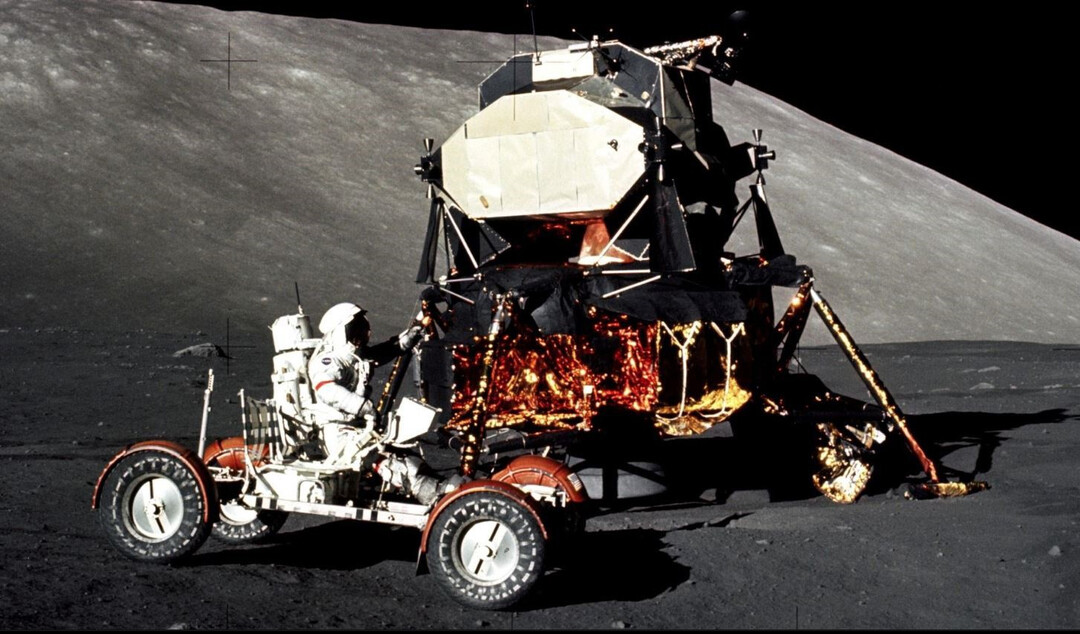
The modern space race is no longer solely about launching rockets; it has transformed into a strategic competition centered on building a permanent, sustainable human presence beyond Earth. In a significant move that signals the intensifying geopolitical stakes, the United States, through its private sector, has forged a key alliance with Japan to solve the most critical challenge facing lunar settlement: the two-week-long, crippling lunar night.
This strategic partnership, involving the American space infrastructure company Astrobotic Technology and the Japanese automotive giant Honda Motor Co., places the Western bloc at the forefront of establishing the foundational power grid for the Moon. Nations like China and Russia are now on notice as this joint effort accelerates the timeline for continuous human operations.
Conquering the Lunar Blackout
The most formidable barrier to long-term human and robotic operations on the Moon is the extended lunar night, a period of darkness lasting approximately 14 Earth days. Without sunlight, lunar bases face a total power blackout, leaving them unable to maintain warmth, run experiments, or recharge vital equipment. The solution demands an innovative, closed-loop energy system that can store and regenerate power without continuous solar input.
The collaborative approach leverages highly specialized technologies from both nations:
Honda's Regenerative Fuel Cell (RFC) System: Building on its expertise in hydrogen technology, Honda's RFC system functions as a highly efficient energy storage and power generation solution. During the lunar day, excess solar energy is used to split water into hydrogen and oxygen (electrolysis). At night, this stored hydrogen and oxygen are fed into the fuel cell to generate electricity and water.
Astrobotic's Vertical Solar Array Technology (VSAT): Astrobotic's technology is designed for optimal solar energy capture on the lunar surface. The company is developing deployable, sun-tracking solar arrays capable of generating power in the range of 10 kW to 50 kW (VSAT-XL), providing the essential daytime power input for Honda’s RFC system.
The combined system creates a near-perfect, circulative renewable energy cycle. The sole byproduct of power generation—water—is immediately recycled back into Honda's electrolysis system to produce more hydrogen, effectively closing the resource loop and ensuring a clean, unlimited energy supply.
The Foundation of a Lunar Power Grid
This collaboration is more than a mere technical demonstration; it is a foundational step toward commercial lunar infrastructure. Astrobotic is developing its ambitious project known as LunaGrid, envisioning a genuine electric power network on the lunar surface. The ultimate goal is to allow future rovers, habitat modules, and astronaut bases to simply "plug in" to this commercial grid, much like a consumer on Earth.
The joint feasibility study is a critical step in this process. Honda and Astrobotic are currently modeling one-year solar illumination profiles at various candidate sites on the lunar South Pole to optimize the size and scalability of the RFC system to meet the demanding energy needs of extended missions.
The integration of Honda's scalable energy storage with Astrobotic's power capture and distribution system is projected to significantly extend mission durations from days to years, dramatically boosting mission performance and economic viability.
An Unconventional but Potent Alliance
The pairing of an automotive manufacturing powerhouse with a cutting-edge aerospace logistics firm represents a highly unconventional, yet profoundly potent, combination. It illustrates a trend where terrestrial industrial expertise—specifically Honda’s deep knowledge of fuel cells developed for a sustainable Earth—is being directly transferred to address the unique engineering challenges of long-duration space exploration.
Should this integrated system prove robust in the extreme conditions of the Moon, it is poised to become the standard for lunar power. The development not only solves the technical problem of the lunar night but also establishes a scalable, clean, and commercial energy model for all future lunar ventures. By laying the groundwork for a permanent, self-sustaining human presence, the U.S.-Japan partnership has significantly raised the bar, compelling rival space powers to re-evaluate their own strategies or risk being eclipsed in the new era of space exploration.
[Copyright (c) Global Economic Times. All Rights Reserved.]