![[등록] 2026-09-01 15:48:31](/support/_updata/banner2/tl181982910_6749.png)


As nurturing talent in high-tech sectors like semiconductors and Artificial Intelligence (AI) becomes a top priority for higher education, universities are shifting their focus beyond simple quota expansion toward strengthening practical training and industry ties.
Following the Ministry of Education’s recent announcement to increase the admission quota for high-tech departments by 569 students across 12 universities in the Seoul metropolitan area for the 2025 academic year, the Tech University of Korea (TUKorea) is leading the charge by significantly expanding its practice-based curriculum centered on the Department of Semiconductor Engineering.
■ Infrastructure for Real-World Expertise
According to TUKorea on the 21st, the university reorganized its semiconductor department in 2025 into two specialized majors: Nano-Semiconductor Engineering and Semiconductor System Engineering. This restructuring follows its selection for the Ministry of Education’s "Semiconductor Specialized University Support Project" in 2024, which secured approximately 24 billion KRW in funding over four years.
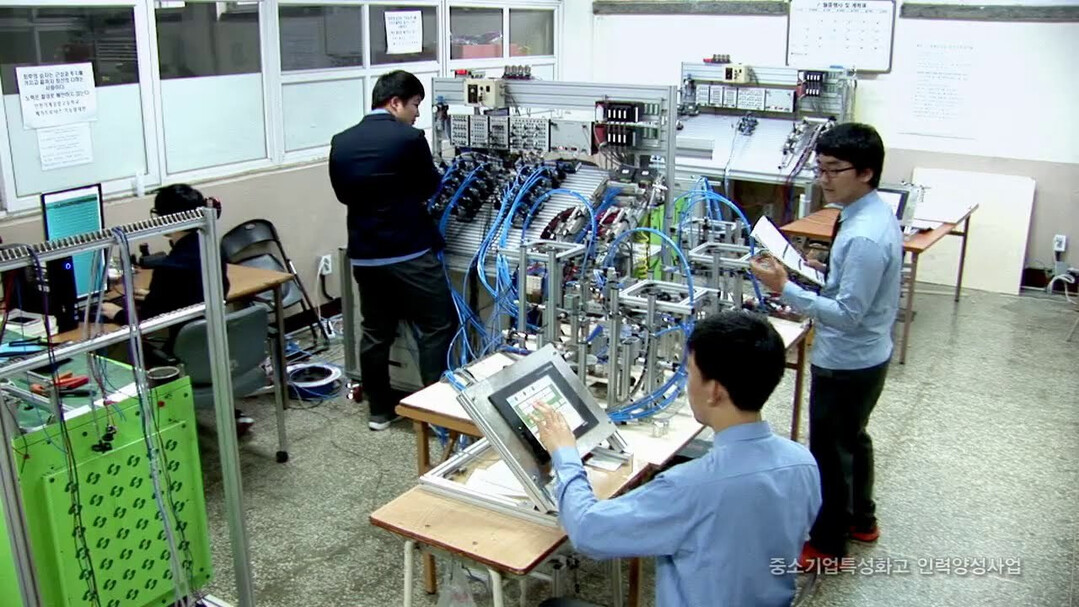
To support this academic growth, TUKorea has established a 1,090-square-meter "Comprehensive Semiconductor Education Center." The facility houses seven specialized laboratories, including a fabrication (FAB) cleanroom and measurement/analysis rooms, providing a seamless educational pipeline from process to analysis.
■ Curriculum Focused on the "8 Core Processes"
The curriculum is strictly designed around industry demand for process and equipment expertise. It covers the "8 Core Semiconductor Processes," including wafer manufacturing, etching, deposition, and photolithography. Specialized courses on packaging analysis and equipment principles are also offered to ensure students are "field-ready."
Graduates are expected to transition into careers at top-tier global companies such as Samsung Electronics, SK Hynix, ASML, Lam Research Korea, Applied Materials Korea (AMK), and Tokyo Electron Korea.
■ A Multidisciplinary Approach to Talent
TUKorea is not limiting its semiconductor education to a single department. By linking with other engineering disciplines such as the School of Electronics Engineering and the Department of Materials Science and Engineering, the university has created a robust ecosystem that covers equipment, materials, and design.
"The core of semiconductor talent cultivation is not just about increasing the number of students, but ensuring they experience processes and equipment in an environment that mirrors the actual industry," said a university official. "We will continue to focus on fostering talent that can be immediately deployed to the field through our advanced infrastructure and convergence education."
[Copyright (c) Global Economic Times. All Rights Reserved.]