![[등록] 2026-09-01 15:48:31](/support/_updata/banner2/tl181982910_6749.png)


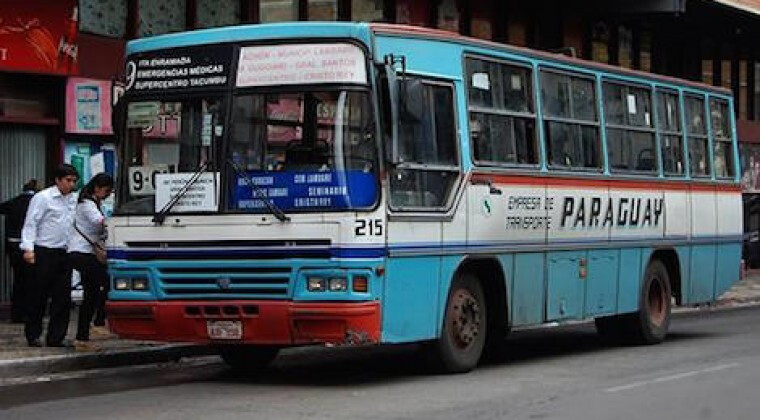
ASUNCIÓN, Paraguay - The dynamic Asunción Metropolitan Area (AMA), the beating heart of Paraguay, is currently navigating a period of significant transformation and growth. Home to 34% of the nation's population and 47% of its vehicles, this sprawling urban center has witnessed a staggering 180% population surge over the past four decades. This rapid expansion, coupled with increasing urban sprawl and a burgeoning vehicle fleet, has placed immense strain on the city's transportation infrastructure, resulting in escalating traffic congestion, prolonged commute times, and worsening air pollution. Notably, Asunción stands as the only major Latin American capital without a metro rail system, underscoring the urgency for innovative solutions. Leveraging its abundant clean energy resources from hydroelectric power, the government is actively exploring various public transportation enhancements, including the establishment of electric bus routes.
In tandem with these governmental efforts, the World Bank has spearheaded the introduction of cutting-edge data-driven technologies to refine Asunción's public transport planning. At the core of this initiative lie the analysis of General Transit Feed Specification (GTFS) data and Mobile Phone Data (MPD).
Imagine GTFS as a comprehensive guidebook for an intricate toy bus set. It meticulously details every facet of public transit operations, from anticipated arrival times at bus stops and route itineraries to estimated travel durations to destinations. This granular information empowers citizens to precisely plan their journeys, knowing exactly when and where to catch their bus. The World Bank provided crucial support to Paraguay's Vice-Ministry of Transportation in establishing the first-ever GTFS dataset for the Asunción Metropolitan Area. This invaluable data has now been integrated into widely used applications like Google Maps, equipping public transport users with efficient navigation tools.
While understanding the supply side of public transportation services is paramount, its true potential is unlocked when combined with insights into citizens' actual movement patterns. MPD offers a dynamic lens into these patterns. By analyzing anonymized mobile phone data, origin-destination matrices are generated, providing a holistic understanding of urban mobility within Asunción. This methodology unveils diverse travel behaviors that traditional survey methods often fail to capture, such as nighttime commutes and short-distance trips.
A compelling illustration of MPD's power emerged in 2021 when a mobility survey conducted in the Asunción Metropolitan Area was compared with MPD analysis. The MPD analysis detected approximately 2.5 times more trips than the traditional survey. This finding aligns with existing research indicating that surveys tend to underestimate overall trip volumes, off-peak travel, and short-distance journeys.
The vast dataset collected across the Asunción Metropolitan Area paints a rich and detailed picture of the city's transportation dynamics. On a typical weekday, approximately eight million trips occur, placing the average number of trips per person on par with Bogotá and similar to Buenos Aires. Intriguingly, public transport usage accounts for less than 7% of these trips. Non-motorized transport (walking and cycling) represents a modest 15%, leaving a staggering 78% of all trips reliant on cars and motorcycles, overwhelming a road network ill-equipped to handle the burgeoning vehicle count. This heavy reliance on private vehicles significantly contributes to prolonged commute times for public transport users. Despite nearly half of all trips being within a 1-5 kilometer range, over 16% of public transport journeys exceed one hour.
The analysis of GTFS and MPD data has yielded invaluable insights for public transport planning. Eusebio Ayala Avenue, a major arterial road accounting for one-sixth of the total daily trips, was identified as having significant potential for service quality and efficiency improvements despite already hosting a large number of public transport routes. GTFS data analysis revealed the presence of 20 bus routes sharing the entire corridor, highlighting issues such as route duplication and inefficient headways. This suggests that the implementation of dedicated bus lanes, route restructuring, and other service enhancements could significantly improve public transport services for residents along this vital corridor.
Asunción's journey towards urban mobility innovation is still in its nascent stages. As the city continues its trajectory of development, the application of advanced data analytics will be fundamental in laying the groundwork for a smarter and more efficient public transportation system. Asunción's experience serves as a compelling example of the transformative power of data in shaping the future of urban mobility, and the World Bank's transport team stands ready to support cities worldwide in achieving similar breakthroughs.
[Copyright (c) Global Economic Times. All Rights Reserved.]