![[등록] 2026-09-01 15:48:31](/support/_updata/banner2/tl181982910_6749.png)


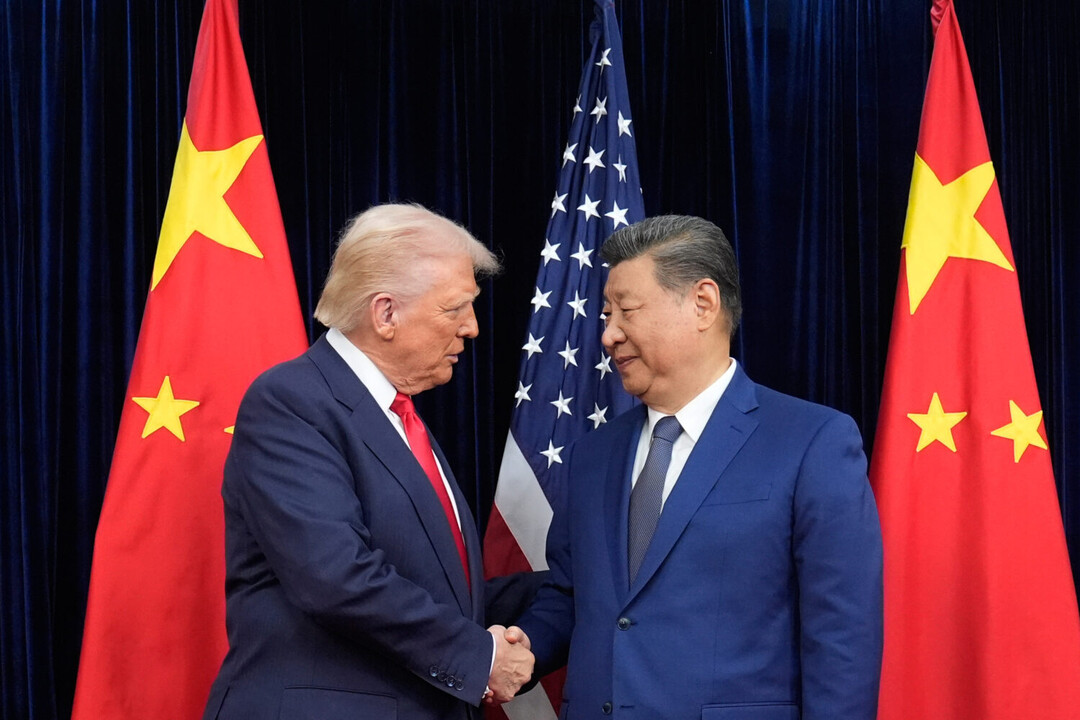
WASHINGTON D.C. — President Donald Trump departed for Beijing on Tuesday, embarking on a high-stakes state visit aimed at reshaping the economic landscape between the world’s two largest powers. Speaking to reporters on the South Lawn of the White House before boarding Air Force One, the President signaled an aggressive negotiation strategy, identifying trade as his "absolute priority" while dismissing the notion that Middle Eastern conflicts would serve as leverage for China.
The three-day visit marks President Trump’s first return to the Chinese capital in nine years, following his 2017 state visit. It also serves as a follow-up to the brief encounter between Trump and Chinese President Xi Jinping during the Busan summit in South Korea last October.
“We have a tremendous number of things to discuss with President Xi,” Trump stated, emphasizing that the massive trade deficit and market access remain at the forefront of his administration's goals. “But more than anything else, trade is going to be the center of this discussion. We are going to get it right this time.”
Strategic Distance on Iran
One of the most striking moments of the President's pre-departure briefing was his refusal to link the ongoing tensions with Iran to the Beijing summit. Despite the escalating regional conflict, Trump appeared keen to decouple Middle Eastern security from his economic demands on China.
While referring to President Xi as "my friend," Trump was blunt about the Islamic Republic’s future. "I wouldn't say Iran is a major point of discussion," Trump remarked. "We’re handling Iran very well. They are either going to make a deal with us, or they are going to be obliterated."
Analysts suggest this rhetoric is a calculated move to prevent Beijing from using its influence over Tehran as a "bargaining chip" to extract trade concessions from Washington. By asserting that the U.S. is managing Iran unilaterally, Trump seeks to maintain a position of strength in the trade room.
Eyes on Russia and Ukraine
The President also used the occasion to project a vision of American-led global order, expressing unwavering confidence in brokering an end to the war in Ukraine. In a surprising disclosure, Trump suggested that his diplomatic tour might not end with Asia, noting that a visit to Russia remains a distinct possibility before the year concludes.
"The situation in Ukraine is coming to a head, and we are going to get that settled fast," Trump claimed, positioning himself as the central arbiter in the US-China-Russia "Great Power" triangle.
A Powerhouse Delegation
The President is arriving in Beijing with a delegation comprised of his administration's most influential hawks and trade loyalists. The entourage includes Secretary of State Marco Rubio and Secretary of Defense Pete Hegseth, both known for their firm stances on national security. They are joined by U.S. Trade Representative (USTR) Jamison Greer and White House Deputy Chief of Staff James Blair.
In a shift from his 2017 visit, First Lady Melania Trump did not join the trip. Instead, the President is accompanied by his son, Eric Trump, and daughter-in-law, Lara Trump, highlighting the personal and familial nature of his diplomatic inner circle.
The Beijing Itinerary
President Trump is expected to touch down in Beijing on the night of May 13 (KST). The schedule is packed with high-level diplomacy, including at least six face-to-face encounters with President Xi. The centerpiece of the trip will be the formal bilateral summit at 10:00 AM on May 14, followed by a tour of the Temple of Heaven and a lavish state dinner.
As the world watches, the outcome of the "Beijing Summit" will likely define the trajectory of global markets and security for the remainder of the decade. For Trump, the mission is clear: "America First" begins with the ledger.
[Copyright (c) Global Economic Times. All Rights Reserved.]