• 2025.12.11 (Thu)
  • All articles
  • LOGIN
  • JOIN
Global Economic Times
APEC2025KOREA가이드북
  • Synthesis
  • World
  • Business
  • Industry
  • ICT
  • Distribution Economy
  • Well+Being
  • Travel
  • Eco-News
  • Education
  • Korean Wave News
  • Opinion
  • Arts&Culture
  • Sports
  • People & Life
  • Column
    • Cho Kijo Column
    • Lee Yeon-sil Column
    • Ko Yong-chul Column
    • Cherry Garden Story
  • Photo News
  • New Book Guide
MENU
 
Home > Synthesis

Indonesian Researchers Develop New Fish Vaccine to Boost Aquaculture

Eugenio Rodolfo Sanabria Reporter / Updated : 2024-12-13 17:20:07
  • -
  • +
  • Print


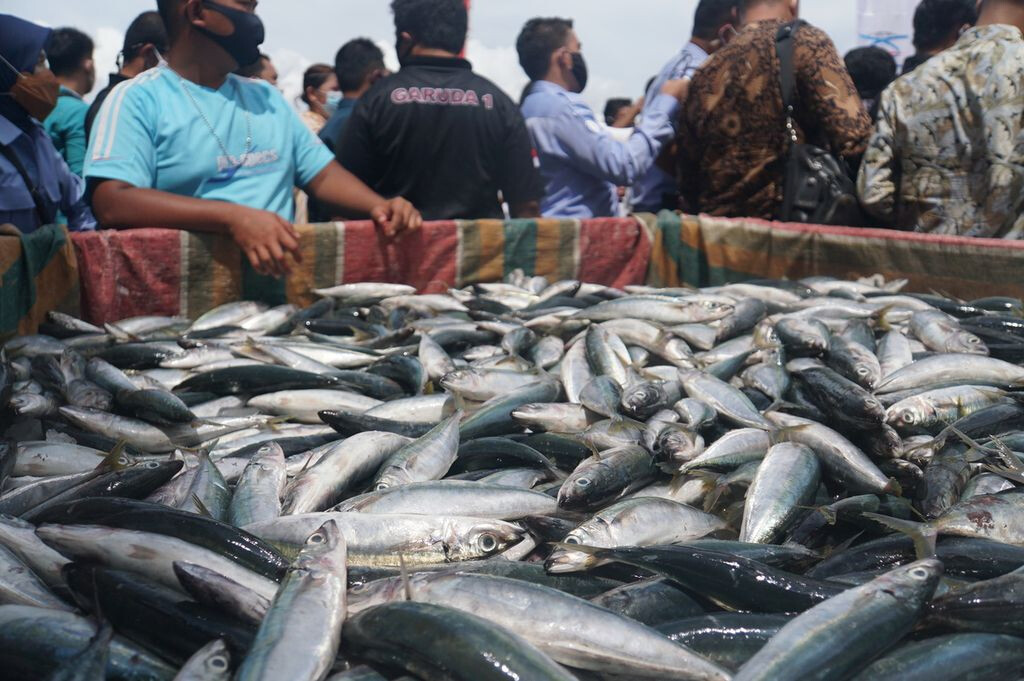
Jakarta, Indonesia – Researchers at the Veterinary Research Center (PRVet) of the National Research and Innovation Agency (BRIN) are focusing on developing new vaccines and medications for fish, as well as improved methods for disease detection and antimicrobial resistance. These efforts aim to increase the productivity of aquatic food.

"Managing the health of cultured fish is becoming increasingly important, as disease outbreaks in fish farming can reduce productivity and profitability," said Angela Mariana Lusiastuti, a researcher at PRVet.

She revealed that liquid vaccines have limitations such as being impractical and easily damaged during storage and transportation. To address these challenges, the researchers are developing freeze-dried vaccines coated with chitosan, which offers several advantages.

"It is easy to mobilize, can maintain the quality and effectiveness of the vaccine at high temperatures, and is suitable for long-distance transportation," she explained.

Additionally, Lusiastuti emphasized the importance of developing and collaborating on research into zoonotic diseases, which can re-emerge due to contaminants such as toxins, heavy metals, hormones, pesticides, and other chemicals.

"The commercialization of innovative products obtained needs to be carried out," she said.

Meanwhile, Dedi Chandra, an ecosystem controller at the Ministry of Forestry, stressed the importance of aquatic food security amid the threat of climate change. He highlighted the World Organisation for Animal Health (WOAH) fish health standards, which cover disease prevention, early detection, reporting, and control to ensure the safety of international trade in fishery products.

"The purpose of aquatic standards is to improve the safety and health of aquatic animals worldwide," he said.

Dedi explained that these standards are designed to ensure the safety of international trade in aquatic animals and aquatic animal products, while avoiding unjustified sanitary barriers. 

[Copyright (c) Global Economic Times. All Rights Reserved.]

  • #globaleconomictimes
  • #koyongchul
  • #cherrylee
  • #seoulkorea
  • #periodicoeconomico
  • #글로벌이코노믹타임즈
  • #GET
  • #GETtv
  • #liderdel
Eugenio Rodolfo Sanabria Reporter

Popular articles

  • Poll Reveals Mixed Japanese Reaction to PM Takaichi’s Taiwan Intervention Remarks

  • Firefly Aerospace Stock Soars on Surprise Q3 Beat and Raised Guidance 

  • Americas’ Agriculture Hailed as Key to Sustainable Global Food Supply

I like it
Share
  • Facebook
  • X
  • Kakaotalk
  • LINE
  • BAND
  • NAVER
  • https://globaleconomictimes.kr/article/1065601150059264 Copy URL copied.
Comments >

Comments 0

Weekly Hot Issue

  • ZTE Faces Massive US Fine Over Alleged Foreign Bribery; Potential Settlement Could Exceed $2 Billion
  • Mexico Hikes Tariffs on 'Strategic Goods' from South Korea, China, and Other Non-FTA Nations
  • From Air to Plastic: A Female Scientist's Carbon Neutral Revolution
  • Rising Resentment: Uncensored Voices Expose China's Surveillance State
  • US Proposes Mandatory Social Media Disclosure for ESTA and Visa Applicants, Citing Enhanced Security
  • Concert Halls Struggle to Silence 'Phone Nuisance' Amidst Growing Concerns Over Performance Etiquette

Most Viewed

1
Korean War Ally, Reborn as an 'Economic Alliance' Across 70 Years: Chuncheon's 'Path of Reciprocity,' a Strategic
2
A Garden Where the City's Rhythm Stops: Dongdaemun's 'Cherry Garden', Cooking Consideration and Diversity
3
The Sudden Halt of Ayumi Hamasaki's Shanghai Concert: Unpacking the Rising Sino-Japanese Tensions
4
Alliance in a Dilemma: The Fallout of Trump's Advice to Takaichi Not to 'Provoke Taiwan' 
5
The Paradox of the 'Juvenile Offender' (Chokbeop Sonyeon): Impunity or Unfinished Rehabilitation?
광고문의
임시1
임시3
임시2

Hot Issue

Mexico Hikes Tariffs on 'Strategic Goods' from South Korea, China, and Other Non-FTA Nations

Tech Tensions Flare: DeepSeek Allegedly Smuggles Banned NVIDIA Blackwell Chips for New AI Model

Netflix Stock Plummets 10% on Credit Downgrade Fears Following Blockbuster Warner Bros. Acquisition

LG Innotek Develops Eco-Friendly Next-Gen Smart IC Substrate, Reducing Carbon Emissions by Half

Let’s recycle the old blankets in Jeju Island’s closet instead of incinerating them.

Global Economic Times
korocamia@naver.com
CEO : LEE YEON-SIL
Publisher : KO YONG-CHUL
Registration number : Seoul, A55681
Registration Date : 2024-10-24
Youth Protection Manager: KO YONG-CHUL
Singapore Headquarters
5A Woodlands Road #11-34 The Tennery. S'677728
Korean Branch
Phone : +82(0)10 4724 5264
#304, 6 Nonhyeon-ro 111-gil, Gangnam-gu, Seoul
Copyright © Global Economic Times All Rights Reserved
  • 에이펙2025
  • APEC2025가이드북TV
  • 독도는우리땅
Search
Category
  • All articles
  • Synthesis
  • World
  • Business
  • Industry
  • ICT
  • Distribution Economy
  • Well+Being
  • Travel
  • Eco-News
  • Education
  • Korean Wave News
  • Opinion
  • Arts&Culture
  • Sports
  • People & Life
  • Column 
    • 전체
    • Cho Kijo Column
    • Lee Yeon-sil Column
    • Ko Yong-chul Column
    • Cherry Garden Story
  • Photo News
  • New Book Guide
  • Multicultural News
  • Jobs & Workers