• 2025.12.13 (Sat)
  • All articles
  • LOGIN
  • JOIN
Global Economic Times
APEC2025KOREA가이드북
  • Synthesis
  • World
  • Business
  • Industry
  • ICT
  • Distribution Economy
  • Well+Being
  • Travel
  • Eco-News
  • Education
  • Korean Wave News
  • Opinion
  • Arts&Culture
  • Sports
  • People & Life
  • Column
    • Cho Kijo Column
    • Lee Yeon-sil Column
    • Ko Yong-chul Column
    • Cherry Garden Story
  • Photo News
  • New Book Guide
MENU
 
Home > Industry

Turning Trash into Treasure: South Korea's Plasma Breakthrough

KO YONG-CHUL Reporter / Updated : 2025-03-02 16:33:44
  • -
  • +
  • Print

In a significant stride towards sustainable waste management and clean energy production, South Korean researchers at the Korea Institute of Fusion Energy (KFE) have achieved a groundbreaking feat. They've successfully harnessed plasma technology to convert everyday waste into valuable resources – hydrogen and electricity.

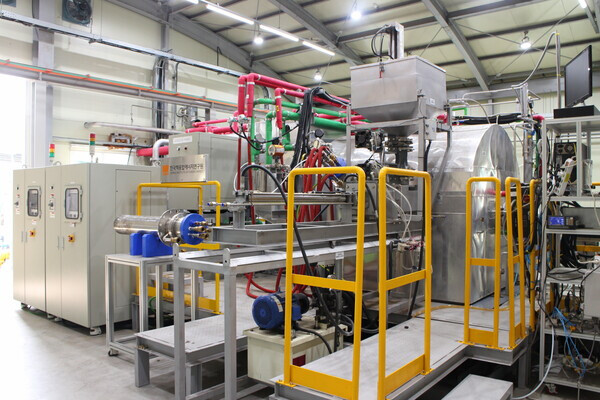
This innovation, centered around a newly constructed plasma waste gasification pilot plant, marks a potential turning point in how we approach waste. The plant, capable of processing three tons of waste daily, utilizes high-temperature plasma to break down waste into syngas, a versatile fuel that can be used to generate both hydrogen and electricity.

What sets this technology apart is its eco-friendly nature. Unlike traditional incineration methods that release harmful greenhouse gases, plasma gasification significantly reduces emissions. By completely decomposing waste at extremely high temperatures, it offers a cleaner alternative for waste disposal.

The implications of this breakthrough are far-reaching. Imagine a future where our landfills are no longer filled with mountains of trash, but instead serve as sources of clean energy. This technology has the potential to revolutionize waste management practices, not only in South Korea but around the world.

KFE's success is the culmination of years of dedicated research and development. The institute has steadily advanced its plasma technology, culminating in the construction of the large-scale pilot plant. Now, with the ability to process significant amounts of waste and generate both hydrogen and electricity, they've demonstrated the practical viability of their technology.

Looking ahead, KFE plans to collaborate with domestic companies to further refine and commercialize their technology. This includes ensuring the stability of the plant through long-term operation and gathering data on various waste types and treatment methods.

The ultimate goal is to optimize the process for maximum efficiency and economic viability. By doing so, South Korea can pave the way for a future where waste is no longer a burden, but a valuable resource.

[Copyright (c) Global Economic Times. All Rights Reserved.]
  • #globaleconomictimes
  • #글로벌이코노믹타임즈
  • #한국
  • #중기청
  • #재외동포청
  • #외교부
  • #micorea
  • #mykorea
  • #newsk
  • #nammidonganews
  • #singaporenewsk
KO YONG-CHUL Reporter
Reporter Page

Popular articles

  • A Garden Where the City's Rhythm Stops: Dongdaemun's 'Cherry Garden', Cooking Consideration and Diversity

  • Dayone Company Achieves Record Performance in Adult Education Market

  • Choi Bun-do, Chairman of PTV Group, Assumes Presidency of the Korean Chamber of Commerce and Industry in South Central Vietnam

I like it
Share
  • Facebook
  • X
  • Kakaotalk
  • LINE
  • BAND
  • NAVER
  • https://globaleconomictimes.kr/article/1065598365785808 Copy URL copied.
Comments >

Comments 0

Weekly Hot Issue

  • Lotte Biologics Hosts 'Future Innovative Technology Development Forum'
  • CJ OnStyle Launches Major Year-End Living Event: 'Jibchak Festa'
  • CJ CheilJedang Launches 'Yummy' Content Service on CJ The Market App
  • Yamaha Music Korea Launches 'Hybrid Piano Music Festa' Special Promotion
  • Lotte Wellfood Dominates 2025 Korea Digital Advertising Awards with Six Wins
  • South Korean Business Undergoes Major Generational Shift: A Move Towards Tech-Driven Leadership

Most Viewed

1
A Garden Where the City's Rhythm Stops: Dongdaemun's 'Cherry Garden', Cooking Consideration and Diversity
2
The Sudden Halt of Ayumi Hamasaki's Shanghai Concert: Unpacking the Rising Sino-Japanese Tensions
3
Choi Bun-do, Chairman of PTV Group, Assumes Presidency of the Korean Chamber of Commerce and Industry in South Central Vietnam
4
The Paradox of the 'Juvenile Offender' (Chokbeop Sonyeon): Impunity or Unfinished Rehabilitation?
5
South Korea Unveils 'K-Med': A Gigantic leap in Medical AI, Challenging Global Tech Giants
광고문의
임시1
임시3
임시2

Hot Issue

South Korean President Lee and Japanese PM Takaichi to Meet in Nara, Signifying a Shift to 'Regional Shuttle Diplomacy'

[Deep Report] The Black Hand Behind the Mask of Disguise: The Reality of Cult Corporate Entities' Encroachment on Power Across Korean Society

Samsung Launches 'Galaxy Z TriFold,' Draws Crowds Despite $2,750 Price Tag

South Korea’s National Assembly Passes Banking Act Amendment Regulating Loan Interest Rates

Let’s recycle the old blankets in Jeju Island’s closet instead of incinerating them.

Global Economic Times
korocamia@naver.com
CEO : LEE YEON-SIL
Publisher : KO YONG-CHUL
Registration number : Seoul, A55681
Registration Date : 2024-10-24
Youth Protection Manager: KO YONG-CHUL
Singapore Headquarters
5A Woodlands Road #11-34 The Tennery. S'677728
Korean Branch
Phone : +82(0)10 4724 5264
#304, 6 Nonhyeon-ro 111-gil, Gangnam-gu, Seoul
Copyright © Global Economic Times All Rights Reserved
  • 에이펙2025
  • APEC2025가이드북TV
  • 독도는우리땅
Search
Category
  • All articles
  • Synthesis
  • World
  • Business
  • Industry
  • ICT
  • Distribution Economy
  • Well+Being
  • Travel
  • Eco-News
  • Education
  • Korean Wave News
  • Opinion
  • Arts&Culture
  • Sports
  • People & Life
  • Column 
    • 전체
    • Cho Kijo Column
    • Lee Yeon-sil Column
    • Ko Yong-chul Column
    • Cherry Garden Story
  • Photo News
  • New Book Guide
  • Multicultural News
  • Jobs & Workers