• 2026.04.27 (Mon)
  • All articles
  • LOGIN
  • JOIN
Global Economic Times
fashionrunwayshow2026
  • Synthesis
  • World
  • Business
  • Industry
  • ICT
  • Distribution Economy
  • Well+Being
  • Travel
  • Eco-News
  • Education
  • Korean Wave News
  • Opinion
  • Arts&Culture
  • Sports
  • People & Life
    • International Student Report
    • With Ambassador
  • Column
    • Cho Kijo Column
    • Cherry Garden Story
    • Ko Yong-chul Column
    • Kim Seul-Ong Column
    • Lee Yeon-sil Column
  • Photo News
  • New Book Guide
MENU
 
Home > World

GCC Banks Poised for Strong Growth in 2025

Pedro Espinola Special Correspondent / Updated : 2024-12-11 14:38:01
  • -
  • +
  • Print


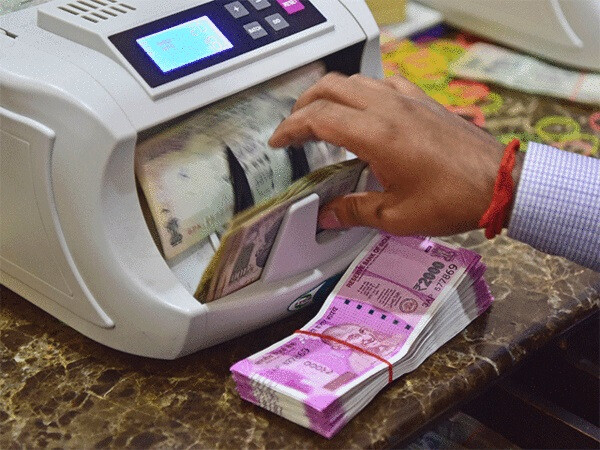
Riyadh: Banks operating in the Gulf Cooperation Council (GCC) region, particularly Saudi Arabia and the UAE, are poised for robust credit growth in 2025, fueled by high oil prices and economic diversification initiatives.   

Saudi Arabia's Bright Outlook

Fitch Ratings projects that Saudi banks will experience a significant 12% financing growth in 2025, nearly double the GCC average. The Kingdom's Vision 2030 initiative, aimed at diversifying the economy, is expected to accelerate this growth, with corporates accounting for a substantial portion of new financing.   

UAE: A Strong Performer

UAE banks are also set to benefit from favorable conditions, with an anticipated 9% loan growth in 2025. Strong liquidity, supported by government deposits and robust fiscal metrics, will further bolster the sector.   

Diversified Growth Across the Region

While Saudi Arabia and the UAE lead the charge, other GCC countries also show promise:

Egypt: Falling inflation, improved investor confidence, and healthy foreign currency liquidity are expected to strengthen the banking sector.
Bahrain: Lower lending rates and stable asset quality will contribute to a reasonable credit growth of 4.5%.
Kuwait: Despite high-interest rates and moderate non-oil GDP growth, Kuwaiti banks will maintain strong liquidity and a 5-6% credit growth.
Oman: Vision 2040 will drive growth opportunities for banks, but reliance on government spending will remain a challenge.
Qatar: Improved business conditions and a pickup in credit growth to 5.5% are anticipated.
Jordan: While facing challenges, Jordan's banking sector is projected to achieve a 3.5% lending growth.

Cautious Optimism

While the overall outlook is positive, challenges such as geopolitical tensions and potential oil price volatility could impact the region's financial institutions. Nevertheless, with strong fundamentals and supportive government policies, GCC banks are well-positioned to navigate these uncertainties and capitalize on emerging opportunities.   


[Copyright (c) Global Economic Times. All Rights Reserved.]

  • #globaleconomictimes
  • #koyongchul
  • #cherrylee
  • #seoulkorea
  • #periodicoeconomico
  • #글로벌이코노믹타임즈
  • #GET
  • #GETtv
  • #liderdel
Pedro Espinola Special Correspondent

Popular articles

  • $2 Million Per Ship: Iran’s "Hormuz Toll" Emerges as Chokepoint in Peace Talks

  • China’s CXMT Closes the Gap: Aiming for Mass Production of 12-Layer HBM by 2025

  • Middle East Ceasefire in Peril: Trump Shifts Stance on Lebanon After Call with Netanyahu

I like it
Share
  • Facebook
  • X
  • Kakaotalk
  • LINE
  • BAND
  • NAVER
  • https://globaleconomictimes.kr/article/1065591278446554 Copy URL copied.
Comments >

Comments 0

Weekly Hot Issue

  • University of Utah Asia Campus Hosts ‘2026 Film Festival,’ Showcasing Student Cinematic Excellence
  • Pioneer of the World’s First Coffee Mix: Former Dongsuh Foods Vice Chairman Cho Phil-je Passes Away at 101
  • The ‘Einstein of Wall Street’ on Market Resilience: "The Fog of War is Lifting, Only Oil Remains"
  • Korea and Vietnam Forge Strategic Partnership in Science, Technology, and Innovation
  • Pentagon’s Arsenal Drained by Iran Conflict: Mounting Fears Over Deterrence Gaps in Korea and Taiwan
  • South Korea Fines Paper Cartel $245M for Systematic Price Fixing

Most Viewed

1
“Printing Lenses Like Newspapers”: Korean Researchers Unveil Game-Changing Mass Production for Metalenses
2
ASML Sees Surge in South Korean Revenue as Samsung and SK Hynix Accelerate Next-Gen Fab Operations
3
Samsung Electro-Mechanics to Build New 'MLCC Embedded Substrate' Line in Vietnam to Lead AI Market
4
Meta Set to Dethrone Google as Digital Advertising King, Driven by AI-Powered Reels
5
Comedian Lee Jin-ho Saved by Former Super Junior Member Kangin After Brain Hemorrhage
광고문의
임시1
임시3
임시2

Hot Issue

Pentagon’s Arsenal Drained by Iran Conflict: Mounting Fears Over Deterrence Gaps in Korea and Taiwan

Korea and Vietnam Forge Strategic Partnership in Science, Technology, and Innovation

University of Utah Asia Campus Hosts ‘2026 Film Festival,’ Showcasing Student Cinematic Excellence

South Korea Fines Paper Cartel $245M for Systematic Price Fixing

Fashion Runway Show 2026

Global Economic Times
korocamia@naver.com
CEO : LEE YEON-SIL
Publisher : KO YONG-CHUL
Registration number : Seoul, A55681
Registration Date : 2024-10-24
Youth Protection Manager: KO YONG-CHUL
Singapore Headquarters
5A Woodlands Road #11-34 The Tennery. S'677728
Korean Branch
Phone : +82(0)10 4724 5264
#304, 6 Nonhyeon-ro 111-gil, Gangnam-gu, Seoul
Copyright © Global Economic Times All Rights Reserved
  • 에이펙2025
  • APEC2025가이드북TV
  • 반달곰 프로젝트
Search
Category
  • All articles
  • Synthesis
  • World
  • Business
  • Industry
  • ICT
  • Distribution Economy
  • Well+Being
  • Travel
  • Eco-News
  • Education
  • Korean Wave News
  • Opinion
  • Arts&Culture
  • Sports
  • People & Life 
    • 전체
    • International Student Report
    • With Ambassador
  • Column 
    • 전체
    • Cho Kijo Column
    • Cherry Garden Story
    • Ko Yong-chul Column
    • Kim Seul-Ong Column
    • Lee Yeon-sil Column
  • Photo News
  • New Book Guide
  • Multicultural News
  • Jobs & Workers