![[등록] 2026-09-01 15:48:31](/support/_updata/banner2/tl181982910_6749.png)


(C) SteelRadar
Mexico City - Mexico is poised to enact a substantial increase in import tariffs on a wide range of "strategic items" originating from nations, such as South Korea and China, with which it does not hold a Free Trade Agreement (FTA). The measure is anticipated to take effect as early as January 2026.
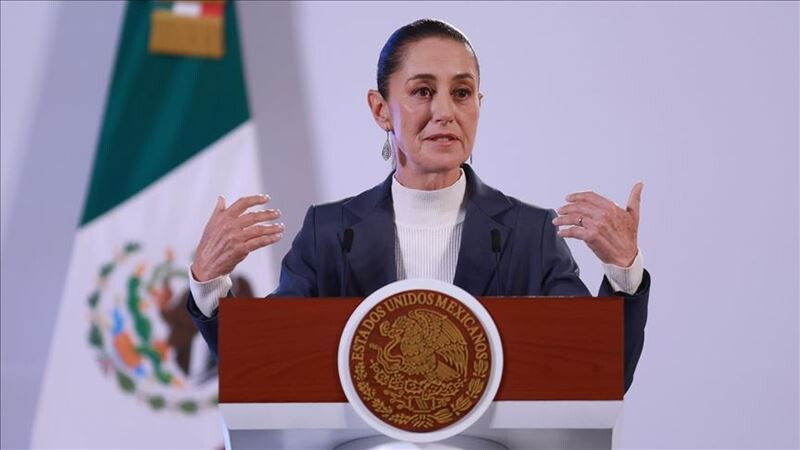
Mexico’s Senate passed the government's amendment to the General Export and Import Tax Law (LIGIE) on the evening of December 10 (local time) with a vote of 76 in favor, 5 against, and 35 abstentions. This followed the House of Representatives' approval earlier the same day (281-24-149). The bill, championed by the executive branch, is expected to be signed by President Claudia Sheinbaum and implemented promptly.
The Sheinbaum administration had initially proposed the measure in September, targeting 1,463 specific products across 17 strategic sectors, including automotive parts, steel, aluminum, plastics, home appliances, and textiles. These tariffs were designed to be the maximum allowable under World Trade Organization (WTO) regulations.
While initial proposals suggested raising the current tariff rates (ranging from 0% to 35%) up to a maximum of 50%, local media, La Jornada and El Financiero, reported that the final, adjusted plan—after consultations with business groups—set the rates for most items at 20% to 35%, with only a limited number of items subject to the full range of 5% to 50%. The specific list of affected items and rates is pending confirmation upon its official publication in the government gazette, though 316 previously untaxed items are reportedly included.
Significant Impact on South Korea and China
The new tariffs will be applied to all countries that have not established an FTA with Mexico. China is expected to be the most heavily impacted nation. Bilateral trade between China and Mexico has more than doubled over the last decade up to 2024, resulting in a substantial trade deficit for Mexico, estimated at approximately $120 billion.
South Korea, which regards Mexico as its largest trading partner in Latin America, will also face unavoidable consequences. Since 1993, South Korea has maintained a consistent trade surplus with Mexico, estimated at around $12.098 billion through the third quarter of this year. Key Korean exports—primarily machinery, automotive, and electronic components, which constituted about 30% of exports last year—fall directly into the strategic categories designated by the Mexican government.
Currently, trade relations between South Korea and Mexico are governed only by a basic Investment Guarantee Agreement (2000), which offers no tariff defense. FTA negotiations between the two countries, which began around 2006, are currently in a stalled state. Other affected countries are likely to include India, Vietnam, Thailand, Indonesia, Taiwan, the UAE, and South Africa. Countries with existing FTAs, such as the US, Canada, EU members, Japan, and Chile, will remain unaffected.
A Tactic for USMCA Negotiations
Analysts widely view this tariff hike as a strategic move by Mexico to gain leverage in upcoming trade discussions, particularly those concerning the United States-Mexico-Canada Agreement (USMCA).
Mexico's economic relationship is overwhelmingly concentrated on the US: according to data from the Mexican Ministry of Economy and the U.S. Trade Representative, 80% of Mexico's exports went to the US last year, and over 40% of its imports originated there. Total bilateral trade reached a record high of approximately $839.9 billion.
As Mexico cannot risk disrupting its trade relationship with the US, establishing distance from China—a country that has had recent trade disputes with the US—is seen as a necessary action to secure a stronger negotiating position with the current and potentially future US administration.
[Copyright (c) Global Economic Times. All Rights Reserved.]