![[등록] 2026-09-01 15:48:31](/support/_updata/banner2/tl181982910_6749.png)


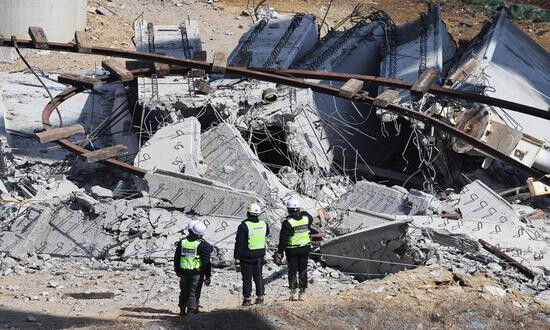
(C) ECNS.cn
Urgent Need to Shift from Punishment to Prevention-Focused Safety Policies
Despite the South Korean government's intensified efforts to prevent serious industrial accidents, including the implementation of the Serious Accidents Punishment Act, the number of fatal accidents has regrettably increased. A recent analysis reveals a widening gap in safety management, with smaller and medium-sized construction sites bearing the brunt of the casualties. Experts argue that a policy framework centered on punishment alone is ineffective and urgently call for a shift toward substantive, prevention-focused support for vulnerable smaller contractors.
Concentration of Accidents in Smaller Sites Highlights Safety Disparity
According to the Ministry of Employment and Labor’s data on accident-related fatalities for the first three quarters of 2025, the total number of industrial accident deaths reached 457, marking a 3.2% increase (14 more fatalities) compared to the previous year. The construction industry was the highest contributor, accounting for 210 deaths. Worryingly, while the number of accidents remained similar, the fatality count rose.
A significant issue highlighted by the statistics is the high concentration of fatalities in smaller-scale projects. Sites with construction costs under 5 billion KRW accounted for 275 deaths, an increase of 26 from the prior year. Within this group, very small sites (under 500 million KRW) saw a rise of 19 fatalities alone.
This data underscores the vulnerability of smaller contractors, who often lack the necessary personnel and budget for robust safety management. The disparity is further evidenced by comparing company sizes: fatalities in businesses with fewer than 5 employees increased by 27 (totaling 137), while those in companies with 50 or more employees decreased by 12. This pattern confirms an expanding safety gap between major corporations and smaller enterprises.
The seriousness of the issue has been acknowledged at the highest levels of government. A Presidential Office official noted earlier this month that while improvements were seen in large businesses, the situation in sites under 50 employees and 500 million KRW remains unresolved.
Punishment-Centric Policies Show Limited Effect
The failure to curb accidents, even among major companies, raises serious questions about the current policy approach. Fatalities have persisted at several top-tier construction firms since the 2022 implementation of the Serious Accidents Punishment Act. Notable incidents in 2025 involved firms such as Hyundai Engineering (7 deaths), POSCO E&C (5 deaths), and Hyundai E&C (3 deaths), among others.
This persistence of accidents at companies equipped with extensive resources and technical expertise suggests that the current system is insufficient to effectively mitigate on-site risks.
Construction site stakeholders are increasingly criticizing the government’s reliance on punitive measures, arguing it yields limited practical safety improvements. Professor Jeong Jin-woo of Seoul National University of Science and Technology emphasized that the continued rise in accidents, despite increased budget and personnel allocations, indicates a fundamental failure of the prevention system. He stressed the need for a system redesign focused on prevention, one that companies can realistically predict and implement on the ground.
Experts Call for Field-Driven Support for SMEs
Professor Choi Myung-ki of the Korean Industrial Site Professor Group pointed out that while large companies have the financial and human capital to establish autonomous safety management systems, small and medium-sized enterprises (SMEs) do not. He urged the government to prioritize the rapid development of support systems, offering necessary personnel and financial resources to SMEs. Crucially, he added, these support measures must incorporate the voices of the actual field workers rather than relying purely on administrative logic.
Despite these expert recommendations, the government and legislature continue to focus their policy momentum on strengthening penalties and regulations. Pending legislation includes the introduction of fines linked to operating profit, the establishment of honorary industrial safety supervisors, and accident reporting reward systems.
However, critics like Professor Jeong caution that an overemphasis on punishment can lead to negative side effects, encouraging companies to engage in merely formal or perfunctory safety compliance. He advocates that the government's primary role should be to create the necessary conditions for prevention, ensuring that companies can realistically comply with the law. The way forward, according to experts, involves establishing practical laws and systems that businesses can actually implement, supported by a constructive environment of guidance and instruction from the government.
[Copyright (c) Global Economic Times. All Rights Reserved.]