• 2026.03.06 (Fri)
  • All articles
  • LOGIN
  • JOIN
Global Economic Times
fashionrunwayshow2026
  • Synthesis
  • World
  • Business
  • Industry
  • ICT
  • Distribution Economy
  • Well+Being
  • Travel
  • Eco-News
  • Education
  • Korean Wave News
  • Opinion
  • Arts&Culture
  • Sports
  • People & Life
    • International Student Report
    • With Ambassador
  • Column
    • Cho Kijo Column
    • Cherry Garden Story
    • Ko Yong-chul Column
    • Kim Seul-Ong Column
    • Lee Yeon-sil Column
  • Photo News
  • New Book Guide
MENU
 
Home > Industry

South Korea's Job Market Hits 26-Year Low Amid Manufacturing Slump

KO YONG-CHUL Reporter / Updated : 2025-08-11 14:12:01
  • -
  • +
  • Print


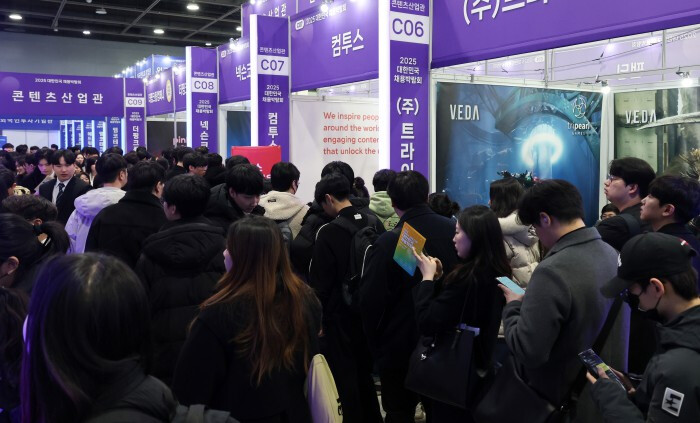
SEJONG – South Korea's job market is experiencing its most significant downturn in a generation, with the number of job openings per job seeker plummeting to a 26-year low. According to a report released today by the Ministry of Employment and Labor, the job-applicant ratio, a key indicator of labor market health, was a mere 0.40 in July, marking the lowest figure since July 1999. This concerning trend is primarily driven by a sharp contraction in the manufacturing sector, which has traditionally been a cornerstone of the nation’s economic stability.

The data, compiled from the integrated employment platform 'Employment24', paints a stark picture of a market where supply far outstrips demand. In July, new job openings fell by 16.9% year-on-year to 165,000, while the number of new job seekers surged by 5.5% to 411,000. This widening gap has made finding employment a "needle-in-a-haystack" challenge for many Koreans, as described by analysts. An official from the Ministry's Future Employment Analysis Division attributed the decline directly to the "severe slump in the manufacturing economy," noting a simultaneous decrease in both available positions and overall employment within the sector.

While the overall number of employment insurance subscribers did increase, the pace of growth was the weakest in 22 years outside of the pandemic period. The total number of subscribers reached 15.599 million, an increase of 180,000 from the previous year. However, this growth was largely confined to the service sector, which added 203,000 new subscribers, led by robust gains in healthcare and social welfare. In stark contrast, two of the nation's most critical industries—manufacturing and construction—saw significant declines in insured workers, shrinking by 5,000 and 19,000 respectively. This trend underscores a worrisome shift away from stable, high-value-added jobs in favor of service-based employment.

The manufacturing sector, in particular, is undergoing a profound demographic shift. While total subscriber numbers in the industry saw a minor decline, an analysis reveals a significant exodus of domestic workers. When factoring out the increase in foreign workers under the Employment Permit System, the number of domestic subscribers in manufacturing fell by 24,000. This data suggests that foreign labor is increasingly filling the vacancies left by departing Korean workers, a trend that may have long-term implications for the workforce and the economy.

Demographic shifts are also evident across age groups. While employment insurance subscriptions rose among individuals in their 30s, 50s, and those over 60, they declined for individuals under 29 and in their 40s. Ministry officials noted that these declines were largely influenced by broader population trends.

Looking ahead, a ministry official suggested that a recovery in the service sector, spurred by consumer spending, could provide a modest boost to the job-applicant ratio. However, the persistent uncertainty in the manufacturing sector continues to cast a long shadow over the nation's economic outlook. Furthermore, while the number of new unemployment benefit applicants saw a slight decrease, the total number of recipients and the total amount of benefits paid increased, indicating that a growing number of individuals are facing extended periods of joblessness. This suggests a deepening structural problem within the labor market that will require more than a temporary boost in consumer confidence to resolve.

[Copyright (c) Global Economic Times. All Rights Reserved.]

  • #globaleconomictimes
  • #micorea
  • #mykorea
  • #Lifeplaza
  • #nammidonganews
  • #singaporenewsk
  • #Samsung
  • #Daewoo
  • #Hyosung
  • #A
KO YONG-CHUL Reporter
Reporter Page

Popular articles

  • Revised and Expanded Edition of ‘Failure of Negotiations with North Korea: Truth and Solutions’ Published

  • Commissioner of Overseas Koreans Agency Visits Koryo-in Community in Incheon to Discuss Support for Settlement

  • Two Falls and a Miracle Run: Choi Ga-on Becomes First Korean to Win Winter Olympic Gold on Snow

I like it
Share
  • Facebook
  • X
  • Kakaotalk
  • LINE
  • BAND
  • NAVER
  • https://globaleconomictimes.kr/article/1065589895726540 Copy URL copied.
Comments >

Comments 0

Weekly Hot Issue

  • The Illusion of a "Stress-Relieving" Smoke: Study Finds Smokers More Prone to Depression
  • From Table to Space: Japan Unveils Edible Spoons Made of Cookies
  • Luckin Coffee Shakes Up Global Market with Blue Bottle Acquisition
  • U.S. Private Sector Hiring Hits 7-Month High in February, ADP Reports
  • Self-Employed Loan Delinquency Rates Double in a Decade Amid Economic Headwinds
  • Multi-Homeowner Loan Balance Hits 103 Trillion Won; Half Concentrated in Seoul and Gyeonggi

Most Viewed

1
Adwa’s Echo in Korea: A Shared Story of Dignity and Freedom
2
2026, The Grand Year of Hangeul Celebration — The River of History Where Five Streams Converge
3
A New Milestone for Ukraine’s Post-War Reconstruction: The Birth of ISVP
4
Mexican currency and the powerful history behind its designs
5
Revised and Expanded Edition of ‘Failure of Negotiations with North Korea: Truth and Solutions’ Published
광고문의
임시1
임시3
임시2

Hot Issue

South Korean Markets Shaken by "Iran Shock": KOSPI Suffers Historic Rout Amid Soaring Oil and FX Rates

Self-Employed Loan Delinquency Rates Double in a Decade Amid Economic Headwinds

U.S. Private Sector Hiring Hits 7-Month High in February, ADP Reports

Industrial Output Dips in January Amid Semiconductor Adjustments; Middle East Tensions Loom as Wild Card

Let’s recycle the old blankets in Jeju Island’s closet instead of incinerating them.

Global Economic Times
korocamia@naver.com
CEO : LEE YEON-SIL
Publisher : KO YONG-CHUL
Registration number : Seoul, A55681
Registration Date : 2024-10-24
Youth Protection Manager: KO YONG-CHUL
Singapore Headquarters
5A Woodlands Road #11-34 The Tennery. S'677728
Korean Branch
Phone : +82(0)10 4724 5264
#304, 6 Nonhyeon-ro 111-gil, Gangnam-gu, Seoul
Copyright © Global Economic Times All Rights Reserved
  • 에이펙2025
  • APEC2025가이드북TV
  • 독도는우리땅
Search
Category
  • All articles
  • Synthesis
  • World
  • Business
  • Industry
  • ICT
  • Distribution Economy
  • Well+Being
  • Travel
  • Eco-News
  • Education
  • Korean Wave News
  • Opinion
  • Arts&Culture
  • Sports
  • People & Life 
    • 전체
    • International Student Report
    • With Ambassador
  • Column 
    • 전체
    • Cho Kijo Column
    • Cherry Garden Story
    • Ko Yong-chul Column
    • Kim Seul-Ong Column
    • Lee Yeon-sil Column
  • Photo News
  • New Book Guide
  • Multicultural News
  • Jobs & Workers