![[등록] 2026-09-01 15:48:31](/support/_updata/banner2/tl181982910_6749.png)


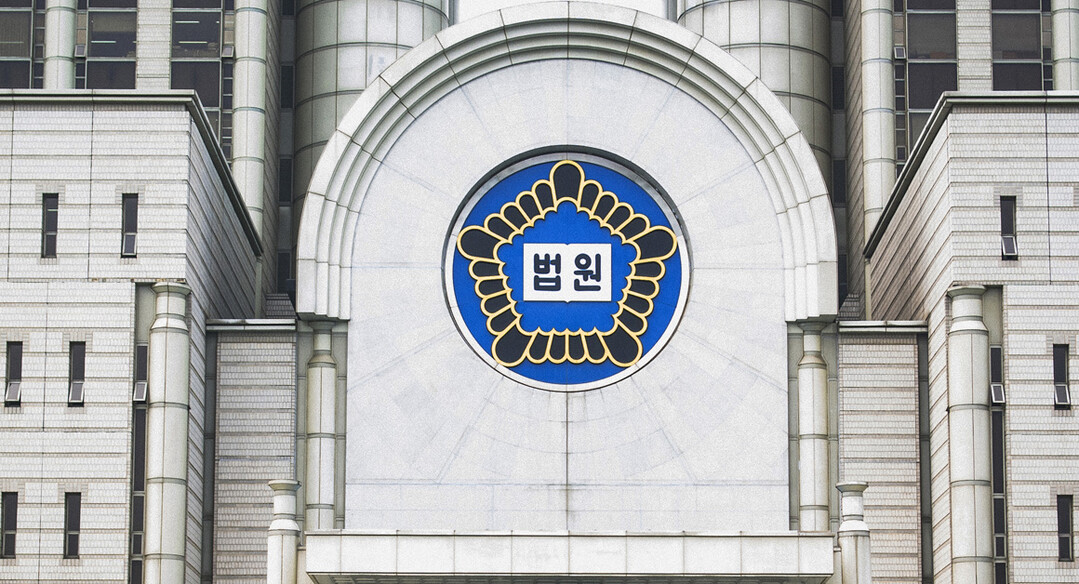
A groundbreaking ruling by the Supreme Court has established for the first time that a foreign corporation can be criminally tried in Korea if it is involved in the illegal theft of industrial technology within the country, leading to the leakage of trade secrets to the foreign entity. The Supreme Court's Second Division (Presiding Justice Eom Sang-pil) announced on the 7th that it has upheld the lower court's decision, which fined Taiwanese corporation A Co. 60 million won for violating the Act on Prevention of Divulgence and Protection of Industrial Technology and the Unfair Competition Prevention and Trade Secret Protection Act.
In 2016, three employees, including Mr. Kim, who worked at a domestic LED company, resigned. They allegedly stole trade secrets by not returning USB drives containing key technical data or by secretly taking photos of them. They were later indicted for sharing the stolen technology with employees at A Co., where they were hired. A Co. was also brought to trial under the "dual punishment" provision, a system that holds both the individual and the corporation responsible for illegal acts.
The Supreme Court's Judgment on the 'Duty of Care and Supervision' of Foreign Corporations Under the Dual Punishment Provision
A key issue in the trial was whether the dual punishment provision of Korean law could be applied to A Co., a foreign corporation. This provision typically applies to domestic corporations, holding a corporation or individual business owner criminally liable for an employee's illegal act committed in the course of their work. However, with this ruling, the Korean Supreme Court has clarified that it can exercise criminal jurisdiction over foreign corporations for illegal acts committed within Korea.
The first-instance court acknowledged that A Co. "neglected its duty of care and supervision to prevent the infringement of trade secrets when hiring employees from a competing company," and fined A Co. 50 million won. The second-instance court increased the fine to 60 million won, ruling that the technology stolen by the employees was not just a simple trade secret but constituted 'advanced technology' under the Act on Prevention of Divulgence and Protection of Industrial Technology. The Supreme Court affirmed this judgment.
The Supreme Court ruled that "the conspiracy of Mr. Kim and the two others to leak or acquire trade secrets, and the subsequent acts of viewing, photographing, and illegally taking out trade secrets, were carried out within the territory of the Republic of Korea." It further stated, "Even if the acts of leaking, disclosing, using, or acquiring the industrial technology occurred outside the territory of the Republic of Korea, they can be considered to have committed a crime within the territory of the Republic of Korea."
It also added that the illegal acts of the three employees "can be considered a part of the criminal constituent elements of A Co. to which the dual punishment provision applies." The court concluded, "It is reasonable to view the defendant company as having committed a crime within the territory of the Republic of Korea, as long as the employees are deemed to have committed a crime within the territory of the Republic of Korea."
The Significance of Expanding the Dual Punishment Provision to Technology Leakage Cases
This Supreme Court ruling holds significant meaning in protecting national core technologies and deterring acts of industrial espionage. In the past, penalties were often focused on the individuals who were the main perpetrators of technology leaks. When technology was leaked abroad, it was nearly impossible to prosecute foreign companies due to the difficulty of securing evidence and enforcing punishments. However, this ruling has paved the way for foreign companies that have benefited from technology leakage in Korea to be held accountable within the Korean legal system.
This is expected to be a great help in protecting the intellectual property of Korean companies amid fierce global technological competition. In a situation where technology leaks are rampant in sectors where Korea holds world-class competitiveness, such as semiconductors, displays, and batteries, this ruling will serve as a strong warning to potential technology theft attempts. It could also highlight the importance of international judicial cooperation.
The legal community believes this ruling will serve as an important precedent for similar cases in the future. It has become more likely that foreign companies involved in technology leakage will be actively investigated and prosecuted. This is expected to encourage companies to implement more thorough verification procedures when hiring employees with questionable pasts and to strengthen internal systems for protecting trade secrets.
However, exercising jurisdiction over foreign companies presents several challenges, including international legal issues and difficulties in enforcement. Nevertheless, this ruling is an important first step that not only proclaims Korea's firm commitment to protecting its industrial technology to the international community but also emphasizes the responsibility of global corporations. As the Korean judiciary has demonstrated a resolute will to protect its domestic companies' core assets across borders, the need for continued legal and institutional improvements in this area is being raised.
[Copyright (c) Global Economic Times. All Rights Reserved.]