![[등록] 2026-09-01 15:48:31](/support/_updata/banner2/tl181982910_6749.png)


(C) North Shore News
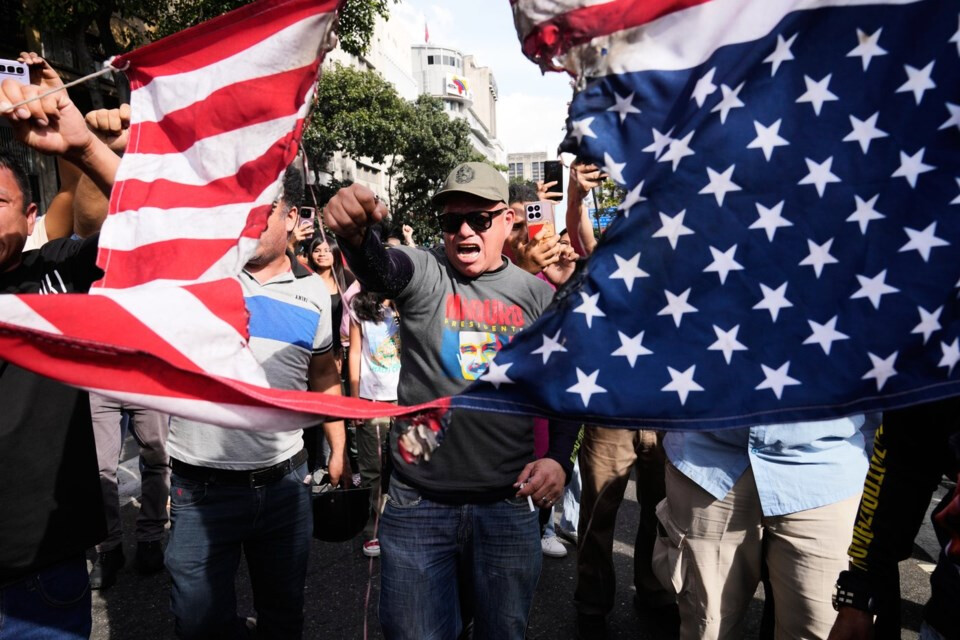
PALM BEACH, Fla. — In a historic shift of Western Hemisphere geopolitics, President Donald Trump announced on Saturday that the United States will directly oversee the administration of Venezuela during a transitional period following the military-led removal of President Nicolás Maduro.
Speaking from his Mar-a-Lago estate, President Trump detailed the objectives of "Operation Absolute Resolve," a massive military strike launched early Saturday morning. The operation involved over 150 aircraft deployed from 20 bases across the region. U.S. special forces successfully apprehended Maduro and his wife at a safe house in Caracas, transporting them to the amphibious assault ship USS Iwo Jima. The President confirmed that the former leader would face trial in either New York or Miami on federal narco-trafficking charges.
Interim Governance and Oil Strategy
President Trump emphasized that the U.S. will maintain control over Venezuela until a "safe, proper, and smart" transition to a new government can be guaranteed. "We are going to run the country until we can ensure it doesn’t fall back into the hands of those who do not have the people's best interests at heart," Trump stated, citing the need for stability to prevent a power vacuum.
A cornerstone of this transitional strategy involves the immediate entry of major American oil corporations into Venezuela. The administration plans to leverage U.S. private sector expertise to restore Venezuela’s decaying energy infrastructure. According to the President, the revenue generated from increased crude production will fund the transitional administration and the broader reconstruction of the nation. Despite this, Trump clarified that the general embargo on Venezuelan oil remains in full effect to maintain leverage.
Political Alliances and Regional Warning
The political future of Venezuela remains fluid. While opposition leader María Corina Machado has long been the face of the resistance, Trump signaled a shift in strategy, remarking that it would be "very difficult" for her to lead at this juncture. Instead, the administration appears to be pivoting toward Executive Vice President Delcy Rodríguez as a functional partner. Secretary of State Marco Rubio has reportedly held discussions with Rodríguez, whom the U.S. views as a key figure in the constitutional succession.
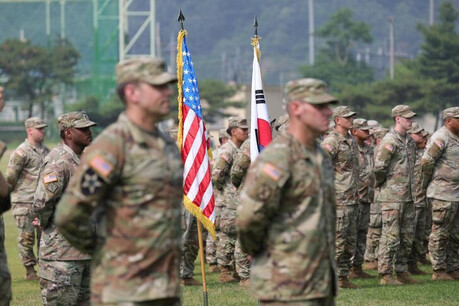
To ensure the safety of American economic interests and personnel, Trump noted that U.S. ground forces may remain stationed in the country. He warned that the U.S. fleet remains on high alert in nearby waters, ready to launch a "much larger second wave" of strikes if necessary.
A Message to the Region
The military intervention serves as a stark warning to other leftist administrations in Latin America. Trump explicitly mentioned that the restoration of U.S. influence in the Western Hemisphere is a primary objective, suggesting that regimes in Colombia and Cuba could be the next targets of American diplomatic or military pressure.
As of Sunday, no U.S. casualties have been reported from the initial operation. While the President shared images on social media purportedly showing a detained Maduro aboard a U.S. vessel, the authenticity of the media is currently under verification by independent analysts. For now, Venezuela enters an unprecedented era of direct American oversight, marking the most significant U.S. military intervention in the region in decades.
[Copyright (c) Global Economic Times. All Rights Reserved.]