![[등록] 2026-09-01 15:48:31](/support/_updata/banner2/tl181982910_6749.png)


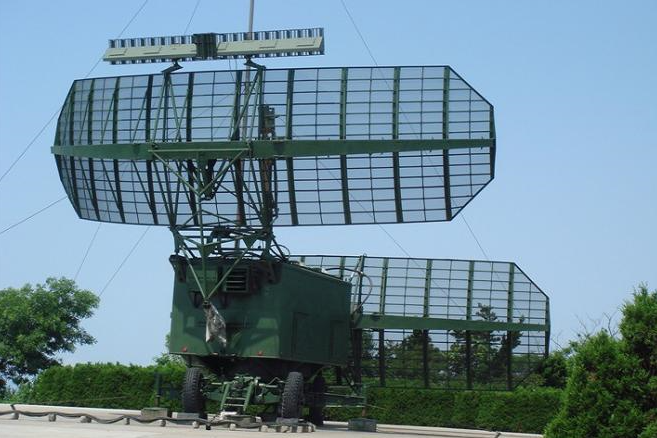
DAEJEON — In the rapidly evolving landscape of global defense, a specialized South Korean firm is proving that the backbone of national security lies in the invisible waves of radar and electronic warfare. Nexwil, a defense technology powerhouse based in Daejeon’s Yuseong District, is capturing international attention as it transitions from a key component supplier to a global innovator in integrated defense systems.
The company’s rise coincides with the booming success of the Cheongung-II (M-SAM) surface-to-air missile system. Nexwil supplies the critical Transmit-Receive Modules (TRM) for the export version of the Cheongung-II radar, a component that serves as the "eyes and ears" of the interceptor system. As Middle Eastern nations increasingly seek robust air defense to protect critical infrastructure, Nexwil’s technological footprint is expanding at an unprecedented rate.
A Foundation Built on R&D Intensity
Founded in 2005, Nexwil has spent over two decades honing its expertise in Digital RF Convergence Technology. Unlike many firms that focus on assembly, Nexwil is a research-heavy entity: approximately 65% of its workforce is dedicated to R&D, and the company reinvests over 7% of its annual revenue back into technological development.
"In today's geopolitical climate, radar technology is synonymous with national power," said Dr. Won-ki Seo, CEO of Nexwil, during the 'Innobiz PR Day' event. A veteran engineer with a Ph.D. in electronics, Seo emphasizes that the company’s edge lies in the internalization of core technologies. By handling RF hardware, digital signal processing, and software development entirely in-house, Nexwil produces equipment that is smaller, lighter, and more power-efficient than competitors—all while maintaining price competitiveness.
Strategic Leap: Convergence and Anti-Drone Warfare
Nexwil’s next growth engine is the fusion of radar and electronic warfare (EW). The company is currently developing an integrated short-range defense system that combines a radar, jammer, and scanner into a single unit.
"Integrated systems that can detect, analyze, and directionally neutralize threats are the future," Seo explained. "We are aiming for full commercialization of these hybrid products by the second half of this year."
This innovation is particularly relevant in the era of "drone warfare." As the threat from low-cost Unmanned Aerial Vehicles (UAVs) outweighs that of expensive traditional missiles, Nexwil has successfully developed miniaturized jammers capable of being mounted on drones or portable platforms. Unlike legacy jammers that broadcast interference indiscriminately, Nexwil’s smart-jamming tech analyzes specific threat signals to provide surgical counter-responses.
Record Performance and Global Aspirations
The financial markets are responding to Nexwil's technological strides. In the first quarter of 2026 alone, the company secured four major contracts totaling 18.6 billion KRW. With this momentum, Nexwil is confident it will exceed its annual revenue target of 30 billion KRW.
For the past twenty years, Nexwil has functioned primarily as a high-tier partner for major Korean defense conglomerates and the Agency for Defense Development (ADD). However, the company is now pivoting toward becoming a product-centric global brand.
"The last two decades were about accumulating the 'know-how.' Now, we are entering the stage where that knowledge is distilled into world-class proprietary products," Seo stated. As K-Defense continues its streak of multi-billion dollar exports, Nexwil stands ready to ensure that the "Made in Korea" label remains a gold standard for radar and electronic warfare across the globe.
[Copyright (c) Global Economic Times. All Rights Reserved.]