• 2026.03.07 (Sat)
  • All articles
  • LOGIN
  • JOIN
Global Economic Times
fashionrunwayshow2026
  • Synthesis
  • World
  • Business
  • Industry
  • ICT
  • Distribution Economy
  • Well+Being
  • Travel
  • Eco-News
  • Education
  • Korean Wave News
  • Opinion
  • Arts&Culture
  • Sports
  • People & Life
    • International Student Report
    • With Ambassador
  • Column
    • Cho Kijo Column
    • Cherry Garden Story
    • Ko Yong-chul Column
    • Kim Seul-Ong Column
    • Lee Yeon-sil Column
  • Photo News
  • New Book Guide
MENU
 
Home > World

Middle East Conflict Triggers Massive Cancellations of European Tours to Japan

Global Economic Times Reporter / Updated : 2026-03-07 13:31:00
  • -
  • +
  • Print

(C) Travel and Tour World


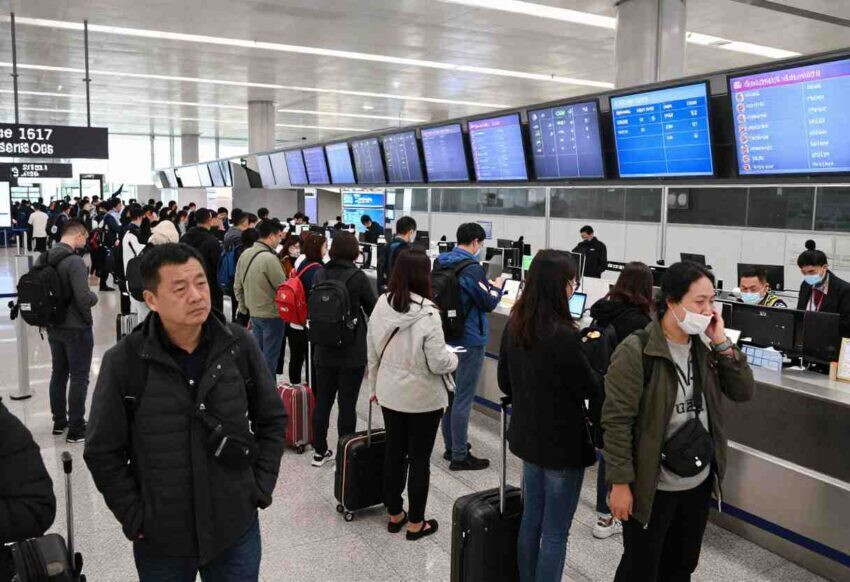
TOKYO — The escalating conflict in the Middle East following airstrikes by the U.S. and Israel against Iran is casting a long shadow over Japan’s tourism industry. What was expected to be a record-breaking spring season is now under threat as European travelers, wary of volatile flight paths and regional instability, cancel their bookings in droves.

The Impact on Local Economies
The ripple effects are being felt most acutely in traditional tourist hubs. According to the Hida Takayama Ryokan & Hotel Cooperative in Gifu Prefecture, a surge of cancellations has hit the region since the strikes began. As of March 5, the cooperative reported 59 major cancellations, affecting more than 360 travelers primarily from Germany and Italy.

"If the conflict persists into the peak cherry blossom season, it could deal a devastating blow to our local economy," a representative from the cooperative stated. "European tourists are high-spenders who typically stay longer than domestic travelers."
 
The Logistical Nightmare: No Easy Way East
The decline in European arrivals is inextricably linked to the geopolitical constraints on global aviation. Since Russia’s invasion of Ukraine in 2022, Western carriers have been barred from Russian airspace. This has forced European travelers to choose between two difficult options:

Ultra-long-haul direct flights that bypass Russia to the north or south, often resulting in higher ticket prices and longer travel times.
Transit hubs in the Middle East, such as Dubai, Doha, or Istanbul, which have become the primary gateways for Europeans traveling to East Asia.
With the Middle East now a high-risk zone, the perceived safety of these transit routes has plummeted. Travelers are opting to stay closer to home rather than risk being stranded or flying near a combat theater.

A Double Blow to Japanese Tourism
The sudden drop in European interest comes at a particularly vulnerable time for Japan. The industry was already reeling from a sharp decline in Chinese tourism—historically the backbone of Japan's visitor economy.

Political Tensions: Following Prime Minister Sanae Takaichi’s remarks in November 2023 regarding potential intervention in Taiwan, Beijing issued a travel advisory discouraging Chinese citizens from visiting Japan.
The Numbers: Data shows a stark downward trend. In December 2023, Chinese arrivals fell by 45% year-over-year. By January 2024, that gap widened to a 60% decrease.
Industry analysts had pinned their hopes on "diversification," looking to Europe and North America to fill the void left by Chinese travelers. The Sankei Shimbun reports that if the European market continues to shrink alongside the Chinese market, the entire Japanese tourism infrastructure—from luxury hotels to local transport—could face a significant contraction.

 
Looking Ahead
As the spring "Sakura" season approaches, the Japanese government and travel agencies are frantically searching for ways to reassure international markets. However, with the Middle Eastern conflict showing no signs of de-escalation, the "Golden Route" of Japanese tourism may remain quieter than usual this year.

The situation serves as a stark reminder of how sensitive international tourism remains to global conflict, even when the destination itself is thousands of miles away from the front lines.

[Copyright (c) Global Economic Times. All Rights Reserved.]

  • #globaleconomictimes
  • #micorea
  • #mykorea
  • #nammidonganews
  • #singaporenewsk
  • #Samsung
  • #Daewoo
  • #Hyosung
  • #Apple
  • #korea
Global Economic Times Reporter
Reporter Page

Popular articles

  • A New Milestone for Ukraine’s Post-War Reconstruction: The Birth of ISVP

  • About mexican food 

  • War Memorial Association Launches Youth Education Program Idea Contest

I like it
Share
  • Facebook
  • X
  • Kakaotalk
  • LINE
  • BAND
  • NAVER
  • https://globaleconomictimes.kr/article/1065587353158695 Copy URL copied.
Comments >

Comments 0

Weekly Hot Issue

  • L’Oréal Korea and Naver Forge Strategic Partnership to Revolutionize AI-Driven Beauty Commerce
  • Domino’s Korea Embraces "Authentic Stateside Flavors" with New American Classic Pizza Duo
  • K-Inner Beauty Dominates Japan: Sales Surge 90% on Qoo10 Japan
  • Sempio and KFRI Join Forces to Pioneer High-Value Food Technologies
  • LG H&H Expands Japanese Footprint: Vegan Brand 'Freshian' Debuts at Biople by CosmeKitchen
  • 29CM’s '29HOME WEEK' Shatters Records: Home & Interior Sales Triple in 10 Days

Most Viewed

1
Adwa’s Echo in Korea: A Shared Story of Dignity and Freedom
2
2026, The Grand Year of Hangeul Celebration — The River of History Where Five Streams Converge
3
A New Milestone for Ukraine’s Post-War Reconstruction: The Birth of ISVP
4
Mexican currency and the powerful history behind its designs
5
Revised and Expanded Edition of ‘Failure of Negotiations with North Korea: Truth and Solutions’ Published
광고문의
임시1
임시3
임시2

Hot Issue

Hanwha Aerospace Solidifies Baltic Stronghold with $330M Defense Investment in Estonia

From $20 to $400: The Explosive "Vintage Digicam" Craze Gripping Korea’s Gen Z and Millennials

Yujin Robot Evolves Industrial Automation: Integrating Autonomous Mobility and Collaborative Robotics

SK On Slashes 37% of US Workforce Amid Global EV Slowdown

Let’s recycle the old blankets in Jeju Island’s closet instead of incinerating them.

Global Economic Times
korocamia@naver.com
CEO : LEE YEON-SIL
Publisher : KO YONG-CHUL
Registration number : Seoul, A55681
Registration Date : 2024-10-24
Youth Protection Manager: KO YONG-CHUL
Singapore Headquarters
5A Woodlands Road #11-34 The Tennery. S'677728
Korean Branch
Phone : +82(0)10 4724 5264
#304, 6 Nonhyeon-ro 111-gil, Gangnam-gu, Seoul
Copyright © Global Economic Times All Rights Reserved
  • 에이펙2025
  • APEC2025가이드북TV
  • 독도는우리땅
Search
Category
  • All articles
  • Synthesis
  • World
  • Business
  • Industry
  • ICT
  • Distribution Economy
  • Well+Being
  • Travel
  • Eco-News
  • Education
  • Korean Wave News
  • Opinion
  • Arts&Culture
  • Sports
  • People & Life 
    • 전체
    • International Student Report
    • With Ambassador
  • Column 
    • 전체
    • Cho Kijo Column
    • Cherry Garden Story
    • Ko Yong-chul Column
    • Kim Seul-Ong Column
    • Lee Yeon-sil Column
  • Photo News
  • New Book Guide
  • Multicultural News
  • Jobs & Workers