![[등록] 2026-09-01 15:48:31](/support/_updata/banner2/tl181982910_6749.png)


(C) India Today
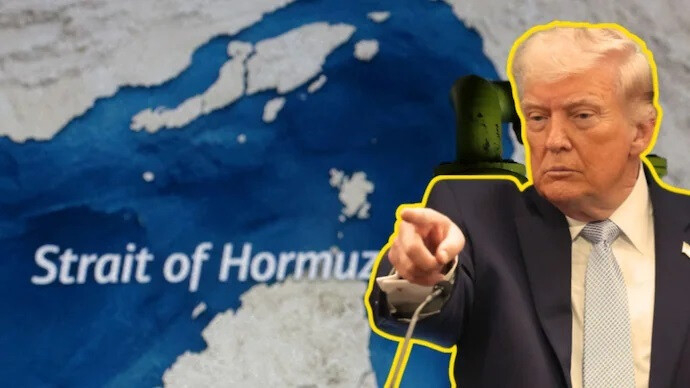
U.S. President Donald Trump has issued a stern public warning to Tehran over reports that Iran is moving to impose transit fees on vessels passing through the Strait of Hormuz. The President’s aggressive stance on social media appears to contradict his own statements made just twenty-four hours earlier, where he floated the idea of a "joint venture" between the U.S. and Iran to collect such tolls.
"They Better Not": Trump’s Social Media Warning
On Thursday (local time), President Trump took to his platform, Truth Social, to address growing concerns regarding maritime transit costs. "There are reports that Iran is charging tolls to tankers passing through the Strait of Hormuz," Trump wrote. "They better not be doing that. If true, it must stop immediately."
The President added a defiant note regarding global energy supplies, stating, "Oil will be flowing again soon, with or without Iran’s help," suggesting that the U.S. is prepared to ensure the passage of oil through the world’s most vital maritime chokepoint by force if diplomatic understandings fail.
From "Joint Venture" to Direct Threats
The President’s latest rhetoric marks a sharp pivot from his comments on Wednesday. In a phone interview with ABC News, Trump had suggested a surprisingly cooperative approach, stating that the U.S. and Iran were considering a "joint venture" to manage the Strait. He described this potential toll system as a way to "protect the Strait and keep it safe from other forces."
This followed a statement on April 6, where he argued that the United States, rather than Iran, should be the entity collecting fees for providing security in the region. The rapid shift from suggesting a shared business model to issuing a "stop immediately" order has left international observers and markets scrambling to discern the actual direction of U.S. foreign policy.
Tolls in Bitcoin and Yuan: The Iranian Proposal
The friction stems from reports that during the current two-week ceasefire, Tehran has been drafting plans to formalize a transit fee system. According to various media outlets, Iran is considering a fee structure that would require payments in cryptocurrencies like Bitcoin or the Chinese Yuan to bypass U.S.-led financial sanctions.
Industry insiders suggest that large tankers could be slapped with fees as high as $2 million per passage, while other reports indicate a levy of approximately $1 per barrel of crude oil. For a Supertanker (VLCC) carrying 2 million barrels, the costs would be staggering, further fueling global inflationary pressures.
White House in Damage Control
The White House has spent the last 24 hours attempting to reconcile the President’s disparate statements. Press Secretary Karoline Leavitt clarified the administration’s official stance during a briefing, emphasizing that the primary goal remains the unconditional reopening of the waterway.
"The President’s top priority is the full reopening of the Strait of Hormuz without any form of restriction," Leavitt said. She further noted that the current ceasefire is predicated on the "free flow of navigation without the imposition of Iranian tolls."
Global Energy Markets on Edge
Despite the nominal ceasefire, the situation on the ground—or rather, on the water—remains dire. Currently, between 230 and 300 vessels are anchored in a massive maritime traffic jam, waiting for permission to transit. Operationally, the Strait remains under the de facto control of the Iranian military, with movement restricted to those who receive explicit clearance from Tehran.
The uncertainty surrounding the "toll controversy" and the fragility of the ceasefire have sent shockwaves through the energy markets. International oil prices are once again flirting with the $100-per-barrel mark, threatening to derail the global economic recovery and worsen the "Stagflation" fears recently highlighted by the Asian Development Bank (ADB).
[Copyright (c) Global Economic Times. All Rights Reserved.]