![[등록] 2026-09-01 15:48:31](/support/_updata/banner2/tl181982910_6749.png)


(C) France24
WASHINGTON – A catastrophic winter storm accompanied by record-breaking arctic temperatures has descended upon North America, plunging the vast majority of the United States and Canada into a state of emergency. As of January 24 (local time), the National Weather Service (NWS) has issued an unprecedented series of warnings, including ice storms, extreme cold, and blizzards, affecting an estimated 200 million people.
“A Life-Threatening Event”: Record Lows and Blizzards
Meteorologists are describing the current system as a "blockbuster" storm of historic proportions. Ken Graham, Director of the NWS, issued a stern warning characterizing the weather as "extremely dangerous." The geographic scale is staggering, stretching from the Southwest to the Northeast.
Temperature forecasts have reached lethal levels. Minnesota is expected to plummet to -40°C, while parts of Quebec, Canada, are bracing for wind chills as low as -50°C. A massive snow cloud, currently stretching over 1,300 miles, is projected to expand to 2,000 miles, blanketing major metropolitan areas. New York City alone is anticipating at least 30cm of snowfall, while mountainous regions remain under high-risk avalanche warnings.
The Peril of “Catastrophic Freezing”
While snow remains a primary concern, experts are warning of "catastrophic ice accumulation" caused by freezing rain. This phenomenon is particularly destructive to infrastructure; as ice coats power lines and trees, the added weight leads to widespread snapped cables and structural collapses.
The crisis has already begun in Texas, where over 55,000 power outages were reported within the first few hours of the storm. Officials fear that hundreds of thousands of households may lose heating and electricity as the system moves northeast.
Total Gridlock and States of Emergency
The impact on transportation and civil governance has been immediate:
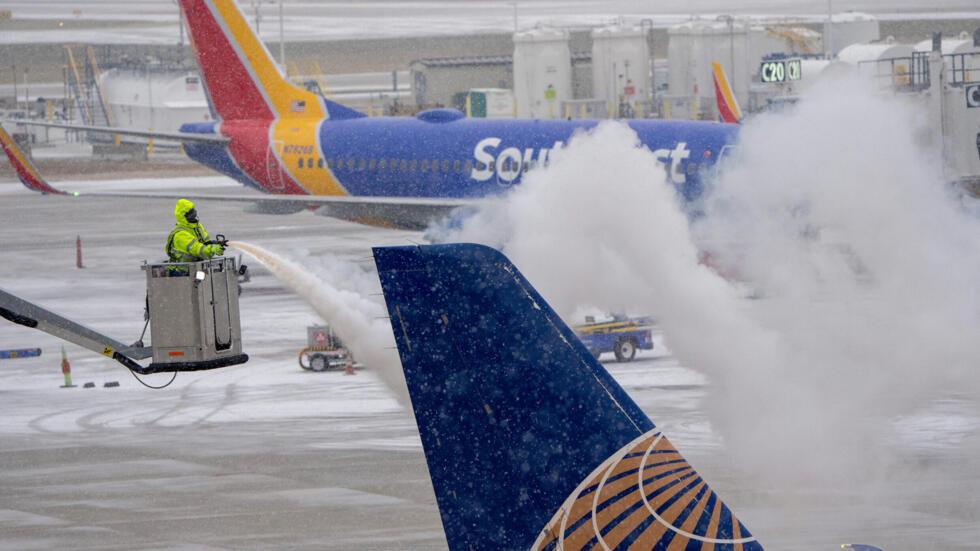
Aviation Crisis: Airlines have canceled approximately 13,000 flights over the weekend, leaving thousands of travelers stranded.
Government Shutdowns: 18 states and Washington D.C. have declared a State of Emergency. Federal offices in the capital are scheduled to remain closed on the 26th.
Civic Disruptions: Schools across the affected regions have suspended classes, and early voting for a special election in New York City, originally set for the 25th, has been postponed.
Supply Chain Strain and Panic Buying
Fear of prolonged isolation has triggered a wave of "panic buying." Local media reports show supermarket shelves stripped bare of essentials as residents stock up on food and water. Furthermore, a shortage of calcium chloride (road salt) in New Jersey, Pennsylvania, and Ohio has raised concerns that major highways may remain impassable for days, further crippling the supply chain.
As the storm continues its trajectory, federal authorities are urging all residents within the impact zone to remain indoors, warning that the "once-in-a-generation" conditions make any travel potentially fatal.
[Copyright (c) Global Economic Times. All Rights Reserved.]