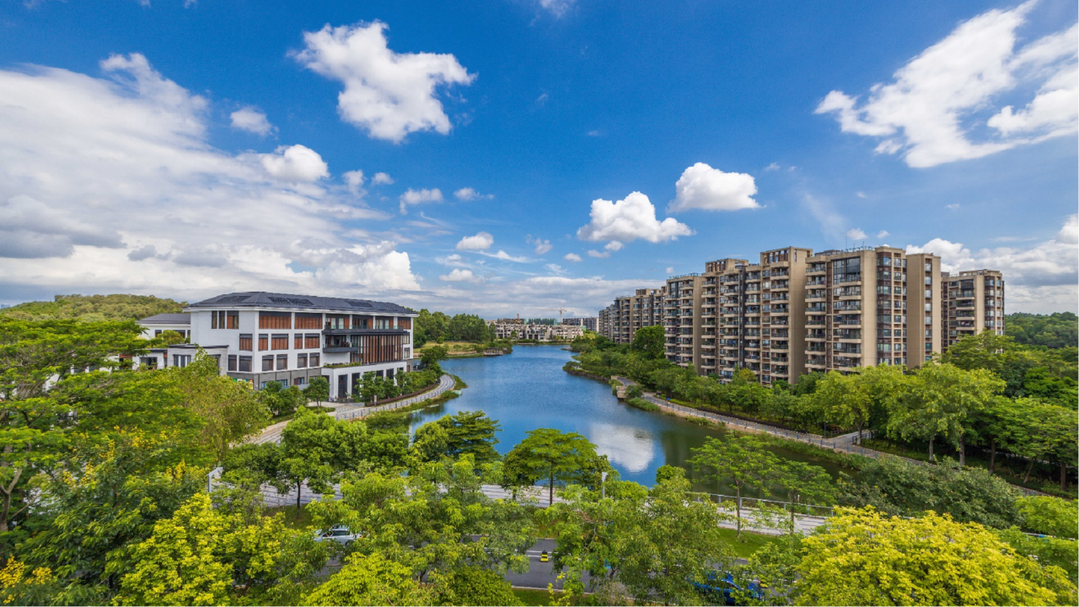
When managing green spaces in multi-family housing complexes, maintenance typically revolves around trimming grass and pruning trees. However, a residential development in southern China is expanding that mandate to include local birds, insects, and aquatic life—translating biological surveys into everyday property management and resident guidelines.
Located in the Shishan area of Foshan, within the Guangzhou-Foshan metropolitan zone of Guangdong province, the "Guangfo New World" residential complex has become a testing ground for urban biodiversity. Developed by New World China, a subsidiary of the Hong Kong-based New World Development, the project recently drew local media attention for introducing a community-wide "nature-friendly covenant."
According to local reports, representatives from the municipal government, property management, ecological societies, local merchants, and residents gathered to publicly adopt the pledge. The agreement commits the community to protecting wildlife habitats, practicing mindful nature observation, sorting waste properly, and participating in volunteer ecological patrols.
Integrating Biodiversity into Daily Operations
Since 2024, the complex has been documenting local wildlife with the help of specialized ecological organizations. Rather than leaving biodiversity data locked away in technical reports, the management team integrates forests and wetlands used by local fauna into its routine maintenance schedule, supported by resident-led patrols and environmental education.
Recent community activities included training volunteer bird-protection patrols and applying bird-strike prevention stickers to glass windows—though experts note that the actual reduction in collisions requires separate, ongoing monitoring. In recognition of these efforts, the Guangzhou Nature Observation Association, a local non-profit, awarded the complex a plaque designating it as an "Eco-Friendly and Nature Observation Demonstration Community." While this award reflects civic recognition rather than official government conservation status, it signals a shift in how residential communities engage with local ecosystems.
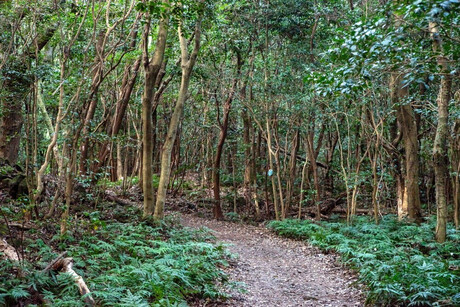
According to New World Development’s sustainability reports, the entire project spans roughly 300 hectares—equivalent to about 420 standard soccer fields—encompassing residential zones alongside approximately 33 hectares of natural lakes and 47 hectares of forest. Field surveys conducted between August 2024 and June 2025 identified 53 bird species, 105 insect species, and 62 plant species, while flagging invasive plants as a key management challenge. Moving forward, the developer plans to improve freshwater wetlands and prioritize native flora.
Reading the Numbers Carefully
Updated local reports indicate that the number of recorded bird species rose to 62 by June 2026. While this marks an increase from the 53 species documented in the company's earlier report, ecologists caution against interpreting raw species counts as immediate proof of ecosystem recovery.
Variations in survey duration, seasonal timing, observation zones, and frequency can significantly influence how many species are spotted. A higher tally could reflect the establishment of new habitats, or simply more thorough observation over a longer period. Accurately assessing ecological recovery requires standardized, repeated monitoring of breeding success, population sizes, and habitat conditions, measured against a pre-development baseline that accounts for habitats lost during initial construction.
Lessons for South Korea’s Apartment Culture
For South Korea, where apartment complexes dominate the urban landscape, the takeaway from Foshan is not necessarily about building massive artificial lakes or forests, but about redefining how existing green spaces are managed.
Currently, greenery in Korean apartment complexes is viewed almost exclusively through the lens of visual landscaping, largely overlooking its potential as an ecological stepping stone that connects fragmented urban habitats. By incorporating resident observations and basic ecological surveys, Korean property managers could rethink mowing and pruning schedules, reduce pesticide use, adjust nighttime lighting, and mitigate bird-window collisions.
To ensure these measures endure, ecological guidelines must be written directly into maintenance contracts, with costs and outcomes transparently shared with residents. Tracking metrics such as native plant establishment, active breeding, and habitat connectivity—rather than just counting planted trees or event attendees—would mark a meaningful step forward.
A developer’s environmental responsibility does not end when construction is complete. As China increasingly takes bold steps in urban biodiversity management, rethinking apartment complexes as spaces for coexistence and ecological learning offers a practical path forward for South Korea’s urban environments.
[Copyright (c) Global Economic Times. All Rights Reserved.]