• 2026.11.24 (Tue)
  • All articles
  • LOGIN
  • JOIN
Global Economic Times
한인동포뉴스(상단)
  • Synthesis
  • World
  • Business
  • Industry
  • ICT
  • Distribution Economy
  • Well+Being
    • Pet Life
    • Halal Horizon
  • Travel
  • Eco-News
  • Education
  • Korean Wave News
  • Opinion
  • Arts&Culture
  • Sports
  • People & Life
    • International Student Report
    • With Ambassador
  • Column
    • Cho Kijo Column
    • Cherry Garden Story
    • Ko Yong-chul Column
    • Kim Bong-seon's Photo Column
    • Kim Seul-Ong Column
    • Lee Yeon-sil Column
    • Professor Lee Soo-young’s Life Essays
  • Photo News
  • New Book Guide
MENU
 
Home > Eco-News

AI and Chip Boom Threaten South Korea’s 2035 Climate Goals, Experts Warn

Kim Young Min Reporter / Updated : 2026-11-24 12:36:21
  • -
  • +
  • Print

SEOUL — South Korea’s ambitious 2035 climate targets face a severe reality check as surging electricity demand from artificial intelligence (AI) data centers and semiconductor megaprojects outpaces the country’s ability to deploy carbon-free energy, energy and policy experts warned on Monday.

During a special seminar hosted by the Korean Society of Climate Change Research and the Korea Institute of Climate Change in central Seoul, specialists called for a fundamental overhaul of how the government drafts its upcoming 12th Basic Plan for Long-Term Electricity Supply and Demand (BPE) and aligns it with the national carbon market.

The 354-TWh Carbon-Free Dilemma

According to Choi Hyung-sik, a senior researcher at the Korea Environment Institute (KEI), factoring in major industrial megaprojects puts South Korea’s projected 2035 power demand on a collision course with its Nationally Determined Contribution (NDC) under the Paris Agreement.

With national power consumption projected to hit roughly 800 terawatt-hours (TWh) by 2035, existing renewable energy targets and planned power plant additions still leave a supply gap of 121.6 TWh. If the country were to replace the 232.4 TWh of natural gas generation currently permitted under its climate roadmap, the total shortfall of carbon-free electricity would balloon to 353.9 TWh.

"Nuclear reactors and offshore wind farms require roughly a decade from initial planning to commercial operation," Choi noted, explaining that policymakers may be forced to rely on natural gas—which has a much shorter construction lead time—inevitably driving up carbon emissions. He warned that unchecked industrial power demand could pit South Korea’s AI Transformation (AX) directly against its Green Transformation (GX).

To bridge this gap, Choi urged policymakers to:

Split demand forecasts: Separate guaranteed baseline demand from "conditional" industrial demand to prevent overbuilding fossil-fuel infrastructure.
Boost grid flexibility: Accelerate the rollout of solar power, energy storage systems (ESS), and transmission networks while enabling flexible operations for nuclear plants.
Mandate climate alignment: Legally bind the electricity master plan to 2035 and 2040 emissions reduction targets backed by stricter carbon price signals.
Rethinking Rigid Forecasting Models

Lim Dong-soon, a professor at Dong-eui University, criticized traditional single-point demand forecasting as outdated in an era of rapid industrial shifts and climate volatility.

"A single exact prediction is impossible," Lim said, advocating for a probabilistic, option-based forecasting model that accounts for global supply chain shifts and industrial demand fluctuations. He emphasized that extreme weather events, energy efficiency gains, and demand response (DR) programs must be built into capacity calculations as fixed variables rather than loose assumptions, supported by continuous "rolling updates" to the national grid plan.

Synchronizing Power Plans with Carbon Markets

Beyond power generation, aligning the electricity plan with the Korea Emissions Trading Scheme (K-ETS) is critical to preventing market distortions, according to Kwon Dong-hyuk, Vice President at BNZ Partners.

Kwon highlighted a structural mismatch in how carbon costs are passed through to consumers. While the carbon cost component in household climate and environment charges has remained frozen at 1.1 won per kWh since 2023, generators factor allowance costs into the System Marginal Price (SMP), influencing dispatch orders and driving up wholesale electricity costs.

He called for greater transparency in setting climate charges and urged regulators to adjust settlement rules so that power generators—rather than everyday consumers—absorb excess carbon compliance costs. Additionally, Kwon recommended publishing official long-term forecasts for electricity emission factors to help corporations manage their carbon liabilities, and earmarking revenues from carbon allowance auctions strictly for grid modernization and electrification.

[Copyright (c) Global Economic Times. All Rights Reserved.]
  • #Cherry Garden
  • #HalalFood
  • #Halal
  • #Petlife
  • #Cats
  • #Dogs
  • #Halalhorizone
  • #Hormuz Impasse
  • #Joseon
  • #globaleconomicti
Kim Young Min Reporter
Kim Young Min Reporter 前 환경데일리 발행인, mkTaiwan 편집인.

Popular articles

  • Stepping into the Shoes of a Joseon Scholar: Daejeon Museum Launches Immersive 'Life Game' Exhibition

  • Qnity Strengthens 'Customer Collaboration' Strategy for Semiconductor Material Innovation… “Shortening South Korea’s Semiconductor Development Cycles”

  • Bitcoin Slumps for a Second Day Amid Record Binance Hack, Tech Sell-Off, and Rising Oil Prices

I like it
Share
  • Facebook
  • X
  • Kakaotalk
  • LINE
  • BAND
  • NAVER
  • https://globaleconomictimes.kr/article/1065584060365617 Copy URL copied.
Comments >

Comments 0

Weekly Hot Issue

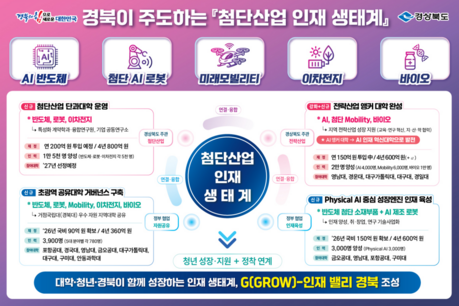
  • Gyeongsangbuk-do to Foster 42,000 Talents in AI, Semiconductors, Robotics, and More236 Billion KRW Invested in Building an Advanced Industry Talent Ecosystem!
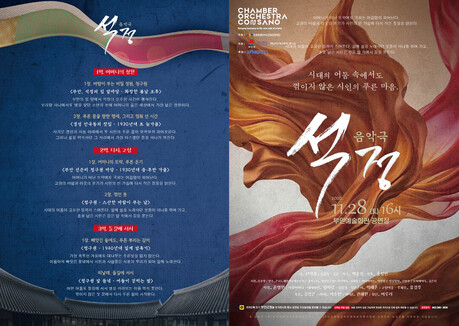
  • Jeonbuk State Culture & Tourism Foundation × Consano Present Original Musical Drama Seokjeong, Depicting the Life of Poet Shin Seok-jeong, in Buan
  • Bucheon Overhauls Local Currency Incentives, Shifting to Payment-Based Cashback
  • Gyeongsangbuk-do Unveils Massive Multi-Billion-Won Plan to Build High-Tech Talent Ecosystem
  • South Korean Firm’s Sunlight-Powered Floating Spheres Offer Chemical-Free Fix for Toxic Algal Blooms
  • Beyond Manicured Lawns: How a Chinese Residential Complex Turns Urban Greenery into Wildlife Habitats

Most Viewed

1
South Korea and Ethiopia Sign Trilateral MOU to Introduce Liquid-Based Cytology (LBC) Technology for Cervical Cancer Diagnosis
2
South Korean Burger Chain Lotteria Expands Singapore Footprint with Halal Certification and New Teriyaki Lineup
3
AI Semiconductor Stocks Plummet: Philadelphia Index Drops 5.28% and Micron Plunges 7.59% Amid Executive Shakeup and Export Restrictions
4
"Stay Out, Get Paid, or Have Police Stay With You": Shenzhen Imposes Strict Security Ahead of APEC Summit
5
Taiwan Bans Short-Selling Below Previous Close Starting Nov. 23, Raises Margin Ratio to 150%
체리가든 스토리
nutri huevos
로타리
동포저널

Hot Issue

Nvidia Reinstates Jensen Huang After 11-Day Ouster, Sparking Massive Market Rally

Fading Hype and Ethics Scrutiny Shadow Trump’s Second Meme Coin Gala

GOP Pushback on Pentagon Nominees Signals Early Lame-Duck Era for Trump

Fashion Runway Show 2026

Let’s recycle the old blankets in Jeju Island’s closet instead of incinerating them.

Global Economic Times
korocamia@naver.com
CEO : LEE YEON-SIL
Publisher & Editor : KO YONG-CHUL
Registration number : Seoul, A55681
Registration Date : 2024-10-24
Youth Protection Manager: KO YONG-CHUL
Singapore Headquarters
5A Woodlands Road #11-34 The Tennery. S'677728
Korean Branch
Phone : +82(0)10 4724 5264
#304, 6 Nonhyeon-ro 111-gil, Gangnam-gu, Seoul
Copyright © Global Economic Times All Rights Reserved
  • News K
  • 반달곰 프로젝트
  • 광고문의
Search
Category
  • All articles
  • Synthesis
  • World
  • Business
  • Industry
  • ICT
  • Distribution Economy
  • Well+Being 
    • 전체
    • Pet Life
    • Halal Horizon
  • Travel
  • Eco-News
  • Education
  • Korean Wave News
  • Opinion
  • Arts&Culture
  • Sports
  • People & Life 
    • 전체
    • International Student Report
    • With Ambassador
  • Column 
    • 전체
    • Cho Kijo Column
    • Cherry Garden Story
    • Ko Yong-chul Column
    • Kim Bong-seon's Photo Column
    • Kim Seul-Ong Column
    • Lee Yeon-sil Column
    • Professor Lee Soo-young’s Life Essays
  • Photo News
  • New Book Guide
  • Overseas Koreans
  • Multicultural News