• 2026.11.24 (Tue)
  • All articles
  • LOGIN
  • JOIN
Global Economic Times
한인동포뉴스(상단)
  • Synthesis
  • World
  • Business
  • Industry
  • ICT
  • Distribution Economy
  • Well+Being
    • Pet Life
    • Halal Horizon
  • Travel
  • Eco-News
  • Education
  • Korean Wave News
  • Opinion
  • Arts&Culture
  • Sports
  • People & Life
    • International Student Report
    • With Ambassador
  • Column
    • Cho Kijo Column
    • Cherry Garden Story
    • Ko Yong-chul Column
    • Kim Bong-seon's Photo Column
    • Kim Seul-Ong Column
    • Lee Yeon-sil Column
    • Professor Lee Soo-young’s Life Essays
  • Photo News
  • New Book Guide
MENU
 
Home > World

Micron Accelerates HBM Expansion in Singapore and Taiwan, Locking in Equipment Supply Through Next Year

LEE YEON SIL Reporter / Updated : 2026-11-24 06:39:06
  • -
  • +
  • Print


U.S. chipmaker ramps up back-end packaging capacity and HBM4 output to narrow the gap with South Korean rivals SK Hynix and Samsung Electronics.

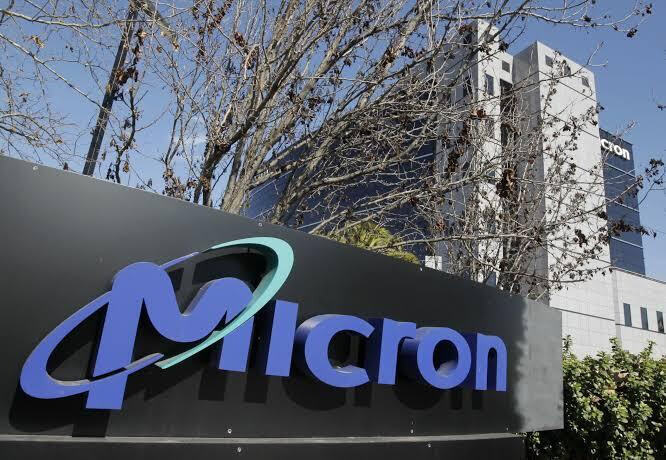
Micron Technology is aggressively scaling up its High Bandwidth Memory (HBM) production footprint across Singapore and Taiwan, intensifying competition in the sixth-generation HBM4 market. By fast-tracking investments in back-end packaging facilities and securing essential manufacturing tools well ahead of schedule, the U.S. memory giant is positioning itself to challenge the dominance of SK Hynix and Samsung Electronics.

According to industry sources on the 24th, Micron began moving its first batch of production machinery into its new HBM packaging plant in Singapore on the 19th, aiming to initiate initial operations in early 2027. The total investment for the facility is estimated at $7 billion. Micron expects the Singapore line to begin making meaningful contributions to its overall HBM packaging capacity starting in the first half of next year.

This rapid deployment aligns with Micron’s broader capital expenditure strategy. During its recent earnings call, the company projected roughly $25 billion in capital spending for the first half of fiscal year 2027 (September 2026 to August 2027), with plans to increase spending further in the second half. While a significant portion of the budget targets cleanroom construction slated for late 2028 and beyond, Micron has pulled forward expenditures for key manufacturing equipment. Industry analysts interpret this front-loaded spending as a sign that Micron has already secured substantial supply commitments from major AI hardware buyers, including Nvidia and Google.

Market watchers estimate that Micron’s HBM wafer capacity will nearly double year-over-year to roughly 100,000 wafers per month by the end of this year. Although its wafer output remains roughly half that of Samsung and SK Hynix, the continuous arrival of packaging tools in Singapore and Taiwan is expected to drive steep volume growth.

On the technological front, Micron’s HBM4 competitiveness is viewed as having largely caught up with its South Korean peers. Having started mass production of 12-layer, 36GB HBM4 chips exceeding 11 Gbps per pin in March, Micron is now sampling 16-layer, 48GB variants with clients. Earlier in June, Nvidia CEO Jensen Huang confirmed in Seoul that all three major memory suppliers had passed qualification for HBM4 destined for Nvidia's upcoming Vera Rubin architecture.

Despite these technical milestones, Micron still trails in overall market share. Counterpoint Research estimates second-quarter HBM market share at 50% for SK Hynix, 33% for Samsung Electronics, and 18% for Micron. For Vera Rubin HBM4 allocations, SK Hynix is projected to supply 60% to 70% and Samsung 25% to 30%, leaving the remainder to Micron—though these ratios remain fluid.

"HBM4 supplied to customers like Nvidia and AMD splits into standard and high-end tiers," a semiconductor equipment industry official noted. "While Samsung holds a strong lead in the high-end segment, the high-volume mid-end market is shaping up to be a head-to-head battle between SK Hynix and Micron."

Micron’s aggressive expansion is also providing a major tailwind for South Korean equipment supplier Hanmi Semiconductor, which provides Non-Conductive Film (NCF) thermal compression (TC) bonders—including the first tools recently delivered to Micron's Singapore plant. While Hanmi Semiconductor ceased voluntary order disclosures earlier this year, industry observers note that Micron’s new capital commitments outpace those of its two HBM rivals. A Hanmi Semiconductor representative stated that Micron accounts for a substantial and growing share of its overseas revenue, adding that the majority of its HBM equipment capacity through next year has already been pre-ordered.

[Copyright (c) Global Economic Times. All Rights Reserved.]

  • #Cherry Garden
  • #HalalFood
  • #Halal
  • #Petlife
  • #Cats
  • #Dogs
  • #Halalhorizone
  • #Hormuz Impasse
  • #Joseon
  • #globaleconomicti
LEE YEON SIL Reporter

Popular articles

  • South Korean Burger Chain Lotteria Expands Singapore Footprint with Halal Certification and New Teriyaki Lineup

  • Capturing Busan's Flavors and Stories! Busan Tourism Star Enterprises Elevate Local Gastronomy and Souvenir Content

  • "77% of Practice Dogs in Pet Grooming Academies Sourced from Breeding Farms"... Blind Spots in Zoonotic Disease Management

I like it
Share
  • Facebook
  • X
  • Kakaotalk
  • LINE
  • BAND
  • NAVER
  • https://globaleconomictimes.kr/article/1065562687366433 Copy URL copied.
Comments >

Comments 0

Weekly Hot Issue

  • Stop Storing Leftover Ham in Its Original Packaging to Prevent Fridge Cross-Contamination
  • Netanyahu Demands Unity Government, Accuses Rivals of Minimizing Iranian Threat
  • Libya Condemns Ukrainian Strikes on Russian Vessels, Demands Clarification
  • China’s AI Sector Faces Severe Cash Crunch as Open-Source Strategy Backfires
  • South Korea’s Chunmoo Faces New Budget Rival as Philippines Eyes Indian Pinaka Rocket System
  • Japan Weighs New Levy on Cosmetic Clinics to Curb Rural Doctor Shortage

Most Viewed

1
South Korea and Ethiopia Sign Trilateral MOU to Introduce Liquid-Based Cytology (LBC) Technology for Cervical Cancer Diagnosis
2
South Korean Burger Chain Lotteria Expands Singapore Footprint with Halal Certification and New Teriyaki Lineup
3
AI Semiconductor Stocks Plummet: Philadelphia Index Drops 5.28% and Micron Plunges 7.59% Amid Executive Shakeup and Export Restrictions
4
"Stay Out, Get Paid, or Have Police Stay With You": Shenzhen Imposes Strict Security Ahead of APEC Summit
5
Taiwan Bans Short-Selling Below Previous Close Starting Nov. 23, Raises Margin Ratio to 150%
체리가든 스토리
nutri huevos
로타리
동포저널

Hot Issue

Nvidia Reinstates Jensen Huang After 11-Day Ouster, Sparking Massive Market Rally

Fading Hype and Ethics Scrutiny Shadow Trump’s Second Meme Coin Gala

GOP Pushback on Pentagon Nominees Signals Early Lame-Duck Era for Trump

Fashion Runway Show 2026

Let’s recycle the old blankets in Jeju Island’s closet instead of incinerating them.

Global Economic Times
korocamia@naver.com
CEO : LEE YEON-SIL
Publisher & Editor : KO YONG-CHUL
Registration number : Seoul, A55681
Registration Date : 2024-10-24
Youth Protection Manager: KO YONG-CHUL
Singapore Headquarters
5A Woodlands Road #11-34 The Tennery. S'677728
Korean Branch
Phone : +82(0)10 4724 5264
#304, 6 Nonhyeon-ro 111-gil, Gangnam-gu, Seoul
Copyright © Global Economic Times All Rights Reserved
  • News K
  • 반달곰 프로젝트
  • 광고문의
Search
Category
  • All articles
  • Synthesis
  • World
  • Business
  • Industry
  • ICT
  • Distribution Economy
  • Well+Being 
    • 전체
    • Pet Life
    • Halal Horizon
  • Travel
  • Eco-News
  • Education
  • Korean Wave News
  • Opinion
  • Arts&Culture
  • Sports
  • People & Life 
    • 전체
    • International Student Report
    • With Ambassador
  • Column 
    • 전체
    • Cho Kijo Column
    • Cherry Garden Story
    • Ko Yong-chul Column
    • Kim Bong-seon's Photo Column
    • Kim Seul-Ong Column
    • Lee Yeon-sil Column
    • Professor Lee Soo-young’s Life Essays
  • Photo News
  • New Book Guide
  • Overseas Koreans
  • Multicultural News