• 2026.11.24 (Tue)
  • All articles
  • LOGIN
  • JOIN
Global Economic Times
한인동포뉴스(상단)
  • Synthesis
  • World
  • Business
  • Industry
  • ICT
  • Distribution Economy
  • Well+Being
    • Pet Life
    • Halal Horizon
  • Travel
  • Eco-News
  • Education
  • Korean Wave News
  • Opinion
  • Arts&Culture
  • Sports
  • People & Life
    • International Student Report
    • With Ambassador
  • Column
    • Cho Kijo Column
    • Cherry Garden Story
    • Ko Yong-chul Column
    • Kim Bong-seon's Photo Column
    • Kim Seul-Ong Column
    • Lee Yeon-sil Column
    • Professor Lee Soo-young’s Life Essays
  • Photo News
  • New Book Guide
MENU
 
Home > World

China Eases Restrictions on Korean Games and Films, While K-Pop Remains Sidelined

KO YONG-CHUL Reporter / Updated : 2026-11-24 06:44:07
  • -
  • +
  • Print

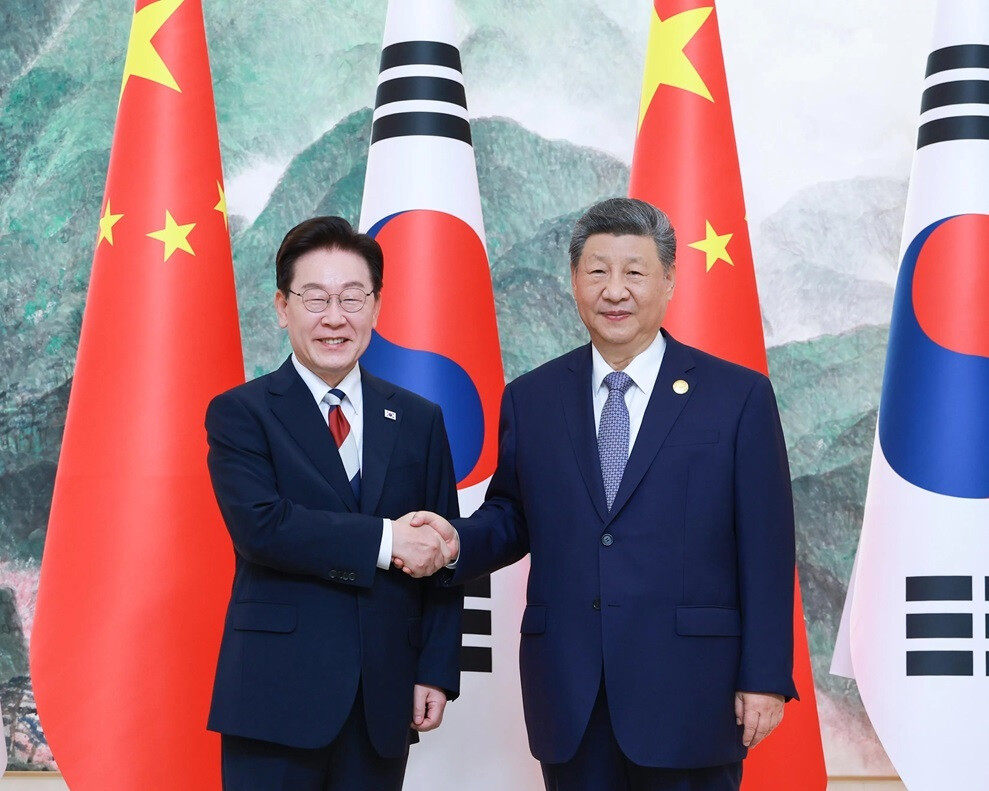
SEOUL — Beijing is selectively opening its cultural market to South Korea, easing long-standing trade barriers on films and video games while keeping live K-pop performances under tight restriction. The policy shift follows a substantial breakthrough in service and investment negotiations under the Korea-China Free Trade Agreement (FTA), reached by South Korean President Lee Jae-myung and Chinese President Xi Jinping during the recent APEC summit in Shenzhen.

According to South Korean government officials, both nations are currently conducting legal reviews after concluding the core negotiations on November 18—nearly nine years after talks began in March 2018. Under the updated pact, China has agreed for the first time in a trade deal to grant Most-Favored-Nation (MFN) status to South Korean films and online games, promising non-discriminatory treatment in pre-release censorship and market access. Live entertainment, including K-pop concerts, was notably omitted from the agreement.

A Decade of De Facto Bans

Since 2016, when diplomatic tensions flared over the deployment of the U.S. THAAD missile defense system in South Korea, Beijing has maintained an unofficial blockade on Korean pop culture. Data from South Korea’s Ministry of Culture, Sports and Tourism highlights the stark imbalance: between 2016 and September of this year, only a single South Korean movie was approved for theatrical release in China, compared to 355 Chinese films screened in South Korea. Meanwhile, major K-pop stadium tours in mainland China have been virtually nonexistent.

Confidence in Domestic Industries vs. "Cultural Security"

Industry observers point out that Beijing’s selective liberalization reflects both growing confidence in its domestic media sectors and persistent political anxieties.

Analysts specializing in Chinese affairs note that Beijing views large-scale, non-state-sponsored public gatherings—such as massive K-pop concerts—as a potential risk to social stability and "cultural security," a sensitivity rooted in historical precedents like the 1976 Tiananmen protests.

Conversely, China’s domestic film and gaming industries have matured significantly over the past decade, insulating them from foreign competition:

Film & Short-Form Drama: According to the China Film Administration, domestic box office revenue surged 55% from 26.6 billion yuan in 2016 to 41.3 billion yuan last year, capturing nearly 80% of the local market. Furthermore, China’s booming paid short-form drama market surpassed 100 billion yuan last year—double its entire theatrical box office—presenting a lucrative new monetization avenue for Korean creators.
Gaming: Figures from the China Audio-Video and Digital Publishing Association show that China’s domestic gaming revenue more than doubled over nine years, reaching 350.8 billion yuan last year. Chinese developers are also dominating globally, generating over $20.4 billion in overseas sales, with South Korea serving as their third-largest mobile export market. Despite this, only 12 games utilizing South Korean intellectual property received Chinese operating licenses (banhao) in the first eight months of this year.

Navigating Strict Censorship

With Chinese gaming giants like HoYoverse and Bilibili Games taking center stage at major Korean expos like G-STAR 2026, Beijing appears assured that its homegrown studios can hold their own against Korean competitors.

For South Korean studios and filmmakers, the FTA breakthrough offers a vital lifeline into one of the world’s largest consumer markets. However, digital policy and gaming experts emphasize that market access does not mean unrestricted freedom. Korean companies will need to adopt localized strategies—including modifying character designs and storylines—to successfully navigate China’s strict ideological censorship guidelines.

[Copyright (c) Global Economic Times. All Rights Reserved.]

  • #Cherry Garden
  • #HalalFood
  • #Halal
  • #Petlife
  • #Cats
  • #Dogs
  • #Halalhorizone
  • #Hormuz Impasse
  • #Joseon
  • #globaleconomicti
KO YONG-CHUL Reporter
Reporter Page

Popular articles

  • Culinary Mashups and Nostalgia with a Twist: South Korea’s F&B Giants Vie for Consumer Attention

  • Japanese Hotel Prices Surge Nearly 9% Amid Booming Korean Tourism

  • AI Health and Wellness: How Generations Differ in Their Use of Artificial Intelligence

I like it
Share
  • Facebook
  • X
  • Kakaotalk
  • LINE
  • BAND
  • NAVER
  • https://globaleconomictimes.kr/article/1065562933506788 Copy URL copied.
Comments >

Comments 0

Weekly Hot Issue

  • Stop Storing Leftover Ham in Its Original Packaging to Prevent Fridge Cross-Contamination
  • Netanyahu Demands Unity Government, Accuses Rivals of Minimizing Iranian Threat
  • Libya Condemns Ukrainian Strikes on Russian Vessels, Demands Clarification
  • China’s AI Sector Faces Severe Cash Crunch as Open-Source Strategy Backfires
  • South Korea’s Chunmoo Faces New Budget Rival as Philippines Eyes Indian Pinaka Rocket System
  • Japan Weighs New Levy on Cosmetic Clinics to Curb Rural Doctor Shortage

Most Viewed

1
South Korea and Ethiopia Sign Trilateral MOU to Introduce Liquid-Based Cytology (LBC) Technology for Cervical Cancer Diagnosis
2
South Korean Burger Chain Lotteria Expands Singapore Footprint with Halal Certification and New Teriyaki Lineup
3
AI Semiconductor Stocks Plummet: Philadelphia Index Drops 5.28% and Micron Plunges 7.59% Amid Executive Shakeup and Export Restrictions
4
"Stay Out, Get Paid, or Have Police Stay With You": Shenzhen Imposes Strict Security Ahead of APEC Summit
5
Taiwan Bans Short-Selling Below Previous Close Starting Nov. 23, Raises Margin Ratio to 150%
체리가든 스토리
nutri huevos
로타리
동포저널

Hot Issue

Nvidia Reinstates Jensen Huang After 11-Day Ouster, Sparking Massive Market Rally

Fading Hype and Ethics Scrutiny Shadow Trump’s Second Meme Coin Gala

GOP Pushback on Pentagon Nominees Signals Early Lame-Duck Era for Trump

Fashion Runway Show 2026

Let’s recycle the old blankets in Jeju Island’s closet instead of incinerating them.

Global Economic Times
korocamia@naver.com
CEO : LEE YEON-SIL
Publisher & Editor : KO YONG-CHUL
Registration number : Seoul, A55681
Registration Date : 2024-10-24
Youth Protection Manager: KO YONG-CHUL
Singapore Headquarters
5A Woodlands Road #11-34 The Tennery. S'677728
Korean Branch
Phone : +82(0)10 4724 5264
#304, 6 Nonhyeon-ro 111-gil, Gangnam-gu, Seoul
Copyright © Global Economic Times All Rights Reserved
  • News K
  • 반달곰 프로젝트
  • 광고문의
Search
Category
  • All articles
  • Synthesis
  • World
  • Business
  • Industry
  • ICT
  • Distribution Economy
  • Well+Being 
    • 전체
    • Pet Life
    • Halal Horizon
  • Travel
  • Eco-News
  • Education
  • Korean Wave News
  • Opinion
  • Arts&Culture
  • Sports
  • People & Life 
    • 전체
    • International Student Report
    • With Ambassador
  • Column 
    • 전체
    • Cho Kijo Column
    • Cherry Garden Story
    • Ko Yong-chul Column
    • Kim Bong-seon's Photo Column
    • Kim Seul-Ong Column
    • Lee Yeon-sil Column
    • Professor Lee Soo-young’s Life Essays
  • Photo News
  • New Book Guide
  • Overseas Koreans
  • Multicultural News