• 2026.06.05 (Fri)
  • All articles
  • LOGIN
  • JOIN
Global Economic Times
fashionrunwayshow2026
  • Synthesis
  • World
  • Business
  • Industry
  • ICT
  • Distribution Economy
  • Well+Being
  • Travel
  • Eco-News
  • Education
  • Korean Wave News
  • Opinion
  • Arts&Culture
  • Sports
  • People & Life
    • International Student Report
    • With Ambassador
  • Column
    • Cho Kijo Column
    • Cherry Garden Story
    • Ko Yong-chul Column
    • Kim Seul-Ong Column
    • Lee Yeon-sil Column
  • Photo News
  • New Book Guide
MENU
 
Home > Distribution Economy

Tensions Resurface in Middle East, Sending KRW/USD Exchange Rate Rebounding Toward 1,480 Won

Hwang Sujin Reporter / Updated : 2026-04-09 11:59:34
  • -
  • +
  • Print


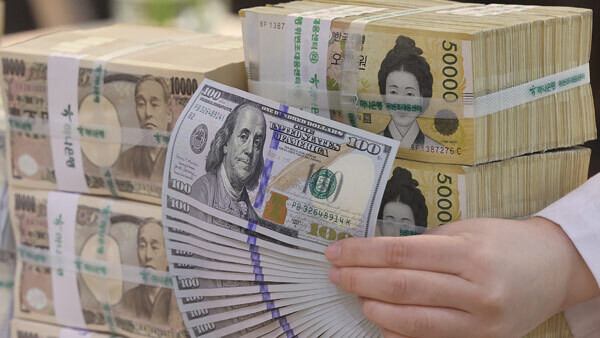
SEOUL — The South Korean won took a sharp turn for the worse on Thursday, erasing a portion of the previous day’s significant gains as renewed military tensions in the Middle East reignited safe-haven demand for the U.S. dollar. Despite a preliminary ceasefire agreement between the United States and Iran, ongoing skirmishes in the region have cast a shadow of doubt over the stability of the global financial markets.

Market Reaction: A Swift Reversal
As of 9:25 AM on April 9, the KRW/USD exchange rate was trading at 1,479.70 won in the Seoul foreign exchange market, up 9.1 won from the previous day's close. The currency pair opened the session with a 10.0-won jump to 1,480.6 won and surged as high as 1,484 won during early trading before slightly moderating.

This rebound comes just 24 hours after the won saw a dramatic appreciation of over 30 won, fueled by hopes of a diplomatic breakthrough. However, the market’s optimism proved to be fragile.

Geopolitical Uncertainty: The "Tug-of-War" Continues
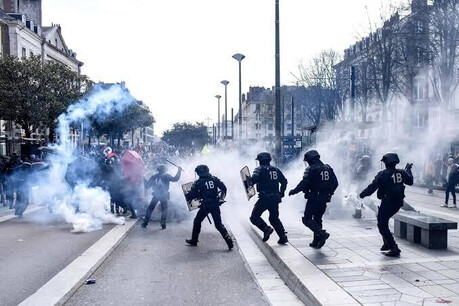
The primary driver behind the won's weakness is the persistent instability in the Middle East. While Washington and Tehran recently agreed to a two-week ceasefire, the reality on the ground remains volatile. Reports of continued Israeli airstrikes in Lebanon and Iran’s strategic maneuvering around the Strait of Hormuz—a critical artery for global oil supply—have kept investors on edge.

All eyes are now focused on the upcoming peace negotiations scheduled for April 11 in Islamabad, Pakistan. While the summit offers a glimmer of hope for a permanent end to hostilities, the "wait-and-see" approach taken by international traders is currently providing a tailwind for the U.S. dollar.

The Dollar's Resilience vs. Risk Appetite
The U.S. Dollar Index (DXY), which measures the greenback against six major currencies, climbed back to the 99.0 level. This recovery reflects a cautious shift back toward liquid, safe assets as the "geopolitical discount" applied to the dollar on Wednesday was partially clawed back.

However, the surge in the exchange rate was somewhat mitigated by a surprisingly resilient stock market. Overnight, Wall Street closed higher, maintaining a baseline of "risk-on" sentiment that trickled down to the Seoul bourse. Foreign investors remained net buyers of Korean equities, providing a buffer that prevented the won from spiraling further toward the 1,500-won mark.

Expert Outlook: Volatility in the 1,470-1,480 Range
Financial analysts suggest that while the immediate panic has subsided, the floor for the exchange rate has moved higher due to structural demand.

"Despite progress in ceasefire negotiations, the continuation of local skirmishes maintains a layer of uncertainty," said Min Kyung-won, a senior research fellow at Woori Bank. "We are seeing strong 'buy-on-dip' demand from both domestic importers and offshore speculators, which is exerting upward pressure on the rate."
Min further noted that while foreign capital inflows into the KOSPI are helping to cap the rally, the exchange rate is likely to consolidate in the high 1,470-won range for the remainder of the week as the market awaits the results of the Islamabad summit.

Implications for the Korean Economy
For South Korea, a persistent exchange rate near 1,480 won poses a dual challenge. While it theoretically aids price competitiveness for exporters, the increased cost of importing raw materials and energy—exacerbated by Middle Eastern tensions—could fuel domestic inflationary pressures. The Bank of Korea is expected to monitor these fluctuations closely, as the 1,500-won psychological barrier remains a critical threshold for potential market intervention.

[Copyright (c) Global Economic Times. All Rights Reserved.]

  • #globaleconomictimes
  • #micorea
  • #mykorea
  • #nammidonganews
  • #singaporenewsk
  • #Samsung
  • #Daewoo
  • #Hyosung
  • #Apple
  • #korea
Hwang Sujin Reporter

Popular articles

  • SK hynix CEO Kwak Noh-jung Meets Bill Gates and Satya Nadella to Solidify AI Memory Alliance

  • Hyundai Mobis Completes Independent EV 'Heart' Lineup: A Major Leap Toward Global Leadership in Power Electric Systems

  • "Singer of Filial Piety" Hyun Sook: "I Visit the Marginalized to Honor My Mother’s Memory"

I like it
Share
  • Facebook
  • X
  • Kakaotalk
  • LINE
  • BAND
  • NAVER
  • https://globaleconomictimes.kr/article/1065581839725952 Copy URL copied.
Comments >

Comments 0

Weekly Hot Issue

  • Samsung Electronics Super-Enterprise Union Loses Majority Status Amid Backlash Over Bonus Disparities
  • Samsung to Embed Vital Signs and Heart Health Scores in Upcoming Galaxy Watch9 Lineup
  • Apple Honors Digital Excellence: 12 Exceptional Apps and Games Celebrated at the 2026 Design Awards
  • Nexon Revamps Signature Youth Coding Competition into AI-Driven 'Nexon Young Programmers Cup'
  • Tech University of Korea Gathers 200 Game and AI Researchers to Discuss Industrial Expansion
  • Major Korean Telcos Trim Online-Exclusive Plans by Up to 50% Amid Shift to Unified Mobile Tariffs

Most Viewed

1
From a moment of collective sacrifice to a moment of collective democracy: The Timing of the Election in Ethiopia and Korea
2
U.S. Holds Off on Immediate Comprehensive Semiconductor Tariffs, but Pressure Mounts for Samsung and SK Hynix to Accelerate Domestic Investments
3
[Interview] "Halal is Not a Religious Regulation, but a 'Trust Infrastructure'… Creating a Premium 'K-Halal' Centered on Data and Platforms"
4
‘600 Million Won Bonus’ at Samsung Electronics Triggers Deep Sense of Relative Deprivation Among Korean Workers
5
Bomb Attack Targets Moving Train in Pakistan: At Least 29 Dead, 102 Injured
광고문의
임시1
임시3
임시2

Hot Issue

Murata Unveils Next-Gen Resin Electrode MLCC for Automotive Applications

Samsung to Embed Vital Signs and Heart Health Scores in Upcoming Galaxy Watch9 Lineup

L&F Plus Secures KRW 220 Billion from National Growth Fund to Anchor South Korea’s First Mass LFP Cathode Production

Samsung Electronics Super-Enterprise Union Loses Majority Status Amid Backlash Over Bonus Disparities

Fashion Runway Show 2026

Global Economic Times
korocamia@naver.com
CEO : LEE YEON-SIL
Publisher : KO YONG-CHUL
Registration number : Seoul, A55681
Registration Date : 2024-10-24
Youth Protection Manager: KO YONG-CHUL
Singapore Headquarters
5A Woodlands Road #11-34 The Tennery. S'677728
Korean Branch
Phone : +82(0)10 4724 5264
#304, 6 Nonhyeon-ro 111-gil, Gangnam-gu, Seoul
Copyright © Global Economic Times All Rights Reserved
  • 에이펙2025
  • APEC2025가이드북TV
  • 반달곰 프로젝트
Search
Category
  • All articles
  • Synthesis
  • World
  • Business
  • Industry
  • ICT
  • Distribution Economy
  • Well+Being
  • Travel
  • Eco-News
  • Education
  • Korean Wave News
  • Opinion
  • Arts&Culture
  • Sports
  • People & Life 
    • 전체
    • International Student Report
    • With Ambassador
  • Column 
    • 전체
    • Cho Kijo Column
    • Cherry Garden Story
    • Ko Yong-chul Column
    • Kim Seul-Ong Column
    • Lee Yeon-sil Column
  • Photo News
  • New Book Guide
  • Multicultural News
  • Jobs & Workers