• 2026.11.11 (Wed)
  • All articles
  • LOGIN
  • JOIN
Global Economic Times
[등록] 2026-09-01 15:48:31
  • Synthesis
  • World
  • Business
  • Industry
  • ICT
  • Distribution Economy
  • Well+Being
    • Pet Life
    • Halal Horizon
  • Travel
  • Eco-News
  • Education
  • Korean Wave News
  • Opinion
  • Arts&Culture
  • Sports
  • People & Life
    • International Student Report
    • With Ambassador
  • Column
    • Cho Kijo Column
    • Cherry Garden Story
    • Ko Yong-chul Column
    • Kim Bong-seon's Photo Column
    • Kim Seul-Ong Column
    • Lee Yeon-sil Column
  • Photo News
  • New Book Guide
MENU
 
Home > Distribution Economy

Alibaba Accelerates Full-Stack AI Strategy: Targeting 10-Trillion-Parameter Models and 20GW Data Centers 

Hwang Sujin Reporter / Updated : 2026-09-23 12:35:22
  • -
  • +
  • Print

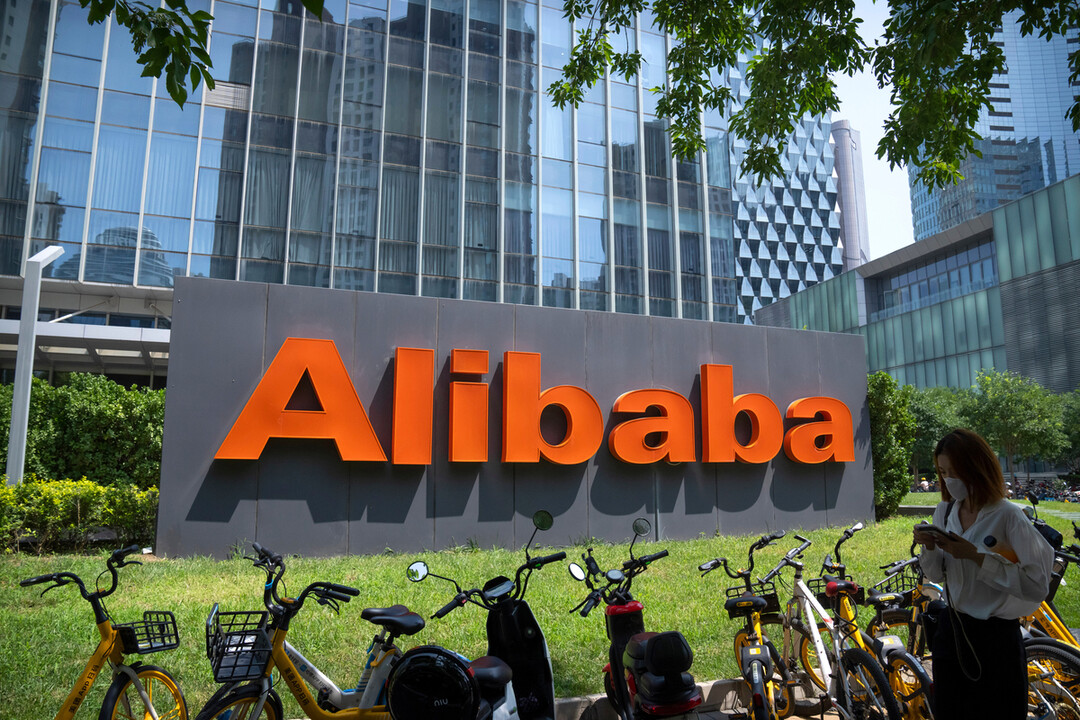
Alibaba Group has unveiled an ambitious full-stack artificial intelligence roadmap at its annual flagship technology event, the Apsara Conference, held in Hangzhou. Spanning proprietary AI chips, cloud infrastructure, foundational large language models, and agentic ecosystems, the tech giant is making aggressive moves to solidify its leadership in the global intelligence economy. 

Scaling the Qwen Frontier and Recursive Self-Improvement

At the core of Alibaba's model strategy is the continuous evolution of its Qwen foundation family. While the next-generation Qwen 4 is currently undergoing intensive training, the company outlined its long-term trajectory toward the Qwen 4.5 and Qwen 5 series, which are projected to scale up to an unprecedented 5 to 10 trillion parameters. 

A major highlight of the conference was Alibaba’s breakthrough in Recursive Self-Improvement (RSI). Demonstrating empirical success, models like Qwen3.8-Max have autonomously executed cycles of pipeline design, data validation, and error diagnosis to optimize their own performance. Remarkably, Alibaba also utilized AI models to assist in chip design; through thousands of automated Electronic Design Automation (EDA) tool calls, the AI successfully optimized chip bus modules, shrinking the physical chip area by 42% without sacrificing computing performance. 

Furthermore, Alibaba is heavily expanding its multimodal and application-specific ecosystem. Updates include the real-time translation tool Qwen 3.8-Live Translate, audio generation models, and upcoming solutions like Qwen-Image 3.1 tailored for high-speed creative and e-commerce workflows. For mobile hardware manufacturers, the newly introduced Qwen Intelligence platform enables the creation of cross-application AI assistants on smartphones. 

Proprietary Silicon: The Zhenwu V900 Processor

To power these massive workloads independently, Alibaba's semiconductor subsidiary, T-Head, introduced its most powerful AI processor to date: the Zhenwu V900. Offering triple the performance of its predecessor (the M890), the V900 features 216GB of high-speed memory and massive inter-chip bandwidth. Engineered to natively support various precisions down to FP4, a single cluster built on these processors can scale up to 500,000 chips. Mass production and commercial rollout are slated for the first quarter of 2027. 

Alibaba also laid out a clear roadmap for its Yitian Central Processing Unit (CPU) series. The upcoming Yitian 750, scheduled for release by 2029, will feature proprietary core architecture designed to interface directly with Zhenwu AI accelerators, ensuring tightly integrated hardware performance across servers and supernode clusters. 

Agentic Cloud and Massive Infrastructure Expansion

Addressing the operational demands of the AI agent era, Alibaba Cloud introduced its comprehensive Agentic Cloud architecture. Structured across model, execution, and context tiers, the framework optimizes storage efficiency, reduces token consumption by up to 67%, and integrates high-throughput data lakehouse solutions like OpenLake. Network latency and bottlenecks are heavily mitigated by Alibaba's proprietary HPN 8.0 Pro networking architecture, supporting 100-petabit scales.

To sustain this exponential growth, Alibaba Group CEO Eddie Wu announced a massive infrastructure target: Alibaba Cloud aims to expand its global data center capacity to exceed 20 gigawatts (GW) by 2032. Emphasizing that mid-to-long-term industry demand heavily outstrips current global supply chains, Wu framed the initiative as a crucial step toward preparing for an era where machine intelligence and autonomous thinking will vastly scale past human capacity.

[Copyright (c) Global Economic Times. All Rights Reserved.]

  • #globaleconomictimes
  • #micorea
  • #mykorea
  • #Lifeplaza
  • #nammidonganews
  • #singaporenewsk
  • #Taiwanpost
  • #Samsung
  • #Doosa
Hwang Sujin Reporter

Popular articles

  • CGV Unveils October Tech Special Hall Lineup… From Films to K-Pop Live Concerts

  • November Shopping Festival Sparks Retail War in South Korea: Where to Find the Best Deals

  • From Kim Whanki to Pokémon Cards... Seoul Auction Opens the Floodgates

I like it
Share
  • Facebook
  • X
  • Kakaotalk
  • LINE
  • BAND
  • NAVER
  • https://globaleconomictimes.kr/article/1065584013149489 Copy URL copied.
Comments >

Comments 0

Weekly Hot Issue

  • Inha University Caught in Campus Culture Clash Over Proposed Rhee Syng-man Statue Revival
  • Honoring a Legacy: Poet Oh Dong-chun Recognized for Lifelong Dedication to Hangul and Sijo Poetry
  • Bongeunsa Temple to Host 2026 Patriotic Buddhism Cultural Festa
  • South Korea Confronts a Growing Health Crisis as Adult Obesity Rates Surge
  • Pain of Chosei Coal Mine Meets Japanese Readers: Moon Young-sook Publishes Japanese Edition of 'Black Sea'
  • Beyond the Trillion-Dollar Mark: China’s Trade Surplus and the Debate Over Global Economic Dominance

Most Viewed

1
US Army Conducts Rare Temporary Burial Drills to Prepare for Worst-Case Large-Scale War Scenarios
2
World Citizens are Flying Directly to Busan... The Era of 4 Million Foreigners is Just Around the Corner
3
Eating 100g of Baechu Kimchi Daily Linked to Lower High-Cholesterol Risks
4
Meeting Christmas Early!… Busan Dessert Sales Event "Daldal The Market" Held
5
November Shopping Festival Sparks Retail War in South Korea: Where to Find the Best Deals
체리가든 스토리
nutri huevos
로타리
동포저널

Hot Issue

Jensen Huang Faces Shareholder Class Action and Leadership Scrutiny Amid Espionage Allegations Involving Former Associate

Disgraced South Korean Scientist Hwang Woo-suk Becomes UAE Citizen

Is South Korea Heading Toward France's Path? Aging Population and Fiscal Pressures Looming Ahead

Fashion Runway Show 2026

Let’s recycle the old blankets in Jeju Island’s closet instead of incinerating them.

Global Economic Times
korocamia@naver.com
CEO : LEE YEON-SIL
Publisher : KO YONG-CHUL
Registration number : Seoul, A55681
Registration Date : 2024-10-24
Youth Protection Manager: KO YONG-CHUL
Singapore Headquarters
5A Woodlands Road #11-34 The Tennery. S'677728
Korean Branch
Phone : +82(0)10 4724 5264
#304, 6 Nonhyeon-ro 111-gil, Gangnam-gu, Seoul
Copyright © Global Economic Times All Rights Reserved
  • News K
  • 반달곰 프로젝트
  • 광고문의
Search
Category
  • All articles
  • Synthesis
  • World
  • Business
  • Industry
  • ICT
  • Distribution Economy
  • Well+Being 
    • 전체
    • Pet Life
    • Halal Horizon
  • Travel
  • Eco-News
  • Education
  • Korean Wave News
  • Opinion
  • Arts&Culture
  • Sports
  • People & Life 
    • 전체
    • International Student Report
    • With Ambassador
  • Column 
    • 전체
    • Cho Kijo Column
    • Cherry Garden Story
    • Ko Yong-chul Column
    • Kim Bong-seon's Photo Column
    • Kim Seul-Ong Column
    • Lee Yeon-sil Column
  • Photo News
  • New Book Guide
  • Overseas Koreans
  • Multicultural News