![[등록] 2026-09-01 15:48:31](/support/_updata/banner2/tl181982910_6749.png)


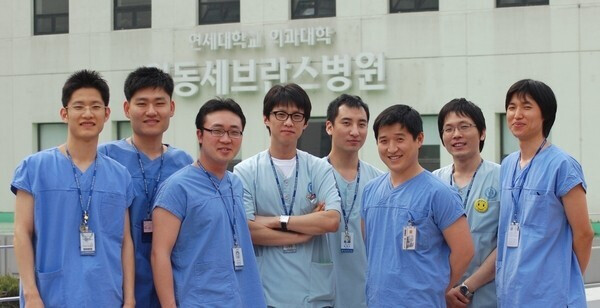
In emergency rooms, male nurses are no longer an unfamiliar presence. Taking on diverse duties such as patient transport, emergency response, and interprofessional collaboration, they have firmly established themselves as a vital pillar of the medical field.
In the past, when male nurses were rare, there was a tendency to view a man choosing nursing with a sense of unfamiliarity. However, as the number of male nurses has steadily grown, public perception within the field has also shifted.
Particularly in specialized departments like emergency rooms, the role of male nurses often stands out significantly. Beyond physically demanding tasks such as patient transport and handling hazardous situations, they play active roles in collaborating with other medical staff and communicating with patients and their guardians.
The increase in male nurses has also brought internal changes to organizational culture. While they were previously viewed as a minority struggling to adapt to a female-majority organization, recent evaluations suggest that different working styles and perspectives actually contribute positively to teamwork.
Nevertheless, male nurses still account for a single-digit percentage of the total nursing workforce. Challenges remain, such as navigating differences in communication styles or encountering gender-based stereotypes.
Chang Myung-seok, co-representative of the Young Nurses Association, who has worked in the emergency room for about 11 years, stated that he has personally experienced these changes in the field.
In an interview with The Korean Doctors' Weekly, Chang explained, "Colleagues generally hold a positive view regarding the increase in male nurses. With a certain proportion of men, teamwork often improves, and most people view it as a great stimulus that female nurses and male nurses look at nursing tasks from different perspectives."
“We Wish We Had More Male Nurses in the ER”… Preferred in Specialized Departments
The emergency room is one of the places where the role of male nurses is relatively clear.
Due to the influx of emergency patients and frequent unpredictable situations, patient transport and crisis response are often required. Field evaluations indicate that the physical strength and responsiveness of male nurses serve as distinct advantages in these processes.
Chang noted, "I have often heard from the Department of Emergency Medicine that they wish there were more male nurses in the ER."
He added that beyond physical strength, the strengths of male nurses also shine in communication during interdepartmental collaboration. Some large hospital emergency rooms and other specialized departments are showing a preference for hiring male nurses.
The growth in the number of male nurses has also changed intra-team relationships. "Looking back at my time working in the ER," Chang explained, "teamwork became much better compared to the early days when male nurses were extremely rare. Given the nature of the ER, when dangerous situations arise, male nurses are able to step in and handle them."
The role of male nurses is not limited to physically demanding tasks. Different perspectives and communication styles also inject a fresh dynamic into the organization. While being a minority used to mean that merely adapting to the existing organizational culture was a challenge, as shared working experiences accumulate, male nurses are now taking on central roles in organizational communication.
Chang remarked, "Once you endure the tough times a bit and begin functioning as a member of the team, people start to understand each other's communication styles. I frequently notice that they actually become the center of communication among members, and the overall work atmosphere improves."
Similar changes are unfolding in relationships with patients and their guardians. Although patients and families might initially find male nurses unfamiliar, differences in gender-based communication styles sometimes work out positively.
Chang said, "Patients and guardians might initially feel unfamiliar with male nurses, but there are times when communication with male nurses actually fits them better. Often, patients and guardians find themselves communicating more comfortably."
A 4.8-Fold Increase Over 10 Years… 17.7% of New Nurses Are Men
At the heart of these field changes is the steady growth of male nurses.
According to the Ministry of Health and Welfare's License Management Information System, out of 282,656 licensed nurses in 2011, male nurses accounted for only 1.5% (4,217). By 2024, the number of male nurses surged to 35,765, making up 6.8% of the total 526,939 licensed nurses. Compared to 7,426 in 2014, this represents an approximate 4.8-fold increase over a decade.
The proportion of males is even higher among newly licensed nurses. Out of 25,092 successful candidates in the 66th National Nursing Licensing Examination, 4,437 were men, accounting for 17.7%.
Data analyzed by the Korean Nurses Association from the Korea Health Personnel Licensing Examination Institute shows that the proportion of male passers in the nursing licensing exam has steadily risen from 1.1% in 2004 to 7.8% in 2013 and 14.7% in 2020.
Given that male nurses are likely to continue flowing into the profession, the gender ratio and organizational culture in the field are expected to gradually shift further.
Numbers Have Grown, But They Remain a Minority… Differences in Communication Styles Exist
Although the presence of male nurses has grown, their share of the total nursing workforce remains at 6.8%. Being a minority working in a predominantly female organization remains a hurdle that male nurses must still overcome.
Chang mentioned that subtle differences in communication styles can sometimes feel more significant than expected during the work process.
"Male nurses are still a minority in terms of numbers," Chang said. "In groups where women are the overwhelming majority, minor differences in communication styles can often feel quite prominent during work."
However, he noted that these differences do not necessarily lead to conflict. Through working together and accumulating a process of understanding each other's work and communication styles, these differences can instead act as organizational diversity.
He also noted that differences in work characteristics based on gender can sometimes be felt. Chang stated, "In terms of attention to detail or work speed, male nurses sometimes generally lag behind female nurses."
This points to the need for an environment where male and female nurses understand each other's distinct characteristics and work together, rather than categorizing them simply by the strengths or weaknesses of one side.
“Increasing Male Nurses Isn't the Goal… An Environment Without Gender Distinction Is Crucial”
Although male nurses are rapidly increasing, voices also suggest that raising the proportion of men itself should not become the ultimate goal.
Ultimately, what matters is creating an environment where people can work as nurses regardless of gender, to the point where a separate category called "male nurse" is no longer necessary, experts point out.
Chang stated, "I don't think male nurses necessarily have to increase. There should be no distinction of men and women within the profession."
However, because male nurses are still a minority, necessary support systems during the process of adapting to the organization should be put in place. This includes improving perceptions of male nurses alongside providing education to help them settle into nursing duties.
Chang emphasized, "Above all, senior staff need to provide plenty of support so that male nurses can work hard with pride as nurses in their respective positions."
[Copyright (c) Global Economic Times. All Rights Reserved.]