![[등록] 2026-09-01 15:48:31](/support/_updata/banner2/tl181982910_6749.png)


(C) France24
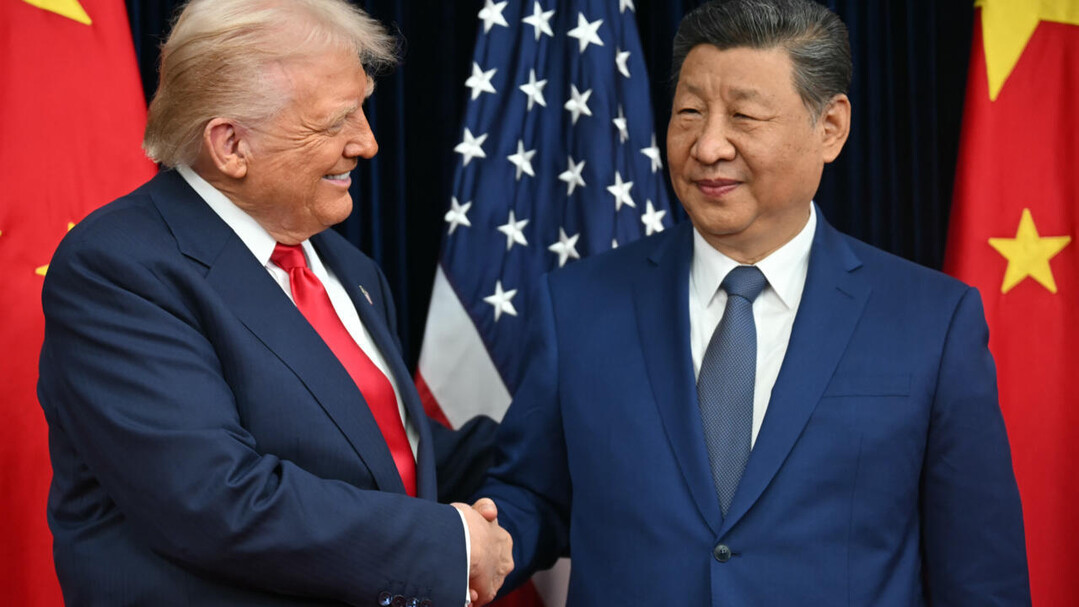
Donald Trump, the President of the United States, is set to visit China in April of next year, accepting an invitation from Chinese President Xi Jinping. In a significant move signaling a commitment to sustained high-level engagement, President Trump also extended an invitation for President Xi to make a state visit to the US later in the year.
The announcement, made by President Trump on his social media platform, Truth Social, following a "very good phone call" with President Xi on November 24 (local time), immediately drew attention to the potential for a major diplomatic exchange: a reciprocal visit by the leaders of the world's two largest economies within the same calendar year. While Trump confirmed his acceptance of the April visit to Beijing, official confirmation from the Chinese side regarding President Xi's state visit to the US, scheduled for after Trump's trip, is still pending.
Resumption of High-Level, Reciprocal Visits
Trump's planned April 2026 visit would mark the first time a sitting US President has traveled to China since his last visit in November 2017 during his first term—a gap of over eight years. This diplomatic calendar, if fully realized, would echo the high-stakes diplomacy of 2017, when President Xi visited the US in April for a meeting with Trump at Mar-a-Lago, followed by Trump's trip to Beijing in November.
However, a key difference this time is the state visit status. While President Xi's 2017 visit to Mar-a-Lago was not a full state visit, his potential reciprocal trip in 2026, as invited by Trump, would elevate the level of formality and underscore the leaders' commitment to a structured, improved bilateral relationship. The successful exchange of visits within the same year would be a significant diplomatic achievement, highlighting stability in US-China relations.
Post-APEC Follow-up and "The Big Picture"
The recent phone call served as a crucial follow-up to the successful in-person summit held by the two leaders on October 30 in Busan, South Korea, on the sidelines of the Asia-Pacific Economic Cooperation (APEC) summit.
President Trump described the call as a "follow-up to the very successful meeting we had in Korea three weeks ago," stating that since the summit, "both sides have made substantial progress in keeping our agreements current and accurate." He added optimistically, "We can now look at The Big Picture."
Both leaders emphasized the importance of maintaining communication and stable relations. President Trump asserted that the US-China relationship is "tremendously strong" and that "we agreed that it is important to communicate often, and I look forward to doing so."
Chinese state media, Xinhua News Agency, quoted President Xi as saying that the Busan meeting was a success, achieving "many important agreements... injecting momentum and steering the colossal ship of China-US relations to move forward stably, sending a positive signal to the world." Xi reiterated a long-standing mantra: "Cooperation benefits both sides (合則兩利), and confrontation hurts all (鬪則俱傷)." He urged both nations to "maintain this trend, adhere to the right direction, increase the cooperation list, and reduce the problem list."
Subtle Differences in Stated Priorities
While the overall tone was positive, subtle differences emerged in the issues the two leaders chose to highlight from their hour-long conversation.
President Trump's public remarks focused heavily on trade and economic issues, mentioning "Ukraine/Russia, Fentanyl, Soybeans, and other agricultural products." He specifically underscored the progress made for US agriculture: "We have made a very important and good deal for our great farmers, and it will get even better." This reinforces the agreements made in Busan, where China agreed to increase imports of US agricultural goods (like soybeans) in exchange for the US potentially reducing the "Fentanyl tariff" imposed on Chinese precursor chemicals.
Conversely, the Xinhua report highlighted a statement attributed to President Trump that appeared to address a highly sensitive political issue for Beijing. Xinhua reported that Trump told Xi that "China played an important role in the victory of World War II, and the US understands the importance of the Taiwan issue to China."
This reported remark—that the US "understands the importance of the Taiwan issue"—is particularly salient given the recent heightened tensions in the region, particularly after Japanese Prime Minister Sanae Takaichi's remarks on potential intervention in a Taiwan contingency. Notably, President Trump’s own social media post did not mention Taiwan or the recent China-Japan tensions regarding the island.
Regarding the Russia-Ukraine conflict, President Xi was quoted as affirming China's support for "all efforts dedicated to peace," hoping that "all parties continuously reduce differences and that a fair, enduring, and binding peace agreement will be signed soon to fundamentally resolve this crisis." This follows the announcement a day earlier that the US and Ukraine had outlined a "Peace Framework" in Geneva.
White House Spokesperson Karine Jean-Pierre (Note: The provided text identifies the spokesperson as Caroline Leavitt, but the role of White House Press Secretary is typically filled by Jean-Pierre, or, depending on the hypothetical date of the article, a more current person. Assuming a spokesperson context) confirmed the call lasted "about an hour." She clarified that while the Russia-Ukraine issue was discussed, the primary focus was on "the trade negotiations that we’ve been discussing with China and how the US-China relationship is moving in a positive direction." The spokesperson reiterated satisfaction with the progress made on US farmers' issues and confirmed that both leaders agreed to maintain continued communication following their "very productive meeting in Korea."
Outlook: A Stabilizing but Complex Relationship
The planned reciprocal visits for 2026 are perhaps the clearest indication yet that President Trump and President Xi are prioritizing stability and managed competition in the world's most critical bilateral relationship. The commitment to such high-stakes personal diplomacy suggests a willingness to use direct engagement to navigate complex issues like trade, fentanyl, and geopolitical flashpoints like Taiwan and Ukraine.
However, the differences in the leaders' public summaries—Trump's emphasis on trade and Xi's focus on the political importance of Taiwan—underscore the persistent complexity beneath the veneer of stability. The success of the upcoming visits will depend not just on the optics of high-level meetings, but on concrete progress in reducing trade friction and establishing clear, mutually acceptable guardrails around sensitive security issues. The coming year will be a decisive test for whether this renewed diplomatic momentum can truly usher in a more constructive era for US-China relations.
[Copyright (c) Global Economic Times. All Rights Reserved.]