• 2026.04.21 (Tue)
  • All articles
  • LOGIN
  • JOIN
Global Economic Times
fashionrunwayshow2026
  • Synthesis
  • World
  • Business
  • Industry
  • ICT
  • Distribution Economy
  • Well+Being
  • Travel
  • Eco-News
  • Education
  • Korean Wave News
  • Opinion
  • Arts&Culture
  • Sports
  • People & Life
    • International Student Report
    • With Ambassador
  • Column
    • Cho Kijo Column
    • Cherry Garden Story
    • Ko Yong-chul Column
    • Kim Seul-Ong Column
    • Lee Yeon-sil Column
  • Photo News
  • New Book Guide
MENU
 
Home > Industry

The "Betrayal" of US Beef: Record-High Prices Hit South Korean Dinner Tables

Yim Kwangsoo Correspondent / Updated : 2026-02-16 20:26:12
  • -
  • +
  • Print

(C) The Hill


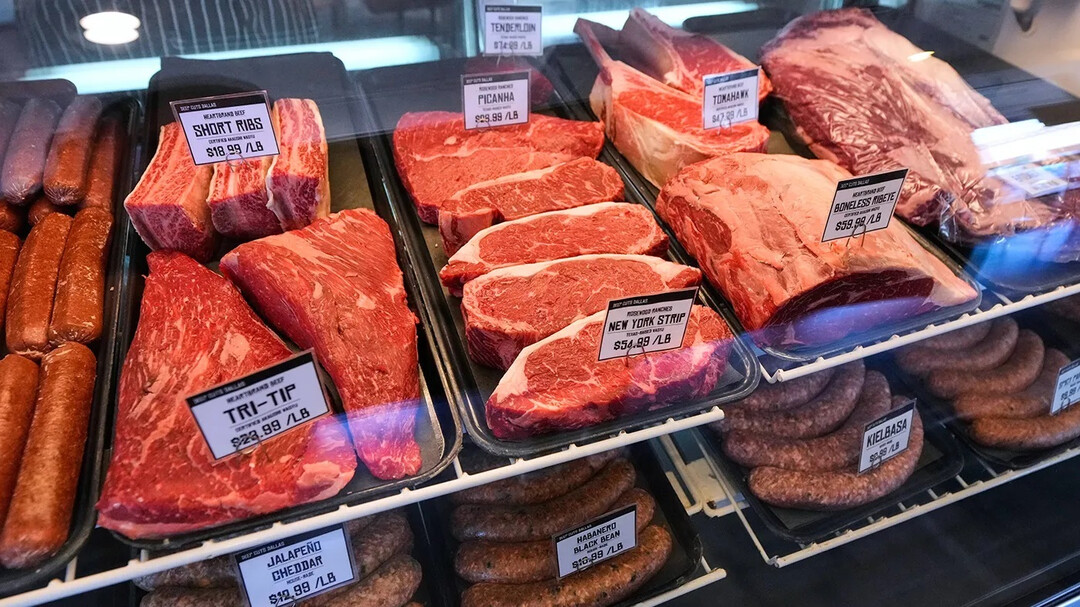
SEOUL — For years, South Korean consumers turned to American beef as a cost-effective alternative to the prohibitively expensive domestic Hanwoo. However, that "budget-friendly" reputation is evaporating. US beef prices are hovering near all-time highs as the American cattle inventory plummets to levels not seen in 75 years, sparking fears of a sustained spike in South Korean food inflation.

A 75-Year Low in Supply
According to recent data from Hankyung ACEL and the Chicago Mercantile Exchange (CME), live cattle prices have surged past $2.40 per pound, a significant jump from under $2.00 just a year ago. This upward trajectory has been persistent for over five years; in mid-2021, prices fluctuated between $1.00 and $1.20.

The root cause of this price surge is a severe supply crunch. A devastating drought in 2022 decimated pastures across the United States, forcing ranchers to reduce herd sizes. According to the U.S. Department of Agriculture (USDA), the total cattle inventory as of January 1, 2026, stood at 86.2 million head—the lowest since 1951.

Failed Interventions and Market Volatility
The crisis has caught the attention of the highest levels of government. Last October, U.S. President Donald Trump criticized the "excessive" cost of beef, leading to a temporary price dip after the administration expanded beef imports from Argentina. However, the relief was short-lived. By December, prices resumed their climb, returning to record levels.

The outlook remains grim. Calf production—a key indicator of future supply—is currently at its lowest point since 1941. While the U.S. government has attempted to intervene by opening federal grazing lands and supporting ranchers, these measures have yet to yield tangible results.

"We are in a structural deficit," noted an industry insider. "Ranchers are holding back cows to rebuild their herds rather than sending them to slaughter, which further tightens the immediate supply. This cycle suggests high prices will persist well into next year."

The Impact on the Korean Market
The shockwaves from the U.S. market are hitting South Korea directly. Data from the Korea Institute for Animal Products Quality Evaluation (KAPE) shows that the average price of frozen American beef ribs rose from 3,912 KRW per 100g in 2023 to 4,466 KRW last year—a 14.1% increase.

Surprisingly, even the complete elimination of import tariffs on US beef (previously 1.2% to 4.8%) earlier this year has failed to lower consumer prices, as the rising base cost and high exchange rates have neutralized any tax benefits.

Diversification as a Survival Strategy
With U.S. beef accounting for 47.1% of South Korea’s imported meat market (approximately 220,427 tons out of 468,122 tons total), local retailers are in a state of emergency. Major supermarkets are frantically diversifying their supply chains, looking toward:

Australia and Brazil
Ireland and Canada

However, diversification offers limited protection. As the U.S. faces its own domestic shortage, American restaurant chains are outbidding international buyers for Australian beef, driving up global prices across the board.

"Between the global supply shortage and the weak Korean Won, our ability to lower prices is extremely limited," a local mart representative stated. For Korean households, the era of "cheap American beef" may be over for the foreseeable future.

[Copyright (c) Global Economic Times. All Rights Reserved.]
  • #Globaleconomictimes
  • #Korea
  • #Seoul
  • #Samsung
  • #LG
  • #Bitcoin
  • #Meta
  • #Business
  • #Economic
  • #The Woori Bank
  • #Elon Musk
  • #C
Yim Kwangsoo Correspondent

Popular articles

  • Won-Dollar Exchange Rate Surges to 1,515 Range Amid Triple Whammy: War, Oil Prices, and Foreign Capital Outflow

  • GIST Researchers Develop Next-Generation EV Battery: Full Charge in 12 Minutes with Enhanced Safety

  • LG AI Research Unveils ‘EXAONE 4.5’: A New Multimodal Powerhouse Outperforming Global Tech Giants

I like it
Share
  • Facebook
  • X
  • Kakaotalk
  • LINE
  • BAND
  • NAVER
  • https://globaleconomictimes.kr/article/1065612295445573 Copy URL copied.
Comments >

Comments 0

Weekly Hot Issue

  • The cherry blossoms at Gakwonsa Temple in Cheonan are in full bloom, making the area beautiful.
  • Pope Leo XIV Slams ‘Handful of Tyrants’ for Ravaging the World Amid Tensions with Trump
  • South Korea Visionary Plan: Transforming Into a Global “UN AI Hub”
  • 60-Year-Old Man Sentenced to 27 Years in Prison for Killing Wife Immediately After Restraining Order Expired
  • El Salvador Imposes Life Sentences for 12-Year-Olds: A Stark Contrast to South Korea's Juvenile Laws
  • The AI Tsunami: Meta to Slash 10% of Workforce Amid Global Tech Purge

Most Viewed

1
From the Alps to Seoul: Life in the Heart of Europe
2
BOK Holds Rate Steady for Seventh Consecutive Meeting, Signaling End of Easing Cycle
3
$2 Million Per Ship: Iran’s "Hormuz Toll" Emerges as Chokepoint in Peace Talks
4
BYD Hits 10,000-Unit Milestone in South Korea Within One Year, Eyes Exclusive "10,000 Club" Entry
5
Republican Party Faces "Total Crisis" as War and Inflation Cloud Midterm Outlook
광고문의
임시1
임시3
임시2

Hot Issue

Hormuz Impasse: Reclosure of Strategic Strait Clouds Hopes for Second Peace Peace Talks

The AI Tsunami: Meta to Slash 10% of Workforce Amid Global Tech Purge

Woori Bank Tightens Reins on Dormant Corporate Accounts to Combat Financial Fraud

K-Innovation Hits Record High: Over 27,000 Public Ideas Flood the ‘Everyone’s Idea’ Project

Fashion Runway Show 2026

Global Economic Times
korocamia@naver.com
CEO : LEE YEON-SIL
Publisher : KO YONG-CHUL
Registration number : Seoul, A55681
Registration Date : 2024-10-24
Youth Protection Manager: KO YONG-CHUL
Singapore Headquarters
5A Woodlands Road #11-34 The Tennery. S'677728
Korean Branch
Phone : +82(0)10 4724 5264
#304, 6 Nonhyeon-ro 111-gil, Gangnam-gu, Seoul
Copyright © Global Economic Times All Rights Reserved
  • 에이펙2025
  • APEC2025가이드북TV
  • 반달곰 프로젝트
Search
Category
  • All articles
  • Synthesis
  • World
  • Business
  • Industry
  • ICT
  • Distribution Economy
  • Well+Being
  • Travel
  • Eco-News
  • Education
  • Korean Wave News
  • Opinion
  • Arts&Culture
  • Sports
  • People & Life 
    • 전체
    • International Student Report
    • With Ambassador
  • Column 
    • 전체
    • Cho Kijo Column
    • Cherry Garden Story
    • Ko Yong-chul Column
    • Kim Seul-Ong Column
    • Lee Yeon-sil Column
  • Photo News
  • New Book Guide
  • Multicultural News
  • Jobs & Workers