• 2025.12.18 (Thu)
  • All articles
  • LOGIN
  • JOIN
Global Economic Times
APEC2025KOREA가이드북
  • Synthesis
  • World
  • Business
  • Industry
  • ICT
  • Distribution Economy
  • Well+Being
  • Travel
  • Eco-News
  • Education
  • Korean Wave News
  • Opinion
  • Arts&Culture
  • Sports
  • People & Life
  • Column
    • Cho Kijo Column
    • Lee Yeon-sil Column
    • Ko Yong-chul Column
    • Cherry Garden Story
  • Photo News
  • New Book Guide
MENU
 
Home > Synthesis

South Korea Rushes Through AI Basic Law Amidst Civil Society Concerns

Hwang Sujin Reporter / Updated : 2024-11-27 11:37:57
  • -
  • +
  • Print


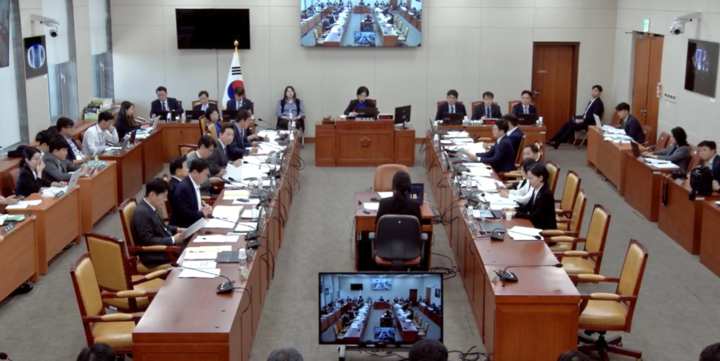
Seoul, South Korea – The South Korean National Assembly has passed a long-awaited AI Basic Law, raising concerns among civil society groups who argue that the legislation was rushed through without sufficient consideration of the risks associated with artificial intelligence.

The Science, ICT, Broadcasting and Communications Committee approved the bill on November 26th, which aims to foster the development of the AI industry while ensuring safety. The bill includes provisions such as requiring watermarks on AI-generated content to combat deepfakes and establishing guidelines for high-impact AI.

While the bill has been praised for providing a legal framework for the AI industry, critics argue that the legislative process was too hasty and failed to adequately address potential risks. Civil society groups, including Participatory Democracy, held a press conference in front of the National Assembly, criticizing the lack of effective regulations for high-impact AI.

The law mandates that AI service providers must provide technical means and guidance for users to add watermarks to AI-generated content such as images and videos. Additionally, the bill classifies AI technologies that pose risks to human life or safety as high-impact AI and empowers the government to impose requirements on related businesses to ensure reliability and safety.

Despite these measures, critics argue that the bill does not go far enough to address the potential harms of AI, such as job displacement, algorithmic bias, and the misuse of AI for malicious purposes. They have called for more robust regulations to protect individuals and society from the negative consequences of AI development.

In response to these concerns, Rep. Choi Min-hee, chairwoman of the Science, ICT, Broadcasting and Communications Committee, stated that she would listen to the voices of civil society and conduct further analysis of the law's impact on society and industry. She also pledged to prepare follow-up legislation to address any shortcomings.

Meanwhile, the committee also passed a bill to repeal the Mobile Device Distribution Act, which regulates the distribution of mobile devices. The new law aims to promote competition among device sellers by eliminating restrictions on subsidies and allowing for more flexible pricing.

[Copyright (c) Global Economic Times. All Rights Reserved.]

Hwang Sujin Reporter

Popular articles

  • From Court to Content: French Tennis Star Océane Dodin Trades Racquet for OnlyFans, Eyes $5M in a Year

  • Kimchi's Day Celebrated with a Glimpse into its Future

  • UNIQLO's Collaboration Strategy: Designer Fashion Meets Mass Appeal

I like it
Share
  • Facebook
  • X
  • Kakaotalk
  • LINE
  • BAND
  • NAVER
  • https://globaleconomictimes.kr/article/1065580609106218 Copy URL copied.
Comments >

Comments 0

Weekly Hot Issue

  • Doosan Group Chosen as Preferred Bidder for SK Siltron in Multi-Billion Dollar Deal
  • Even Elite "Collective Intelligence" Fails: Seoul National University Students Miss the Mark on Exchange Rate Forecasts
  • The Ambassador’s Cup Taekwondo Championship Returns to Bulgaria, Celebrating Martial Arts and Diplomacy
  • Nobel Laureate Machado Departs Oslo; Remains in Good Spirits Despite Spinal Injury
  • Google Completes Gemini 3 Lineup with Launch of ‘Flash’ Model: High Speed Meets Uncompromised Intelligence
  • Germany Approves Massive $60 Billion Rearmament Package to Bolster Defense

Most Viewed

1
Choi Bun-do, Chairman of PTV Group, Assumes Presidency of the Korean Chamber of Commerce and Industry in South Central Vietnam
2
From Court to Content: French Tennis Star Océane Dodin Trades Racquet for OnlyFans, Eyes $5M in a Year
3
Lee Dismisses Vice Minister Amid Allegations of Misconduct and Vetting Gaps
4
NVIDIA Lobby Succeeds? U.S. Bill Expected to Drop AI Chip Export Restrictions
5
US Layoffs Surge: Over 1.17 Million Job Cuts Announced in First 11 Months of 2025
광고문의
임시1
임시3
임시2

Hot Issue

UK to Rejoin EU’s Erasmus+ Program in 2027: A Major Milestone in Post-Brexit Relations

China’s SpaceSail Challenges Starlink’s Hegemony in Brazil’s Satellite Internet Market

U.S. Congress Passes 2026 NDAA: A Legislative Fortress Against Unilateral Troop Withdrawals

Meloni Blocks Key EU Initiatives: Italy’s "My Way" Policy Shadows Upcoming Summit

Let’s recycle the old blankets in Jeju Island’s closet instead of incinerating them.

Global Economic Times
korocamia@naver.com
CEO : LEE YEON-SIL
Publisher : KO YONG-CHUL
Registration number : Seoul, A55681
Registration Date : 2024-10-24
Youth Protection Manager: KO YONG-CHUL
Singapore Headquarters
5A Woodlands Road #11-34 The Tennery. S'677728
Korean Branch
Phone : +82(0)10 4724 5264
#304, 6 Nonhyeon-ro 111-gil, Gangnam-gu, Seoul
Copyright © Global Economic Times All Rights Reserved
  • 에이펙2025
  • APEC2025가이드북TV
  • 독도는우리땅
Search
Category
  • All articles
  • Synthesis
  • World
  • Business
  • Industry
  • ICT
  • Distribution Economy
  • Well+Being
  • Travel
  • Eco-News
  • Education
  • Korean Wave News
  • Opinion
  • Arts&Culture
  • Sports
  • People & Life
  • Column 
    • 전체
    • Cho Kijo Column
    • Lee Yeon-sil Column
    • Ko Yong-chul Column
    • Cherry Garden Story
  • Photo News
  • New Book Guide
  • Multicultural News
  • Jobs & Workers