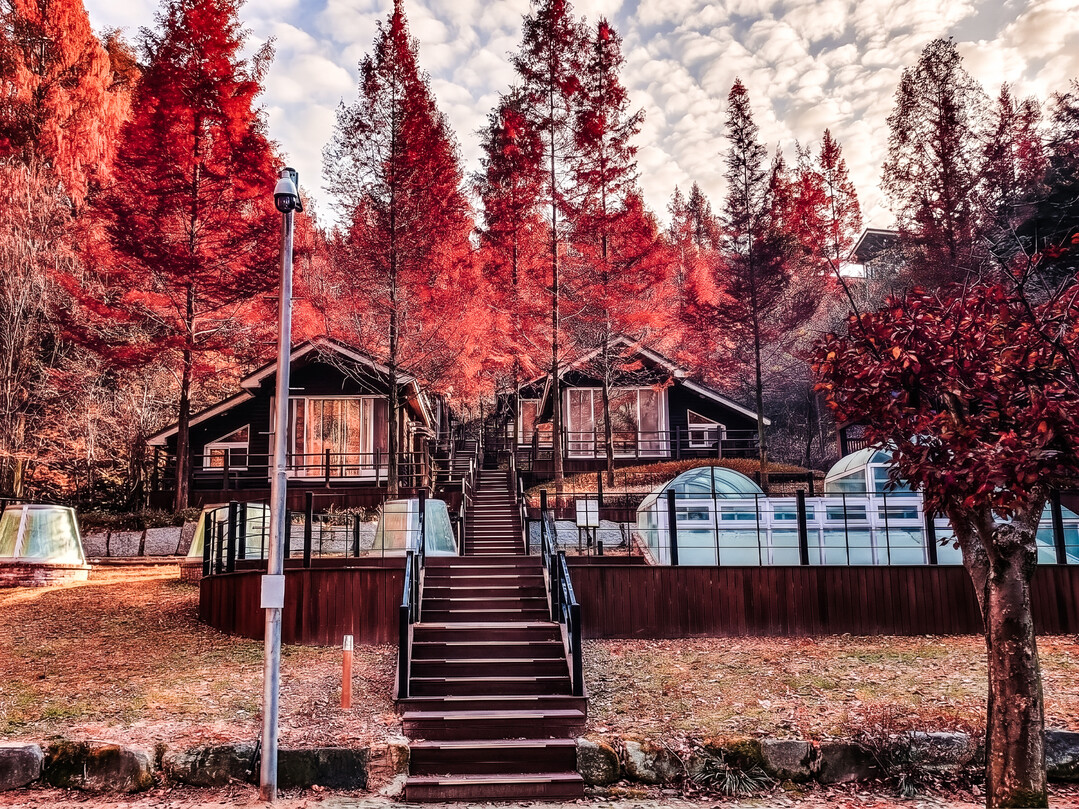
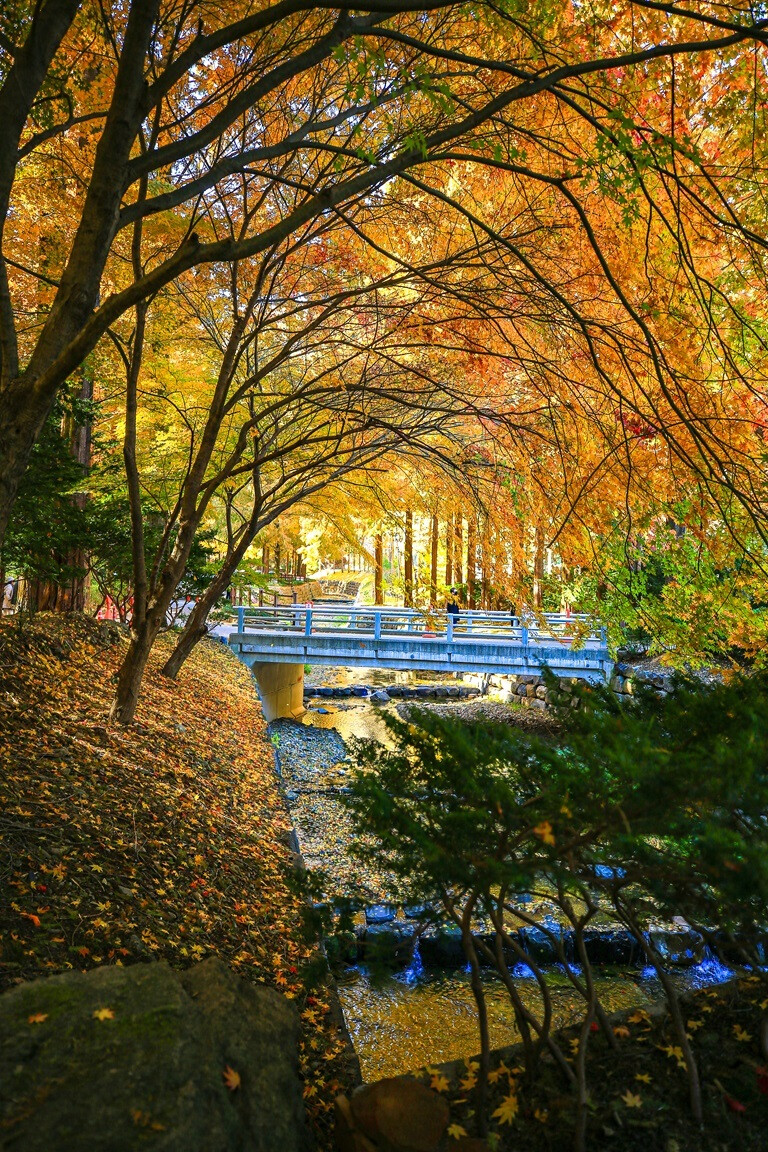
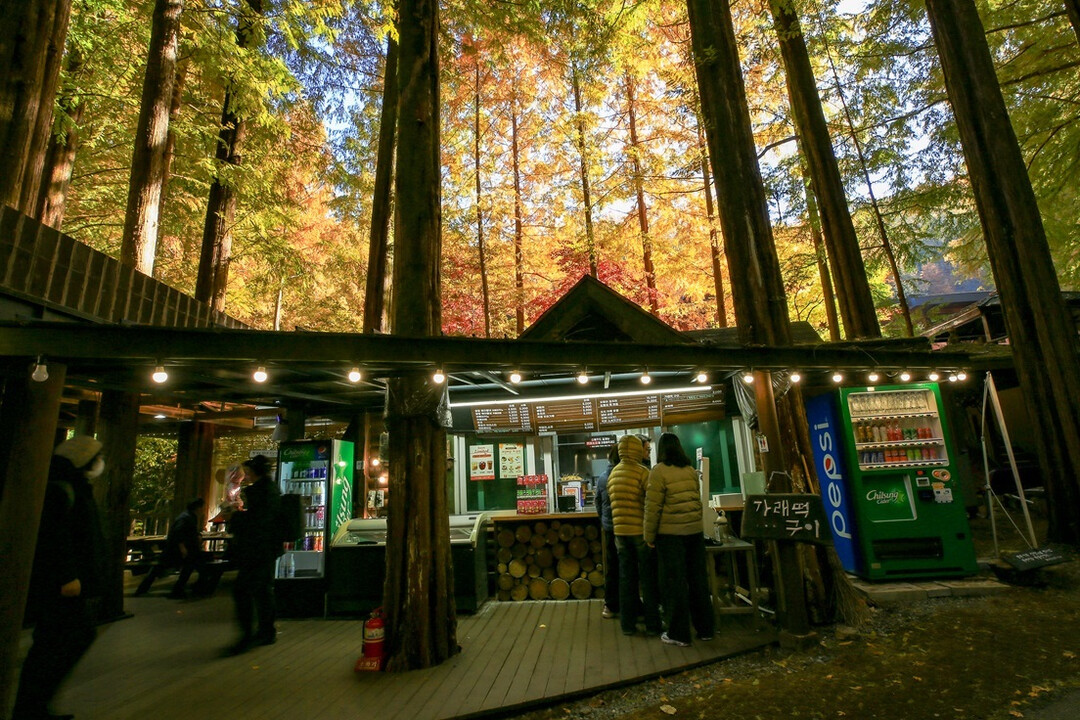
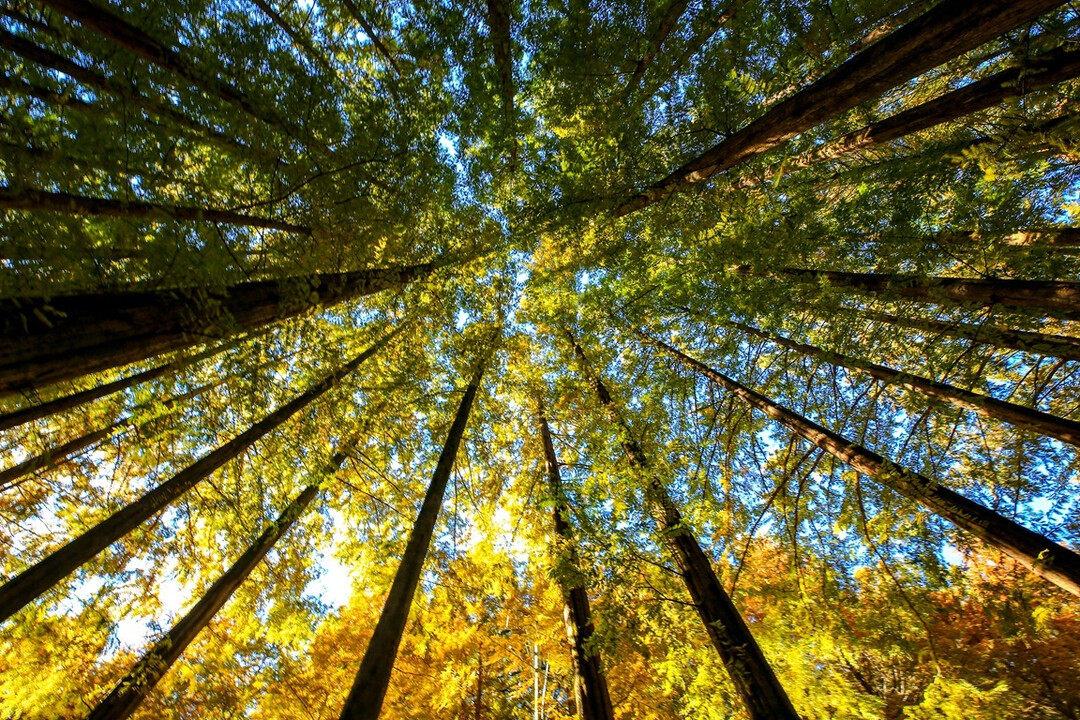
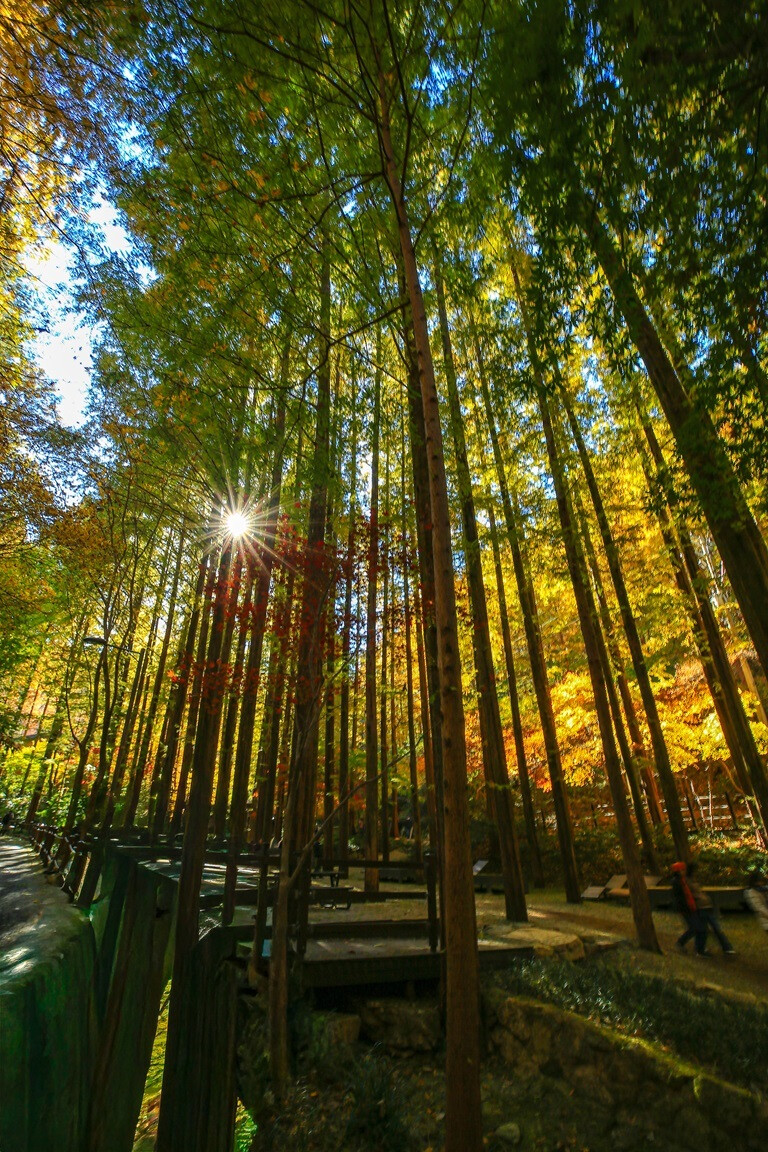
The mountain slopes of Jangan-dong, Seo-gu, Daejeon, in the Jangtaesan Natural Recreation Forest, are at the height of their autumn splendor. Early in the morning, as light mist gently spreads over the lake and red maples reflect upon the water, visitors naturally slow their steps. On both sides of the walking path, Metasequoia trees stretch straight toward the sky. Admission and parking fees are completely free, and the forest is open year-round without closing days. The fact that this forest started from a single individual's private fortune is as remarkable as the scenery itself.
A Single Man’s Long-Term Investment Becomes a Public Forest
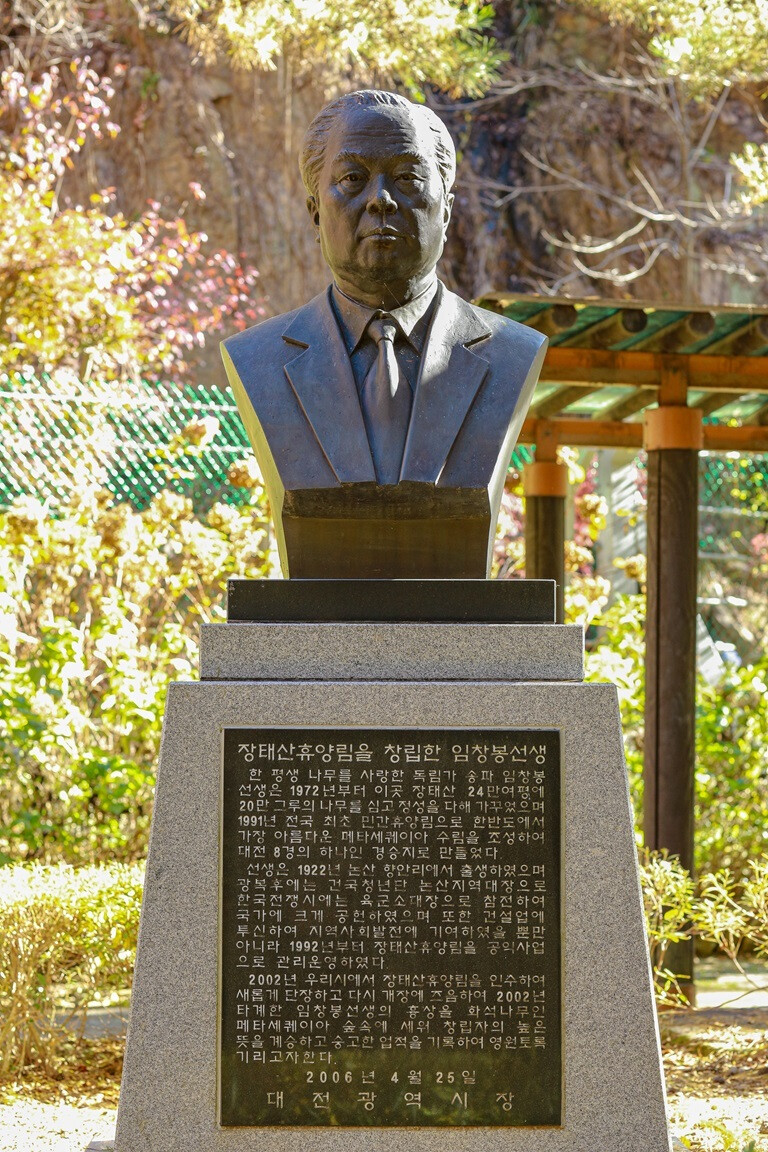
At the beginning of the forest is Chang Bong-im (1922–2002), a registered private forest owner. Starting in 1972, he planted and nurtured over 200,000 trees across approximately 240,000 pyeong of Jangtaesan. The core tree species was the Metasequoia imported from the United States. The cost incurred in this process is known to have reached 20 billion won. In 1991, it opened as the nation's first private recreational forest, and it has since been selected as one of the 8 Scenic Wonders of Daejeon.
The turning point came in 2002. The Daejeon Metropolitan City government acquired the recreational forest, expanded convenience facilities, and opened it to citizens in April 2006. A bronze bust of him stands at the entrance of the recreation forest. Among the trees planted in the early 1970s, the largest ones reach a height of 40m and a circumference of 300cm. It is a rare case where a forest cultivated by an individual for nearly half a century was transferred into a public asset.
Peak Autumn Season in Numbers
Over the past three years, the average annual number of visitors to this place has been about 1.74 million. Among them, about 27% are concentrated in October and November. Roughly calculated, about 470,000 people visit during these two months. The daily capacity of the recreation forest is known to be 6,000 people, meaning that crowds close to capacity limits can flock during autumn weekends.
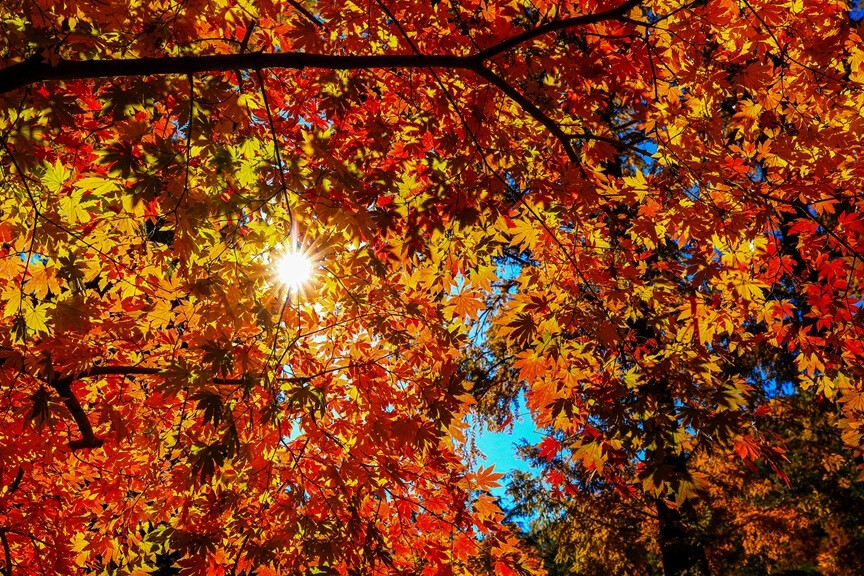
It is also notable that the peak periods of autumn scenery are dualized. Fall foliage shows its deepest colors from mid-October to mid-November, while Metasequoias peak from mid-November to the end of November. Because the peaks of the two landscapes are staggered, visitors encounter a completely different forest depending on when they visit. A longer peak season means more choices for visitors, but it also means prolonged congestion.
Traffic Jams Across a 4km Section
The biggest challenge during the peak season is traffic. The 4km section of road leading to the recreation forest usually takes 10 minutes to pass, but on autumn weekends, it takes 1 to 2 hours. Daejeon City responds by designating weekends and holidays in November as a "traffic countermeasure period."
The measures are specific. Large bus group visitors must drop off passengers in the recreation forest parking lot and then move their vehicles to the Giseong Middle School playground or a temporary parking lot on Beolgok-ro. A turning space for large buses has been established in the 2urator parking lot, and a center line blocking facility is installed along a 1.2km section to completely block roadside parking. Major roadways and areas around nearby social welfare facilities are intensive crackdown zones. Visitors should follow the directions of on-site guides rather than relying solely on navigation guidance.
Circulation Routes Determine Perceived Congestion
If you only want to see the suspension bridge, you don't have to stick to the regular route starting from the entrance. Parking your car at the multipurpose stadium parking lot allows you to reach the bridge in just 1 minute of walking via stairs. Entering through the back door takes about 5 minutes. This is an efficient option for visitors with limited time and is expected to disperse the concentration toward the front gate.
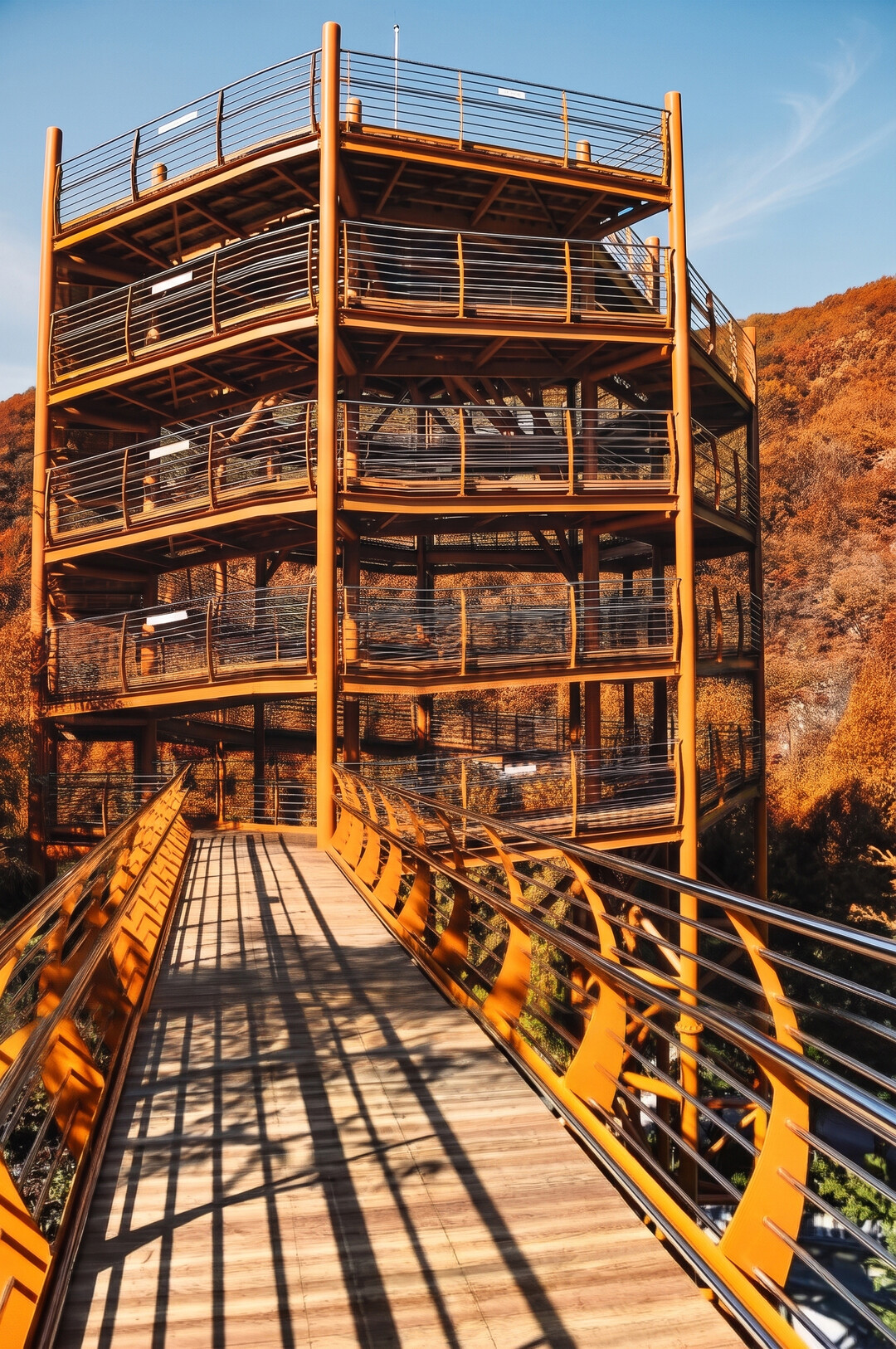
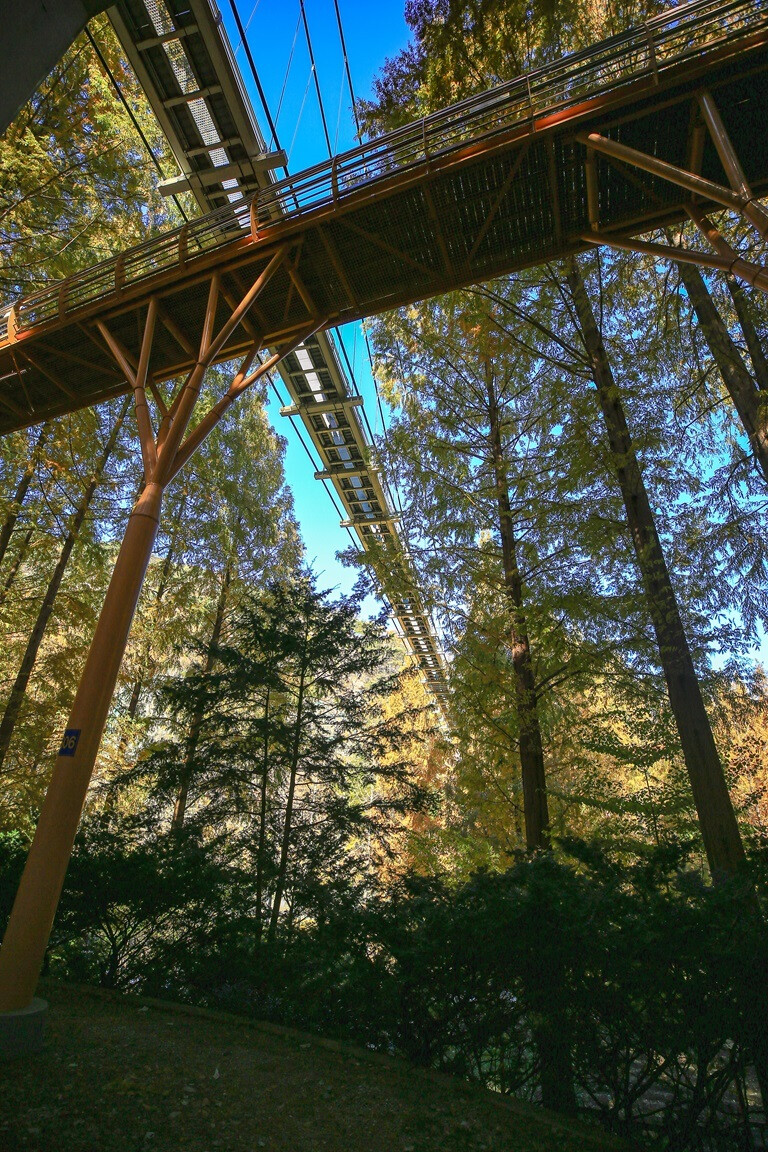
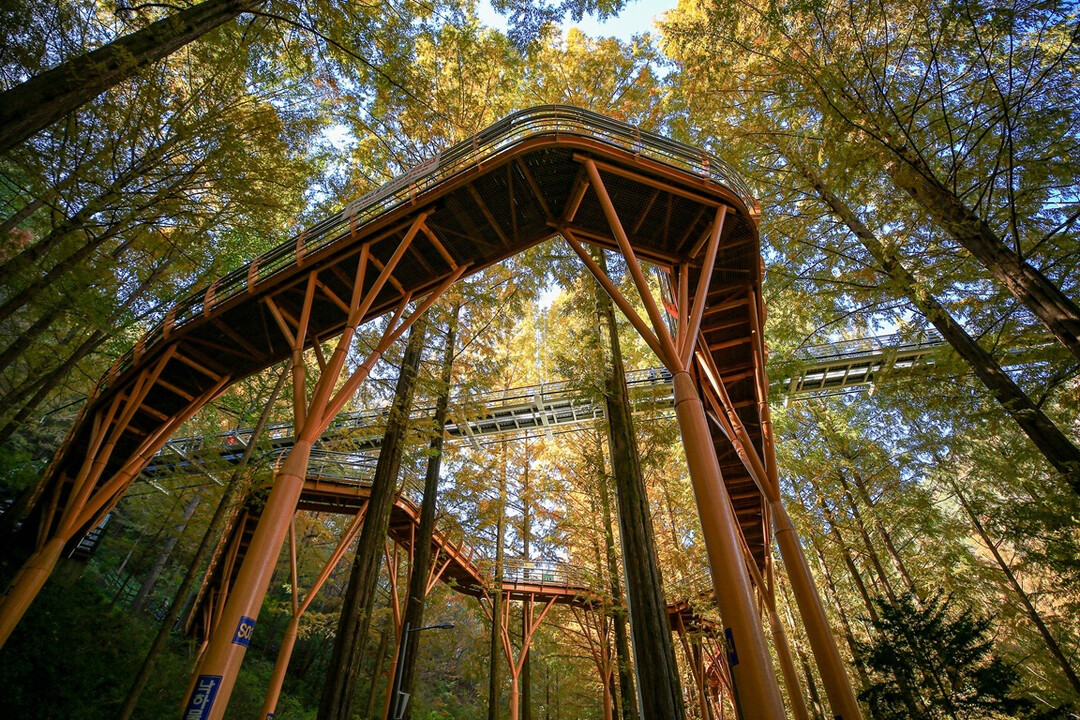
The forest's composition is phased. The Metasequoia forest, health reflexology path, textbook botanical garden, ecological pond, and forest classroom handle ground-level experiences. The suspension bridge (140m long, 50m high), Skyway (12m high, 116m long), and Sky Tower (27m), completed in 2019, draw the gaze upward. Visitors face the tree tops, which they used to look up at from below, at eye level. From the observatory above Hyeongjebawi (Brother Rocks), Jangtaesan's peak, sunset, and bizarre rocks come into view at a glance.
Seasonal Operating Hours, Late Autumn as a Variable
Operating hours for Forest Adventure and the suspension bridge vary by season. From March to June and September to October, they are open from 9 AM to 6 PM, and in July and August when days are longer, until 7 PM. From November to February of the following year, they close at 5 PM. The difference between the longest and shortest times reaches up to two hours.
This difference changes visitation strategies. In mid-October when autumn foliage is at its peak, arriving around noon and scheduling a walk through the forest path and crossing the suspension bridge is completely manageable. After mid-November, days shorten and closing times are advanced, so it is better to move in the morning or early afternoon. This is the point late-autumn visitors looking for the final glow of Metasequoias must pay most attention to.
The Structure of 44,000 Won per Night, Reading Peak Season Criteria
Accommodation facilities are divided into forest houses, forest training centers, recreation halls, and campsites, with meeting rooms operated separately. Check-in is at 3 PM and check-out is by 11 AM the next day. Rates are calculated per room per day and are divided into peak and off-peak seasons. Peak seasons include all days in July and August, Friday and Saturday weekends, and the day before holidays; the rest are off-peak.
The cheapest rooms are 4-person rooms. The 4-person rooms in the forest training center (28㎡) and recreation hall (24㎡) cost 44,000 won in the off-peak season and 76,000 won in the peak season. The 5-person room in the forest training center (33㎡) is 56,000 won in the off-peak and 102,000 won in the peak season. For 6-person rooms, both forest houses and recreation halls are 33㎡ in size, costing 75,000 won in the off-peak and 134,000 won in the peak season. The 10-person room in the recreation hall (66㎡) is 118,000 won in the off-peak and 197,000 won in the peak season, while the largest 15-person forest house (132㎡) is 250,000 won in the off-peak and 350,000 won in the peak season. Campsites have the same rates across zones A, B, and C at 20,000 won in the off-peak and 25,000 won in the peak season. Meeting rooms (50 people, 181㎡) cost 100,000 won for a 4-hour morning or afternoon use, and 200,000 won for full-day use combining morning and afternoon.
Two points stand out in the rate table. First, peak season rates are about 1.25 to 1.8 times higher than off-peak rates. The largest gap is found in the forest training center 5-person room, which rises from 56,000 won to 102,000 won. Campsites show only a 5,000 won difference.
Second, peak season criteria include Fridays and Saturdays. Visitors wishing to stay overnight during autumn foliage weekends essentially pay peak season rates. Since off-peak rates apply from Sunday to Thursday nights unless they are holidays, moving days for the same room significantly reduces the burden.
The more people there are, the lower the per-person burden. Off-peak 4-person rooms cost about 11,000 won per person, and 10-person rooms about 11,800 won. Even in peak season, 4-person and 10-person rooms remain around 20,000 won per person. However, all accommodations operate on a prior reservation system, and many reviews say reservations are not easy. The tension between public facility accessibility and supply limits reveals itself here.
Another Story the Forest Holds
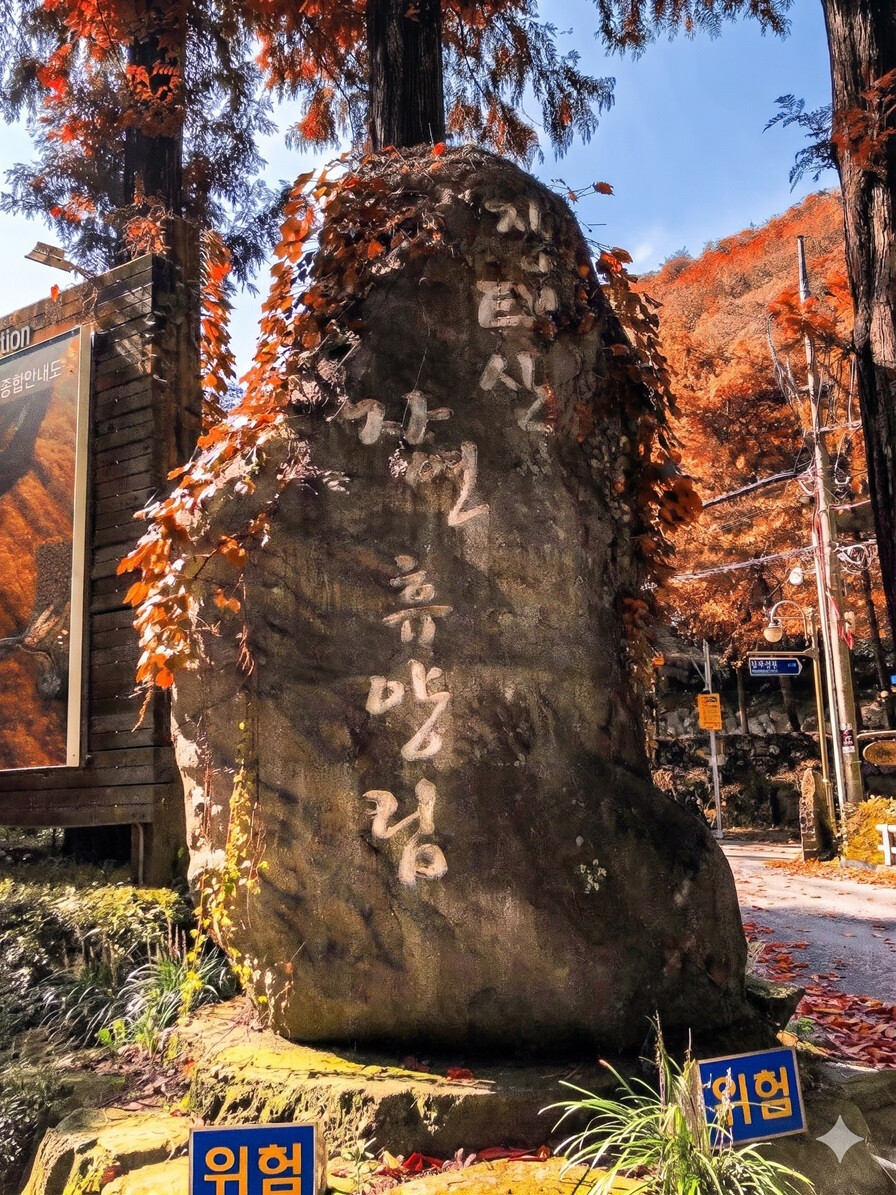
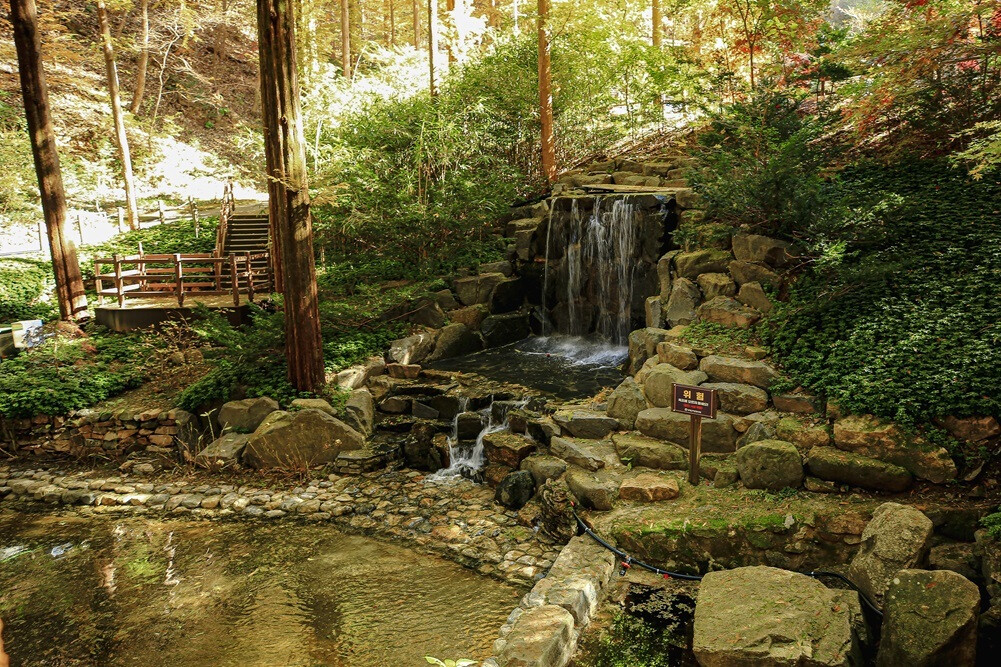
Jangtaesan’s value goes beyond scenery. At the entrance, there is an information sign announcing the habitat of the moss salamander, Daejeon's flagship species. The moss salamander was first discovered in Jangtaesan in 2003, and Daejeon City designated it as a flagship species in 2014 along with the flying squirrel and Gamdol-gogi (gobgeon). The forest's ecological value has been officially recognized.
The path of history also continues. The "Jangang Jinsanseong Pilgrimage Trail," a 7km walk from the recreation forest to Jinsanseong Fortress in Geumsan-gun, Chungcheongnam-do, traces the footsteps of Korea's first martyrs Yun Ji-chung and Kwon Sang-yeon. It is also a life path where peddlers and villagers walked to go to the market. With Geumsan-gun and Seo-gu, Daejeon, signing a business agreement and stepping up maintenance, the recreation forest is expanding from a day-trip course into a starting point for walking travel.
Tasks and Prospects
Jangtaesan Natural Recreation Forest has a rare structure where free admission, high-altitude experiences, and overnight stays are connected in one place. The process by which trees planted by an individual became a forest visited by 1.74 million people annually in half a century shows the power of public assets created by long-term vision.
However, peak season concentration, road congestion, and accommodation reservation difficulties remain tasks to be solved. How effective Daejeon City's traffic measures will be is expected to determine the satisfaction of autumn tourism. Individual visitor choices are also important. Arriving early in the morning before the morning mist clears, checking facility closing times in advance, and following the instructions of guides alone make the forest feel much more relaxed. If you plan to stay overnight, avoiding Fridays and Saturdays and targeting Sunday-to-Thursday nights is also a way. Until the end of November, the final glow of Metasequoias is still waiting.
[Copyright (c) Global Economic Times. All Rights Reserved.]