GIMHAE — As climate change increasingly threatens food security and agricultural stability, municipal researchers in Gimhae have unveiled a strategic blueprint prioritizing smart agriculture, localized supply chains, and bioenergy production.
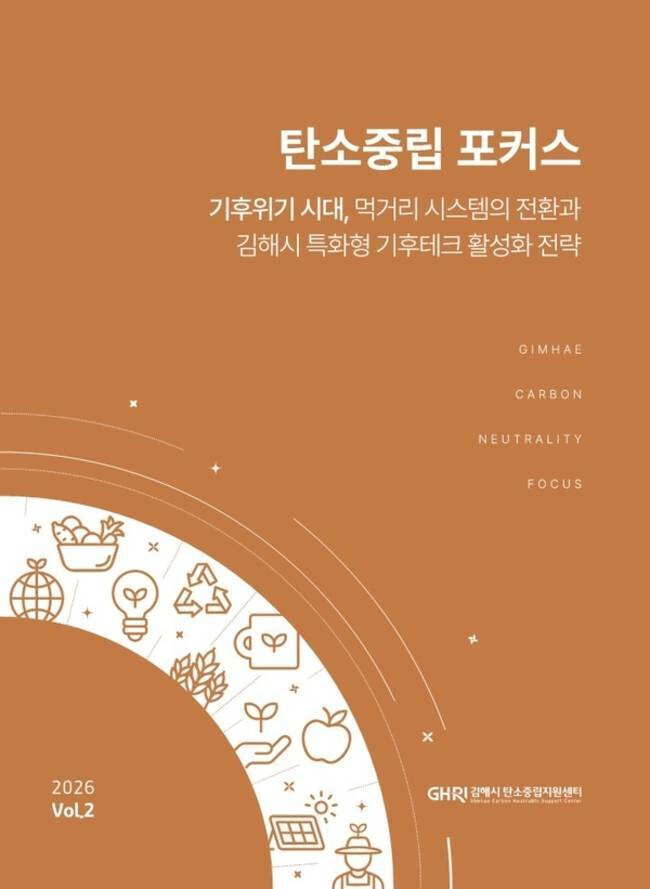
A recent report titled Carbon Neutrality Focus Vol. 2, published by the Gimhae Research Institute, outlines how the local agricultural sector can transition to a low-carbon model. The publication addresses mounting vulnerabilities—including crop yield volatility and price surges—and details systemic interventions spanning from farm production to food waste management.
Gimhae is uniquely positioned to spearhead these innovations, the report notes, citing existing regional infrastructure in greenhouse cultivation (specifically strawberries, tomatoes, and bell peppers), established local food networks, and advanced organic waste management facilities.
To capitalize on these assets, the institute recommends a phased implementation plan:
Immediate Action: Scaling up existing infrastructure-backed pilot programs.
Mid-Term Goals: Deploying paddy water management techniques along the Nakdong River basin, monitoring farmland climate patterns, and validating agricultural carbon-reduction practices.
Long-Term Vision: Integrating smart farming, local food distribution, and biogas generation into a cohesive, circular municipal food economy.
Additionally, the institute emphasizes the necessity of robust Measurement, Reporting, and Verification (MRV) frameworks to track greenhouse gas reductions, alongside exploring potential linkages with carbon credit markets through localized environmental conservation efforts.
[Copyright (c) Global Economic Times. All Rights Reserved.]