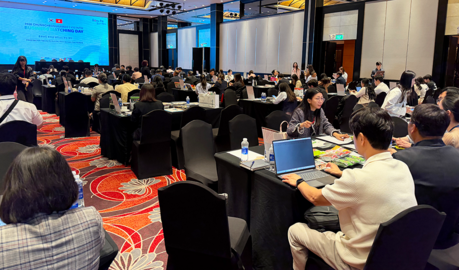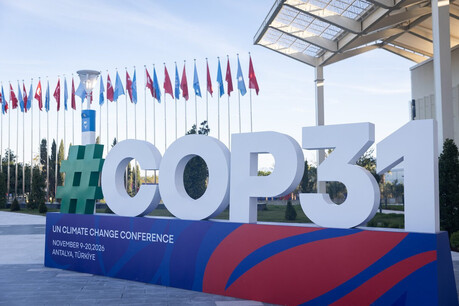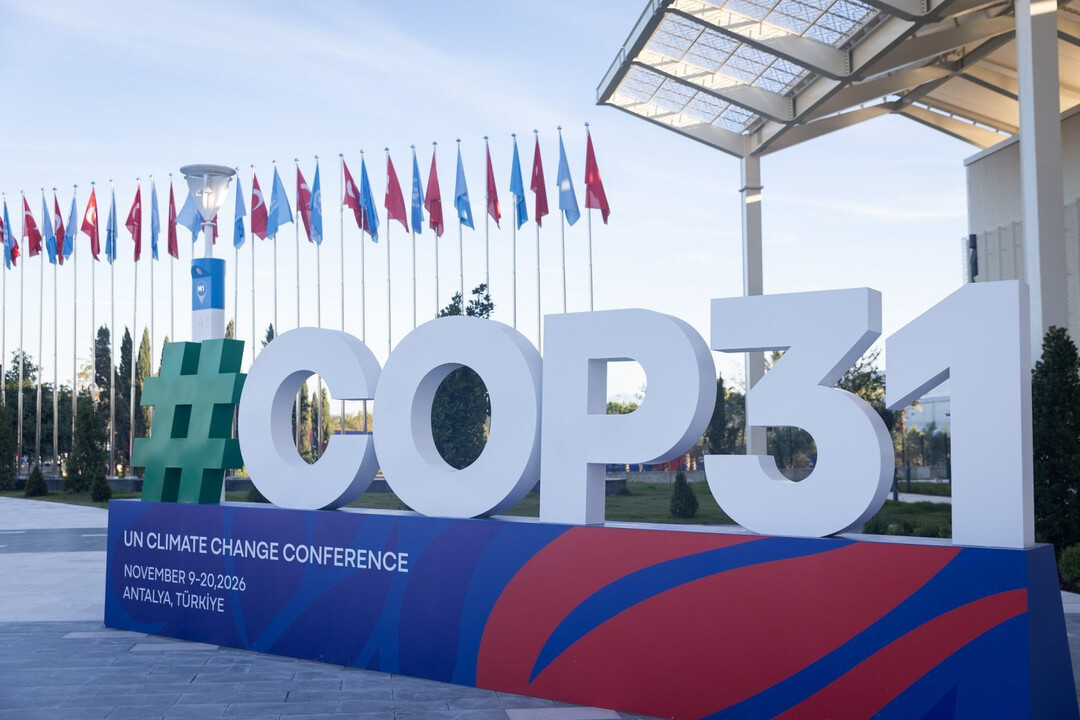
ANTALYA — The 31st United Nations Climate Change Conference (COP31) officially commenced its 12-day run in the southern Turkish coastal city of Antalya, bringing together delegates from 198 nations, international organizations, and civil society groups.
Marking a decade since the landmark adoption of the Paris Agreement—which aims to cap global warming at 1.5°C above pre-industrial levels—this year's summit is officially themed as the "Implementation COP." However, analysts and diplomats have tempered expectations, pointing to persistent geopolitical fragmentation, ongoing Middle East conflicts, and energy market volatility.
A notable absence looms over the summit as the United States, which accounts for roughly one-eighth of global greenhouse gas emissions, skips sending an administration delegation for the second consecutive year. Following executive orders by President Donald Trump withdrawing the U.S. from the Paris Agreement and subsequently the UN Framework Convention on Climate Change (UNFCCC), the nation is slated to officially lose its party status by February.
Growing Ambition Gaps and Institutional Friction
Recent environmental metrics underline a widening chasm between climate pledges and reality. According to a recent United Nations Environment Programme (UNEP) assessment, global emissions must plummet by 18% compared to last year to secure a pathway limiting long-term warming to 1.5°C. Even if current national commitments are met in full, projections indicate a meager 5% to 8% reduction.
Preparatory tensions have also surfaced in diplomatic channels. In a rare arrangement, Turkey and Australia—who competed fiercely to host COP31—agreed to divide leadership roles, with Turkey serving as the host president and Australia acting as the negotiating president, a compromise critics cite as reflective of current international friction.
Focus on the "35x35 Electrification Pledge" and AI Impact
Despite grim prospects for sweeping multilateral agreements, host nation Turkey is spearheading targeted action initiatives, notably the "35x35 Electrification Pledge." The initiative calls for nations to source at least 35% of final energy consumption from electricity by 2035, up from the current global average of approximately 23%.
While the International Energy Agency (IEA) projects that technological readiness and current energy market dynamics could push electrification rates to 33% by the target year, environmental watchdogs have raised concerns. Analysts warn that if expanding electricity demands are met by scaling up fossil-fuel-based power generation, the transition could inadvertently deepen reliance on hydrocarbons.
Artificial intelligence (AI) has also emerged as a central agenda item. Turkey, in partnership with the International Telecommunication Union (ITU), unveiled the "Antalya AI Pledge," which encourages technology providers to transparently disclose the energy footprints of AI services and increase the utilization of zero- and low-carbon power sources.
Financial Roadmaps and South Korea’s Role
Discussions surrounding climate finance remain a critical friction point. While prior summits established broad frameworks aiming to mobilize at least $300 billion annually for developing nations by 2035—scaling up to $1.3 trillion through combined public and private sources—concrete execution strategies remain sparse. The conference will also initiate the second Global Stocktake (GST) to evaluate collective progress under the Paris Agreement, alongside debates on mitigating temporary temperature "overshoot" periods and curbing methane emissions.
Representing South Korea, Climate, Energy, and Environment Minister Kim Sung-hwan leads the government delegation. Seoul plans to coordinate closely with the Environmental Integrity Group (EIG)—which includes Switzerland, Mexico, Monaco, Liechtenstein, and Georgia—to bridge negotiating divides. Furthermore, the South Korean delegation aims to pursue a decarbonization memorandum of understanding with negotiating president Australia, alongside a series of high-level bilateral talks with the European Union, the United Kingdom, and Kenya.
[Copyright (c) Global Economic Times. All Rights Reserved.]