• 2026.11.08 (Sun)
  • All articles
  • LOGIN
  • JOIN
Global Economic Times
[등록] 2026-09-01 15:48:31
  • Synthesis
  • World
  • Business
  • Industry
  • ICT
  • Distribution Economy
  • Well+Being
    • Pet Life
    • Halal Horizon
  • Travel
  • Eco-News
  • Education
  • Korean Wave News
  • Opinion
  • Arts&Culture
  • Sports
  • People & Life
    • International Student Report
    • With Ambassador
  • Column
    • Cho Kijo Column
    • Cherry Garden Story
    • Ko Yong-chul Column
    • Kim Seul-Ong Column
    • Lee Yeon-sil Column
  • Photo News
  • New Book Guide
MENU
 
Home > ICT

AI Infrastructure Boom Sparks Community Pushback: A Comparative Look at US Referendums and South Korea’s Grid Dilemma

Global Economic Times Reporter / Updated : 2026-11-08 19:10:00
  • -
  • +
  • Print

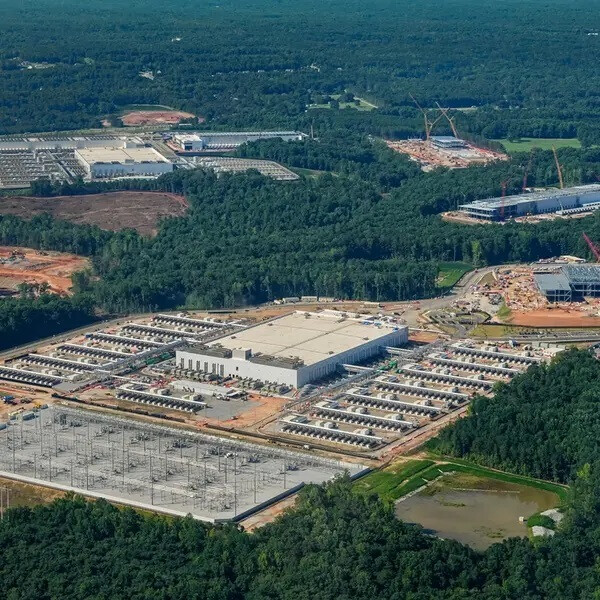
As artificial intelligence continues to drive a global surge in data center construction, communities are increasingly pushing back against the massive infrastructure footprints required to power these facilities. A recent wave of local policy votes in the United States highlights a growing public friction over energy consumption, environmental noise, and utility cost hikes—raising questions for rapidly expanding markets like South Korea.

The American Backlash: Local Resistance and Grid Strain

Recent electoral outcomes across the United States signal strong local opposition to unchecked data center expansion. According to public data tracking via platforms like Ballotpedia, the vast majority of municipal measures concerning data center limits or moratoriums during recent midterms resulted in victories for anti-development or restrictive initiatives. Dozens of towns and cities have either halted or heavily regulated new proposals.

The underlying catalysts for this resistance are multi-faceted. Residents and local policymakers have raised alarms over resource strain—specifically massive water usage for cooling—alongside noise pollution and potential air quality degradation. More prominently, economic anxieties have surged regarding electricity bills. In several US regions, household utility rates have climbed notably as power providers invest heavily in generation and grid infrastructure to meet heavy tech-sector demand. Recent research from national laboratories indicates that data centers could claim a substantially higher share of total national electricity consumption by the end of the decade, intensifying competition for grid capacity.

South Korea’s Balancing Act: Ambitious Targets Meet Local Friction

Similar flashpoints are emerging across South Korea. In neighborhoods from Seoul’s Geumcheon district to Gyeonggi Province cities such as Gwacheon, Gimpo, and Goyang, residents have organized protests and legal challenges against data center projects located near residential zones, citing health worries, fire risks, and acoustic disturbances.

Despite these grassroots concerns, national policy remains focused on scaling up digital infrastructure. South Korean authorities have outlined major initiatives to develop gigawatt-scale AI data center capacity over the next decade. Adjustments by energy planning committees have notably revised power demand projections upward to accommodate anticipated artificial intelligence workloads.

However, this expansion introduces unique structural challenges within South Korea’s energy market. Unlike decentralized or private utility systems where costs pass directly to consumers, South Korea’s government-influenced electricity pricing structure insulates retail customers from immediate price spikes. Instead, the financial weight of reinforcing transmission and substation networks frequently falls upon the state-run utility, Korea Electric Power Corporation (KEPCO). With massive capital already earmarked for grid upgrades over the coming decades—and questions remaining over whether current long-term plans fully incorporate these new tech loads—policymakers face a delicate balancing act.

In response to these fiscal and grid-stability pressures, government officials have signaled a more cautious approach, indicating that unconfirmed or speculative demand forecasts may be trimmed from upcoming long-term electricity supply plans to ensure sustainable grid management.

[Copyright (c) Global Economic Times. All Rights Reserved.]

  • #Cherry Garden
  • #HalalFood
  • #Halal
  • #Petlife
  • #Halalhorizone
  • #Hormuz Impasse
  • #globaleconomictimes
  • #micorea
  • #mykor
Global Economic Times Reporter
Reporter Page

Popular articles

  • World Citizens are Flying Directly to Busan... The Era of 4 Million Foreigners is Just Around the Corner

  • Samsung Electronics Enters the 100 Trillion Won Quarterly Operating Profit Era

  • Should AI Frontrunners Slow Down: Responsible Decision or Monopoly Strategy?

I like it
Share
  • Facebook
  • X
  • Kakaotalk
  • LINE
  • BAND
  • NAVER
  • https://globaleconomictimes.kr/article/1065607481977623 Copy URL copied.
Comments >

Comments 0

Weekly Hot Issue

  • Chungcheongnam-do Secures $23.73 Million in Export Agreements in Ho Chi Minh City and Hanoi
  • From 200,000 Trees to 1.74 Million People: How a Forest Planted by One Man Became a Public Recreational Forest
  • The Burden of the Breach: Why Data Leak Clean-Up Falls Squarely on Consumers
  • Sejong, the City Resembling Seoul: A Royal Dining Journey Along the Geum River
  • Restoring Hearing with Genes, Cochlear Implants with Robots: Where Does Hearing Loss Treatment Stand Today?
  • "Swap Snacks for Two Handfuls of Pecans?": How Triglycerides Dropped After 12 Weeks

Most Viewed

1
Why Can't We Use 'Muse' in Korea?… Zuckerberg Says, "Due to a Lack of Data Centers"
2
US Army Conducts Rare Temporary Burial Drills to Prepare for Worst-Case Large-Scale War Scenarios
3
Eating 100g of Baechu Kimchi Daily Linked to Lower High-Cholesterol Risks
4
World Citizens are Flying Directly to Busan... The Era of 4 Million Foreigners is Just Around the Corner
5
November Shopping Festival Sparks Retail War in South Korea: Where to Find the Best Deals
체리가든 스토리
nutri huevos
로타리
동포저널

Hot Issue

COP31 Kicks Off in Antalya Amid Low Expectations and Complex Geopolitical Pressures

Shattered Expectations: Why Wall Street’s Post-Midterm Stock Rally Stumbled

Digital Detour: Why MZ Generation is Trading Smartphones for "Diginori" and Analog Diaries

Fashion Runway Show 2026

Let’s recycle the old blankets in Jeju Island’s closet instead of incinerating them.

Global Economic Times
korocamia@naver.com
CEO : LEE YEON-SIL
Publisher : KO YONG-CHUL
Registration number : Seoul, A55681
Registration Date : 2024-10-24
Youth Protection Manager: KO YONG-CHUL
Singapore Headquarters
5A Woodlands Road #11-34 The Tennery. S'677728
Korean Branch
Phone : +82(0)10 4724 5264
#304, 6 Nonhyeon-ro 111-gil, Gangnam-gu, Seoul
Copyright © Global Economic Times All Rights Reserved
  • 향기네무료급식
  • APEC2025
  • 반달곰 프로젝트
Search
Category
  • All articles
  • Synthesis
  • World
  • Business
  • Industry
  • ICT
  • Distribution Economy
  • Well+Being 
    • 전체
    • Pet Life
    • Halal Horizon
  • Travel
  • Eco-News
  • Education
  • Korean Wave News
  • Opinion
  • Arts&Culture
  • Sports
  • People & Life 
    • 전체
    • International Student Report
    • With Ambassador
  • Column 
    • 전체
    • Cho Kijo Column
    • Cherry Garden Story
    • Ko Yong-chul Column
    • Kim Seul-Ong Column
    • Lee Yeon-sil Column
  • Photo News
  • New Book Guide
  • Overseas Koreans
  • Multicultural News