• 2026.03.08 (Sun)
  • All articles
  • LOGIN
  • JOIN
Global Economic Times
fashionrunwayshow2026
  • Synthesis
  • World
  • Business
  • Industry
  • ICT
  • Distribution Economy
  • Well+Being
  • Travel
  • Eco-News
  • Education
  • Korean Wave News
  • Opinion
  • Arts&Culture
  • Sports
  • People & Life
    • International Student Report
    • With Ambassador
  • Column
    • Cho Kijo Column
    • Cherry Garden Story
    • Ko Yong-chul Column
    • Kim Seul-Ong Column
    • Lee Yeon-sil Column
  • Photo News
  • New Book Guide
MENU
 
Home > Synthesis

KAIST's Quadruped Robot, Raibo 2, to Attempt a Full Marathon

Hwang Sujin Reporter / Updated : 2024-11-16 11:10:40
  • -
  • +
  • Print


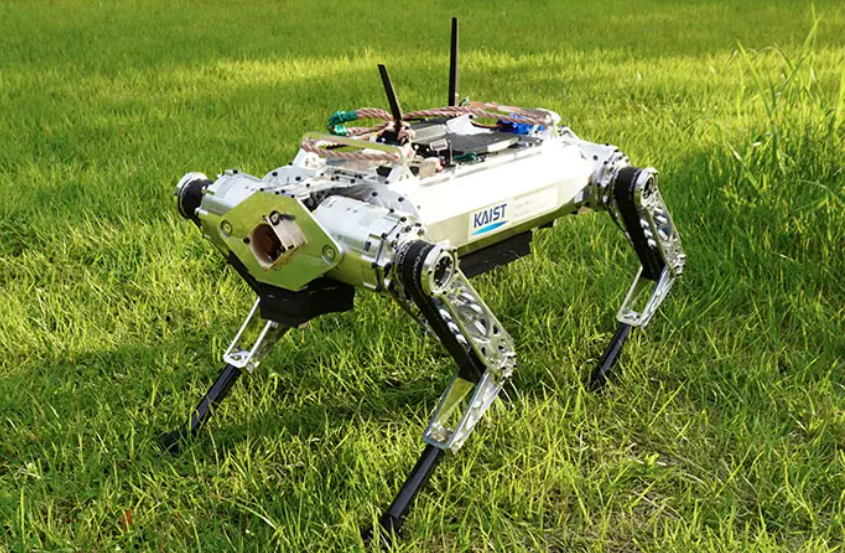
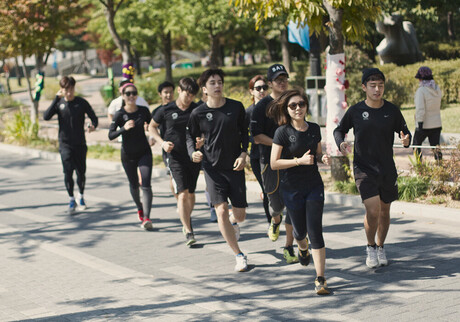
Daejeon, South Korea – A team of researchers at the Korea Advanced Institute of Science and Technology (KAIST) has announced that their quadruped robot, Raibo 2, will attempt to complete a full marathon (42.195 km) at the 2024 Sangju Ggotgam Marathon on November 17th. This marks the first time a quadruped robot will attempt to run a full marathon, providing a real-world test of the robot's capabilities.

Raibo 2 has already demonstrated impressive endurance in a pre-test, completing a 43 km run in 4 hours and 40 minutes on the KAIST campus. This pace is comparable to the average male runner or a top female runner.

Quadruped robots have the potential to perform tasks in challenging environments, such as factories, disaster zones, and mountainous terrains. However, a major limitation has been their limited range. The energy consumption required to support the robot's weight and overcome uneven terrain has typically limited their operating range to around 20 km.

Raibo 2 addresses this limitation with a significantly improved battery life, capable of continuous operation for 43 km on a single charge. The robot also features a faster gait, achieving a speed of 6 meters per second compared to its predecessor's 3.8 meters per second.

These advancements were achieved through a combination of hardware and software improvements. The research team developed a new control algorithm based on reinforcement learning, which allows the robot to optimize its gait for energy efficiency. Additionally, they created a detailed simulation model of the robot to test different gait patterns and identify areas for improvement.

The team also addressed the battery drain issue that caused Raibo 2 to fail to complete a previous marathon attempt. By improving the robot's mechanical design and control system, they were able to increase the battery capacity and reduce energy consumption.

"This research is a significant step towards expanding the operational range of quadruped robots to urban environments," said Lee Chung-in, a researcher involved in the project. "By analyzing the robot's performance in a real-world marathon, we can identify areas for further improvement and accelerate the development of more advanced quadruped robots."

[Copyright (c) Global Economic Times. All Rights Reserved.]

Hwang Sujin Reporter

Popular articles

  • Tzuyang Reveals Massive Expenses: $33,000 Annual Delivery Bill and "Luxury Car" Monthly Income

  • Memoirs of Late Prime Minister Lee Hae-chan Tops Bestseller List Following Presidential Endorsement

  • BTS to Stream ‘ARIRANG’ World Tour Live in 3,500 Theaters Globally

I like it
Share
  • Facebook
  • X
  • Kakaotalk
  • LINE
  • BAND
  • NAVER
  • https://globaleconomictimes.kr/article/1065578931754602 Copy URL copied.
Comments >

Comments 0

Weekly Hot Issue

  • L’Oréal Korea and Naver Forge Strategic Partnership to Revolutionize AI-Driven Beauty Commerce
  • Domino’s Korea Embraces "Authentic Stateside Flavors" with New American Classic Pizza Duo
  • K-Inner Beauty Dominates Japan: Sales Surge 90% on Qoo10 Japan
  • Sempio and KFRI Join Forces to Pioneer High-Value Food Technologies
  • LG H&H Expands Japanese Footprint: Vegan Brand 'Freshian' Debuts at Biople by CosmeKitchen
  • 29CM’s '29HOME WEEK' Shatters Records: Home & Interior Sales Triple in 10 Days

Most Viewed

1
Adwa’s Echo in Korea: A Shared Story of Dignity and Freedom
2
2026, The Grand Year of Hangeul Celebration — The River of History Where Five Streams Converge
3
A New Milestone for Ukraine’s Post-War Reconstruction: The Birth of ISVP
4
Mexican currency and the powerful history behind its designs
5
Revised and Expanded Edition of ‘Failure of Negotiations with North Korea: Truth and Solutions’ Published
광고문의
임시1
임시3
임시2

Hot Issue

Hanwha Aerospace Solidifies Baltic Stronghold with $330M Defense Investment in Estonia

From $20 to $400: The Explosive "Vintage Digicam" Craze Gripping Korea’s Gen Z and Millennials

Yujin Robot Evolves Industrial Automation: Integrating Autonomous Mobility and Collaborative Robotics

SK On Slashes 37% of US Workforce Amid Global EV Slowdown

Let’s recycle the old blankets in Jeju Island’s closet instead of incinerating them.

Global Economic Times
korocamia@naver.com
CEO : LEE YEON-SIL
Publisher : KO YONG-CHUL
Registration number : Seoul, A55681
Registration Date : 2024-10-24
Youth Protection Manager: KO YONG-CHUL
Singapore Headquarters
5A Woodlands Road #11-34 The Tennery. S'677728
Korean Branch
Phone : +82(0)10 4724 5264
#304, 6 Nonhyeon-ro 111-gil, Gangnam-gu, Seoul
Copyright © Global Economic Times All Rights Reserved
  • 에이펙2025
  • APEC2025가이드북TV
  • 독도는우리땅
Search
Category
  • All articles
  • Synthesis
  • World
  • Business
  • Industry
  • ICT
  • Distribution Economy
  • Well+Being
  • Travel
  • Eco-News
  • Education
  • Korean Wave News
  • Opinion
  • Arts&Culture
  • Sports
  • People & Life 
    • 전체
    • International Student Report
    • With Ambassador
  • Column 
    • 전체
    • Cho Kijo Column
    • Cherry Garden Story
    • Ko Yong-chul Column
    • Kim Seul-Ong Column
    • Lee Yeon-sil Column
  • Photo News
  • New Book Guide
  • Multicultural News
  • Jobs & Workers