![[등록] 2026-09-01 15:48:31](/support/_updata/banner2/tl181982910_6749.png)


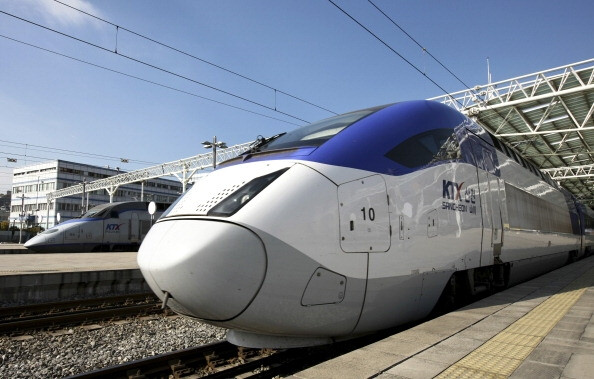
(C) Korea Portal
The South Korean government has officially announced plans to merge the nation's two high-speed rail operators, Korea Railroad Corporation (Korail) and SR Co., Ltd. (SRT operator), by 2026. This move marks the end of a decade-long period of limited competition that began with the launch of the SR (Super Rapid Train) service in 2016. The Ministry of Land, Infrastructure, and Transport (MOLIT) unveiled a "High-Speed Rail Integration Roadmap" on December 8, 2025, detailing a phased integration of ticketing systems, operating structures, and organizations.
The integration is set to bring immediate, visible changes to passenger services:
Expanded Access at Suseo Station: Customers will gain the ability to use KTX rolling stock at Suseo Station, significantly increasing the number of available seats departing from the often-congested southern Seoul terminal.
Inter-Running of Trains: Starting in March 2026, KTX and SRT trains will begin inter-running (교차 운행), allowing KTX trains to operate on the SRT-exclusive Suseo-Pyeongtaek line and vice versa. By June 2026, this cross-operation will be fully liberalized, meaning either operator's trains can run freely on both lines (Seoul-Busan/Mokpo and Suseo-Busan/Mokpo).
Integrated Ticketing: The separate KTX and SRT reservation apps will be consolidated. An initial update in March 2026 will allow users to view nearby stations regardless of the operating company, followed by a full single-app integration by the end of 2026.
Fare Adjustment: Korail plans to lower KTX fares by 10%, matching the current SRT price level. However, a major change under review is the potential abolition of the long-standing KTX mileage accumulation program.
Integration Backlash: Concerns Over Safety and Service Quality
Despite the promise of increased capacity and simplified booking, the integration plan faces strong criticism from industry experts and watchdog groups. The primary concern is that a return to a monopoly system will eliminate the service and fare competition fostered by the SRT, potentially leading to complacency, safety hazards, and a decline in service quality.
Critics point out that the merger is being pushed forward without addressing the long-standing structural issues plaguing the state-owned rail enterprise, such as a high debt ratio and a history of recurring safety incidents.
Professor Emeritus Kang Kyung-woo of Hanyang University's Department of Transportation and Logistics Engineering questioned the government's rationale, stating, "When the two companies were separated, the justification was to improve financial deficits and enhance consumer convenience. Now, they are pushing for integration using the same grounds." He emphasized that the move is being implemented without sufficient review of how it will truly resolve passenger inconvenience in the long run.
The unification debate highlights a fundamental conflict: the efficiency gained from a single operator managing rolling stock and routes versus the pressure for innovation and better service that competition brings. The government insists that the integration is necessary to maximize operational efficiency and better utilize the national rail assets, particularly the shared high-speed rail infrastructure.
Conclusion: A Risky Bet on Operational Efficiency
The merger of Korail and SR is a high-stakes decision that prioritizes system integration and capacity optimization over market competition. While passengers will benefit from immediate conveniences like more seats from Suseo and unified ticketing, the long-term challenge for the newly merged entity will be to prove that it can maintain the same level of service and safety that competition once compelled. The integration roadmap must be accompanied by stringent oversight and effective structural reforms to prevent a return to the operational shortcomings often associated with monopolistic public enterprises. The coming years will reveal whether this move secures a more efficient rail system or merely reverts to old habits.
[Copyright (c) Global Economic Times. All Rights Reserved.]