![[등록] 2026-09-01 15:48:31](/support/_updata/banner2/tl181982910_6749.png)


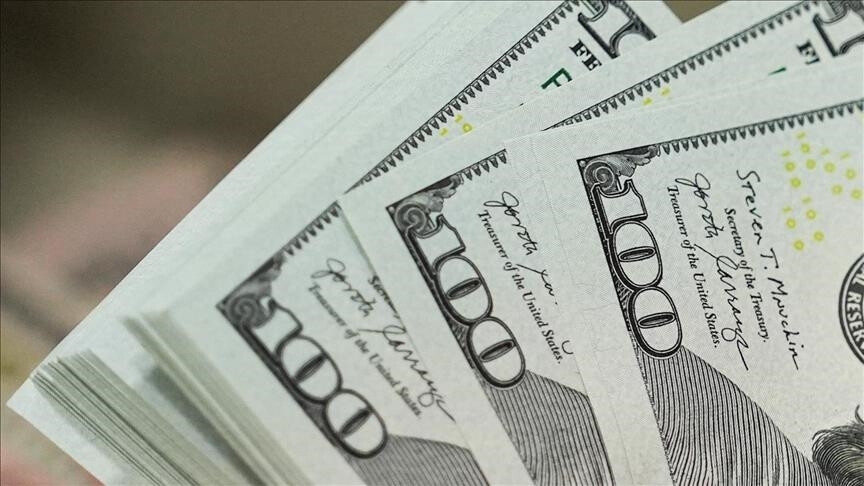
SEOUL – The South Korean won breached the psychologically significant 1,500 level against the U.S. dollar in overnight trading before retracing slightly to close at 1,497.50 won. The currency market remains under intense pressure as investors weigh escalating geopolitical risks in the Middle East against a backdrop of conflicting economic signals from the United States.
At 2:00 a.m. KST on Saturday, the dollar-won exchange rate finished at 1,497.50 won, up 16.30 won from the previous day’s close in Seoul. The late-night surge followed a volatile session where the greenback fluctuated in response to shifting oil prices and labor data.
A Tug-of-War Between GDP and PCE
The trading day began with a brief reprieve for the won. Early in the New York session, the exchange rate dipped below 1,490 won after the U.S. government announced a temporary waiver allowing the sale of sanctioned Russian crude oil currently stranded at sea. This move provided a momentary cooling effect on global oil prices.
Further downward pressure on the dollar came from the U.S. Department of Commerce’s revised GDP figures. The second estimate for Q4 real GDP showed a mere 0.7% annualized growth, a sharp deceleration from the initial estimate of 1.4%.
However, any hopes for a dovish pivot were quickly dashed by the January Personal Consumption Expenditures (PCE) price index. The headline PCE rose 0.3% month-on-month, while the core PCE—the Federal Reserve’s preferred inflation gauge—climbed 0.4%. These figures confirmed that inflationary pressures were becoming "sticky" even before the full impact of the Iran conflict hit the energy markets.
Labor Resilience and the Return of the Hawks
The momentum shifted decisively in favor of the dollar following robust labor data. The U.S. Labor Department reported that job openings (JOLTS) jumped to 6.946 million in January, significantly higher than the market forecast of 6.7 million.
The resilient labor market, coupled with persistent inflation, sent the Dollar Index (DXY) back above the 100.00 mark. Consequently, the dollar-won rate surged, briefly touching an intraday high of 1,500.90 won before settling just below the threshold.
Sonu Varghese, a global macro strategist at Carson Group, noted that the inflation dilemma for the Federal Reserve has worsened. "The latest PCE data shows that inflation was a problem even before the Middle East crisis," Varghese said. "It is increasingly likely that the Fed will not cut rates in 2026. In fact, we may see discussions shift toward a rate hike in the second half of this year."
Market Outlook
As of 2:41 a.m., the yen-won cross rate stood at 936.07 won per 100 yen, while the yuan-won rate was quoted at 216.45 won. The total trading volume for the day reached $14.566 billion.
With the 1,500-won level now being tested, analysts warn of increased volatility. "The combination of energy-driven inflation and a hawkish Fed creates a perfect storm for the won," said one local currency trader. "Market participants are now bracing for the possibility of 1,500 becoming the new baseline if geopolitical tensions do not subside."
[Copyright (c) Global Economic Times. All Rights Reserved.]