![[등록] 2026-09-01 15:48:31](/support/_updata/banner2/tl181982910_6749.png)


(C) Axios
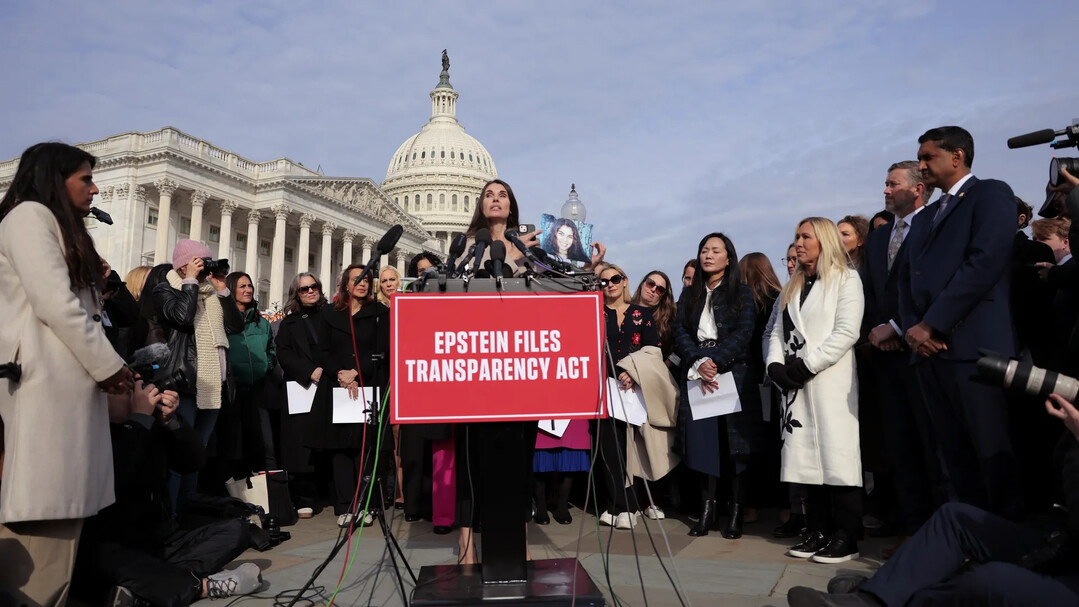
WASHINGTON D.C. — A significant victory for victims of the late, disgraced financier Jeffrey Epstein and his associate Ghislaine Maxwell has been achieved as federal judges in both New York and Florida ordered the release of vast caches of documents, including previously protected grand jury transcripts and evidence. This move, which tears down traditional barriers of confidentiality, is mandated by the newly enacted Epstein Files Transparency Act, a bipartisan legislative triumph signed into law by President Donald Trump on November 19, 2025. The deadline for the Department of Justice (DOJ) to release these files is set for December 19, 2025.
The decisions, made by U.S. District Judge Paul Engelmayer in New York concerning the Maxwell case, and U.S. District Judge Rodney Smith in Florida regarding the abandoned 2005–2007 federal investigation into Epstein, mark a turning point in the years-long fight for accountability. Before the law's passage, federal judges had consistently refused to unseal grand jury materials, citing their traditionally sacrosanct confidentiality.
The Catalyst: The Epstein Files Transparency Act
The Epstein Files Transparency Act (H.R. 4405) compels the Attorney General to make publicly available, in a searchable and downloadable format, all unclassified records, documents, communications, and investigative materials held by the DOJ, FBI, and U.S. Attorneys' Offices that relate to Jeffrey Epstein and Ghislaine Maxwell.
Strikingly Broad Scope: Judge Engelmayer explicitly noted the law’s "strikingly broad" language, which Congress deliberately included to override the traditional secrecy of grand jury proceedings. The Act’s text specifically mentions Ghislaine Maxwell and makes no exception for grand jury materials, while explicitly excluding other categories such as classified information and images of child sexual abuse material (CSAM).
The Legislative Journey: The bill's path to enactment was highly unusual. After months of resistance from the Trump administration—which had previously released a memo stating no further disclosure was needed—bipartisan pressure from Congress, spearheaded by Representatives Ro Khanna (D-CA) and Thomas Massie (R-KY), forced a vote through a rare discharge petition. Despite his earlier opposition, President Trump made a sudden reversal, urging Republicans to support the bill and signing it swiftly after it passed the House (427-1) and the Senate (unanimous consent).
What Victims Hope to Uncover
The survivors of Epstein's vast sex trafficking network, believed to number up to 1,000, have fought tirelessly for the release of these files. Their primary motivation is not simply transparency but securing long-overdue justice and accountability.
The victims and their advocates seek to answer critical questions:
Identify Associates: To determine the full scope of Epstein's network and uncover the identities of powerful and wealthy acquaintances who may have facilitated his crimes, discouraged past investigations, or were complicit in his alleged trafficking.
Institutional Failures: To reveal why Epstein was able to avoid meaningful prosecution for years, shining a light on potential misconduct or institutional failures within federal agencies that may have betrayed the survivors' trust.
Following the Evidence: Advocates hope the released documents—which include flight logs, financial records, search warrants, and internal DOJ communications about charging decisions—will serve as "actionable intelligence" for new investigations and potential prosecutions of those involved.
Protecting Privacy in a Public Release
Both court orders emphasized the need for victim protection as the massive volume of documents is prepared for release. Judge Engelmayer specifically mandated the DOJ establish a mechanism to prevent the inadvertent release of information that would identify or invade the privacy of victims.
The Transparency Act permits the redaction or withholding of materials only on limited grounds:
Personally identifiable information (PII) of victims.
Child sexual abuse materials (CSAM).
Information that would jeopardize an active federal investigation (provided the withholding is narrow and temporary).
Crucially, the law explicitly prohibits withholding records solely to prevent embarrassment, reputational harm, or political sensitivity for government officials, public figures, or foreign dignitaries.
Trump Weighs in on Market Share and Monopolies
In a separate but concurrent political development, President Donald Trump commented on the proposed acquisition by Netflix of Warner Bros. Discovery's film and television studios and streaming division for $72 billion. Speaking to reporters in Washington, the President stated that the deal "could be a problem" due to the size of the combined market share it would create.
Trump confirmed he would be involved in the federal government's decision on whether to approve the merger, noting the substantial increase in market share that would result from uniting one of Hollywood's oldest studios with the world's largest streaming service. The President’s concern over market concentration echoes his past comments on media mergers, suggesting the deal faces a challenging regulatory review process.
The judge's decision to release the files will further pressure the DOJ ahead of the December 19 deadline, bringing the long-shadowed network of Jeffrey Epstein and his associates into the harsh glare of public scrutiny.
[Copyright (c) Global Economic Times. All Rights Reserved.]