![[등록] 2026-09-01 15:48:31](/support/_updata/banner2/tl181982910_6749.png)


SEOUL — South Korea has secured a critical foothold in the global race for semiconductor sovereignty. The Korea Advanced Nano Fab Center (KANC) announced on March 29, 2026, that it has achieved a breakthrough in the localized production of high-performance compound semiconductor devices—a field previously dominated by total import reliance.
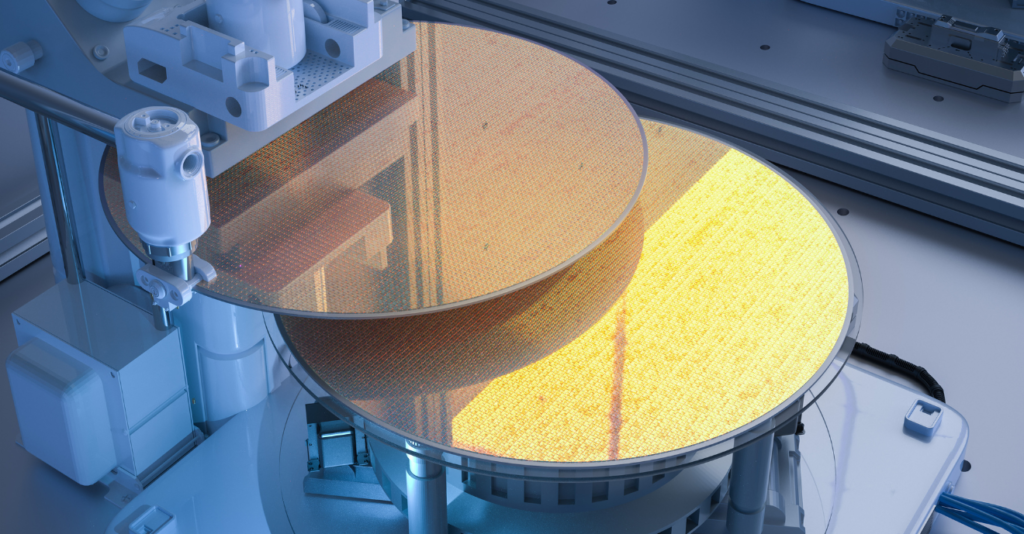
The center confirmed it has reached a 95% yield rate in the manufacturing process for 4-inch Gallium Arsenide (GaAs) metamorphic High Electron Mobility Transistors (mHEMT). This milestone is expected to revolutionize South Korea’s capabilities in defense, aerospace, and next-generation communications.
The "Nuclear Core" of Defense Technology
The GaAs mHEMT is a compound semiconductor device created by combining two or more elements. It is widely regarded as the successor to silicon (Si) based semiconductors, overcoming the latter's physical limitations.
Key advantages include:
Superior Speed: Electron mobility is 5 to 6 times faster than that of silicon.
Signal Integrity: It maintains powerful amplification performance in ultra-high frequency bands without signal distortion.
Extreme Durability: It meets rigorous reliability standards required for outer space, where radiation exposure is high, and functions flawlessly in extreme environments.
Due to these traits, the device is often called the "nuclear core of defense semiconductors." It is an essential component for Advanced Electronically Scanned Array (AESA) radars and missile seekers used in cutting-edge weaponry.
Breaking the Scaling Barrier
Historically, Gallium Arsenide has been notoriously difficult to handle due to its brittle nature compared to silicon. Consequently, production was largely limited to small-scale 2 or 3-inch wafers. Despite South Korea's strong design capabilities, a lack of domestic manufacturing infrastructure meant that over 90% of these core components had to be imported from overseas.
By transitioning from the traditional 2-3 inch scale to a 4-inch large-area wafer while maintaining a 95% yield, KANC has effectively bridged the gap between research and mass production. This achievement significantly enhances both production efficiency and quality control.
Building a Self-Sustaining Ecosystem
KANC is now shifting its focus toward fostering a domestic "fabless" ecosystem. The center has begun developing a Process Design Kit (PDK)—a digital toolkit containing physical characterization data of the manufacturing process. Once this platform is finalized, domestic fabless companies will be able to design complex, high-performance chips using KANC’s 4-inch process for local mass production.
Furthermore, the center will provide Multi-Project Wafer (MPW) support. MPW allows multiple companies to share a single wafer for their designs, drastically reducing the prototype costs for small-to-medium-sized enterprises (SMEs), which can otherwise reach hundreds of millions of won per wafer.
"The 4-inch wafer process will be a turning point in lowering production costs and accelerating supply speeds," said an industry official. "A 95% yield indicates that the process has reached a level of stability suitable for actual commercialization and mass production, moving far beyond the simple R&D stage."
By resolving the long-standing issues of high costs and extended waiting times associated with overseas foundries, this localization effort is set to become the primary engine driving the autonomy of South Korea’s compound semiconductor industry.
[Copyright (c) Global Economic Times. All Rights Reserved.]