![[등록] 2026-09-01 15:48:31](/support/_updata/banner2/tl181982910_6749.png)


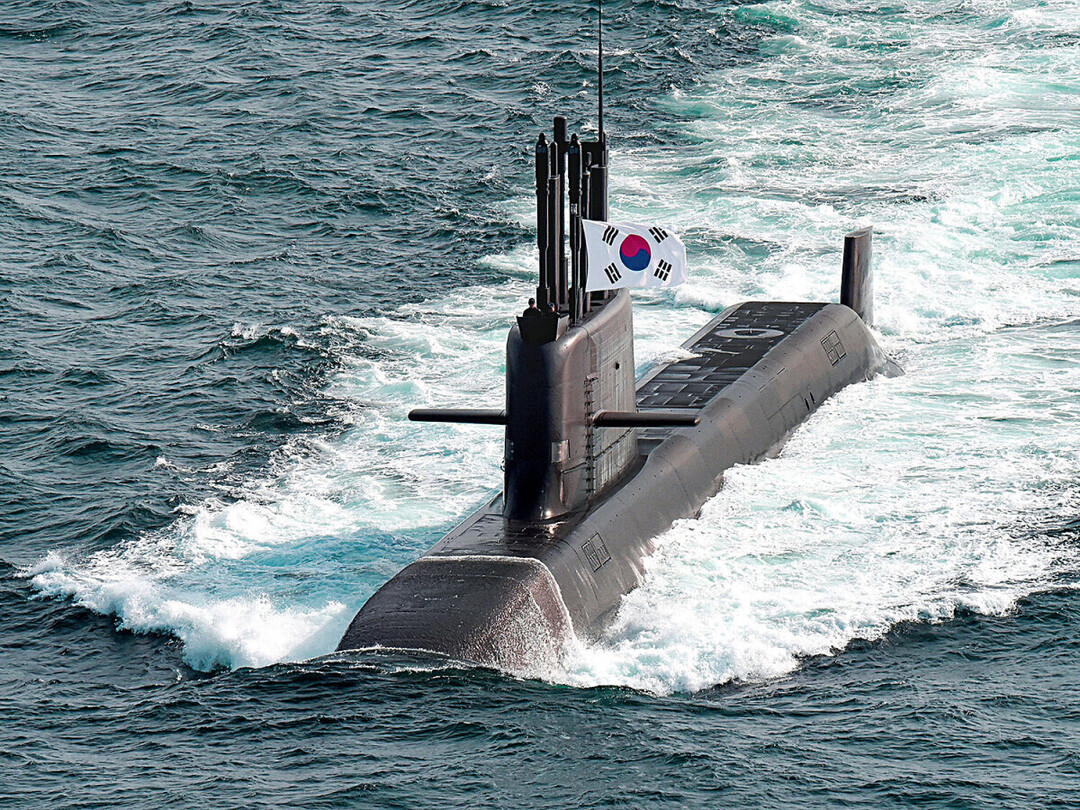
The government’s proposed defense budget for next year has surpassed 70 trillion won for the first time in history. The defense budget growth rate stands at 8.2%, marking the largest increase in 18 years since the Roh Moo-hyun administration in 2008. Notably, 100 billion won has been allocated for the first time to advance the nuclear-powered submarine project.
The government announced that the defense budget for next year has been set at 73.2777 trillion won, an increase of 5.5737 trillion won from this year’s budget of 67.7040 trillion won.
The substantial expansion in defense spending aligns with a push for self-reliant defense, with the government aiming to raise defense spending to 3.5% of Gross Domestic Product (GDP) by 2035. Based on the government proposal, next year's defense budget-to-GDP ratio is projected at 2.33%, a slight increase from this year's 2.28%.
The budget for introducing core capabilities for self-reliant defense was set at 21.3 trillion won, up from last year's 18.6 trillion won. The budget for 24 types of infiltration equipment for the Special Warfare Command surged 13.8-fold from 98 billion won last year to 134.8 billion won. Additionally, the budget for essential non-guided munitions for the 230mm Chunmoo multiple rocket launcher increased from 180.3 billion won to 550.4 billion won.
For the nuclear-powered submarine project pursued as a national strategic initiative, 100 billion won was allocated for the first time for initial operations such as design and research. A Ministry of National Defense official stated, "We are currently in the stage of analyzing the total cost required for the nuclear submarine project, and we believe that amount is necessary solely for design and reviews."
The mass-production budget for the domestically developed KF-21 supersonic fighter jet increased from 1.4 trillion won this year to 3.3 trillion won. The budget to build manned-unmanned teaming systems utilizing Artificial Intelligence (AI), robotics, and drones in preparation for future warfare rose from 800 billion won to 1.2 trillion won.
Force operation expenses, which are used for service members' welfare improvements and general military administration, were allocated 50.0416 trillion won, a 5.95% increase from the previous year's 47.2318 trillion won. In response to population decline and changing advanced battlefield environments, the government plans to significantly expand recruitment of technology-intensive non-commissioned officers and raise the total monthly compensation for a first-year sergeant (Ha-sa) to around 3 million won.
Meanwhile, next year's budget for the Ministry of Unification was set at 1.2549 trillion won, up 10.2 billion won (0.82%) from this year. The ministry allocated 1.0115 trillion won to the Inter-Korean Cooperation Fund used for inter-Korean exchange and cooperation projects—a 0.91% increase. In particular, the budget for economic cooperation-based loan projects was expanded more than threefold to 199.4 billion won. A Ministry of Unification official noted, "This reflects the government's commitment to resuming inter-Korean exchanges and cooperation." Conversely, the operational budget for the North Korean Human Rights Foundation, which has failed to launch due to bipartisan disagreements since the enactment of the North Korean Human Rights Act in 2016, was heavily slashed by 89.5% to just 50 million won.
Next year's budget for the Ministry of Foreign Affairs was set at 3.7033 trillion won, an increase of 88.1 billion won (2.4%) from this year's 3.6152 trillion won. The cybersecurity budget saw a massive fourfold increase, jumping from 3.8 billion won this year to 15.5 billion won next year. Meanwhile, the Official Development Assistance (ODA) budget decreased by 21.9 billion won (1%) from 2.1861 trillion won this year to 2.1642 trillion won next year.
[Copyright (c) Global Economic Times. All Rights Reserved.]