• 2025.12.05 (Fri)
  • All articles
  • LOGIN
  • JOIN
Global Economic Times
APEC2025KOREA가이드북
  • Synthesis
  • World
  • Business
  • Industry
  • ICT
  • Distribution Economy
  • Well+Being
  • Travel
  • Eco-News
  • Education
  • Korean Wave News
  • Opinion
  • Arts&Culture
  • Sports
  • People & Life
  • Column
    • Cho Kijo Column
    • Lee Yeon-sil Column
    • Ko Yong-chul Column
    • Cherry Garden Story
  • Photo News
  • New Book Guide
MENU
 
Home > Business

US Tariffs to Fully Hit Japanese Heavy Trucks, Exemption on Pharmaceuticals Expected

Graciela Maria Reporter / Updated : 2025-09-28 08:11:49
  • -
  • +
  • Print


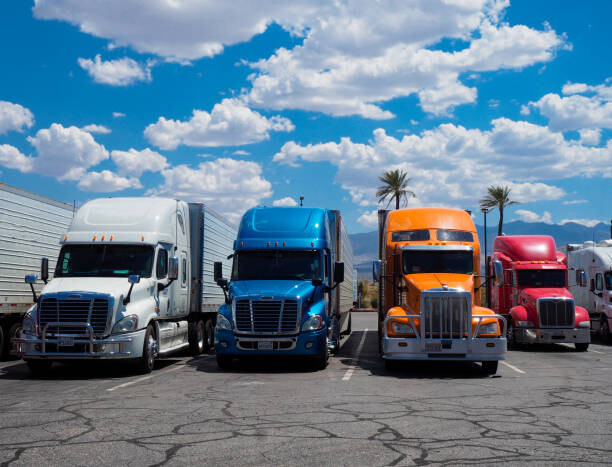
The United States is set to fully impose its newly announced 25% tariff on imported heavy trucks on Japan, starting October 1, according to a report by the Asahi Shimbun on September 27.

Unlike a recent trade agreement that saw the tariff on Japanese passenger vehicles reduced from 27.5% to 15%, large trucks will not receive this special exemption. A White House official confirmed the decision to the Asahi Shimbun, stating bluntly, "A truck is not a passenger car... The heavy truck tariff will be fully applied to Japan."

This move comes as the Donald Trump administration broadens its use of tariffs, though there appears to be a softening on pharmaceutical duties for key allies. The previously announced 100% tariff on imported pharmaceuticals is now expected to be capped at 15% for both Japan and the European Union, based on their existing Most-Favored-Nation (MFN) trade status and framework agreements. The Nikkei reported that this suggests a limited impact on the Japanese pharmaceutical industry.

In a related development, the Japanese government is taking steps to bolster its supply chain resilience and foreign investment. The government revised an ordinance for the Japan Bank for International Cooperation (JBIC) to add automobiles and pharmaceuticals to the list of eligible sectors for equity investment and loans in developed nations. According to the Nikkei, this measure is intended to support the $550 billion investment in the U.S. that was agreed upon during the tariff negotiations.

Japanese Finance Minister Katsunobu Kato emphasized the importance of this initiative, saying, "It is extremely important for Japanese companies to build resilient supply chains in strategic sectors. It is necessary to swiftly promote investment going forward." The full application of the truck tariff underscores the US administration's selective approach to trade agreements, emphasizing that specific sectors remain targets despite broader bilateral agreements.

[Copyright (c) Global Economic Times. All Rights Reserved.]

  • #globaleconomictimes
  • #micorea
  • #mykorea
  • #Lifeplaza
  • #nammidonganews
  • #singaporenewsk
  • #Samsung
  • #Daewoo
  • #Hyosung
  • #A
Graciela Maria Reporter

Popular articles

  • Mother Suspected of Trafficking 12-Year-Old Daughter for Sexual Exploitation in Japan

  • Japan Pioneers External Airbags for Cyclist Safety, Revolutionizing Auto Industry Protection

  • "Louvre" Was the Password: State Audit Slams Museum's Security Gaps, Full Upgrade Not Expected Until 2032

I like it
Share
  • Facebook
  • X
  • Kakaotalk
  • LINE
  • BAND
  • NAVER
  • https://globaleconomictimes.kr/article/1065568227998912 Copy URL copied.
Comments >

Comments 0

Weekly Hot Issue

  • China Stages Massive Naval Show of Force Amid Heightened Tensions with Japan
  • EU Launches Antitrust Probe into Meta Over WhatsApp AI Chatbot Restrictions
  • Sports Icons Converge as 2026 FIFA World Cup Draw Approaches
  • Russia Vows 'Strongest Response' as EU Proposes Using Frozen Assets for Ukraine Loan
  • US Layoffs Surge: Over 1.17 Million Job Cuts Announced in First 11 Months of 2025
  • EU Weighs 'Buy European' Rule: Up to 70% Local Content for Key Products

Most Viewed

1
Korean War Ally, Reborn as an 'Economic Alliance' Across 70 Years: Chuncheon's 'Path of Reciprocity,' a Strategic
2
A Garden Where the City's Rhythm Stops: Dongdaemun's 'Cherry Garden', Cooking Consideration and Diversity
3
The Sudden Halt of Ayumi Hamasaki's Shanghai Concert: Unpacking the Rising Sino-Japanese Tensions
4
Farewell to a Legend: South Korea Mourns the Passing of Esteemed Actor Lee Soon-jae
5
China’s Anti-Starlink Strategy: Simulation Suggests 2,000 Drones Needed for Taiwan Disruption
광고문의
임시1
임시3
임시2

Hot Issue

Global Billionaire Count Hits 2,919, Total Wealth Reaches $15.8 Trillion

China Stages Massive Naval Show of Force Amid Heightened Tensions with Japan

Russia Vows 'Strongest Response' as EU Proposes Using Frozen Assets for Ukraine Loan

UK and Norway Form Joint Naval Fleet to Counter Rising Russian Submarine Threat

Let’s recycle the old blankets in Jeju Island’s closet instead of incinerating them.

Global Economic Times
korocamia@naver.com
CEO : LEE YEON-SIL
Publisher : KO YONG-CHUL
Registration number : Seoul, A55681
Registration Date : 2024-10-24
Youth Protection Manager: KO YONG-CHUL
Singapore Headquarters
5A Woodlands Road #11-34 The Tennery. S'677728
Korean Branch
Phone : +82(0)10 4724 5264
#304, 6 Nonhyeon-ro 111-gil, Gangnam-gu, Seoul
Copyright © Global Economic Times All Rights Reserved
  • 에이펙2025
  • APEC2025가이드북TV
  • 세종시
Search
Category
  • All articles
  • Synthesis
  • World
  • Business
  • Industry
  • ICT
  • Distribution Economy
  • Well+Being
  • Travel
  • Eco-News
  • Education
  • Korean Wave News
  • Opinion
  • Arts&Culture
  • Sports
  • People & Life
  • Column 
    • 전체
    • Cho Kijo Column
    • Lee Yeon-sil Column
    • Ko Yong-chul Column
    • Cherry Garden Story
  • Photo News
  • New Book Guide
  • Multicultural News
  • Jobs & Workers