• 2026.06.05 (Fri)
  • All articles
  • LOGIN
  • JOIN
Global Economic Times
fashionrunwayshow2026
  • Synthesis
  • World
  • Business
  • Industry
  • ICT
  • Distribution Economy
  • Well+Being
  • Travel
  • Eco-News
  • Education
  • Korean Wave News
  • Opinion
  • Arts&Culture
  • Sports
  • People & Life
    • International Student Report
    • With Ambassador
  • Column
    • Cho Kijo Column
    • Cherry Garden Story
    • Ko Yong-chul Column
    • Kim Seul-Ong Column
    • Lee Yeon-sil Column
  • Photo News
  • New Book Guide
MENU
 
Home > ICT

China Outpaces Korea in Robotics, EVs, and Next-Gen Tech: KIET Report

Kim Sungmoon Reporter / Updated : 2026-02-25 07:32:58
  • -
  • +
  • Print

(C) Guandong News


SEOUL – A chilling wind is blowing through Korea’s high-tech corridors. A comprehensive report released on February 24, 2026, by the Korea Institute for Industrial Economics and Trade (KIET) reveals a stark reality: China has effectively overtaken South Korea in nearly all key "future growth engines," including robotics, electric vehicles (EVs), batteries, and autonomous driving.

The report, titled "Analysis of Korea-China Competitiveness in Cutting-edge Industries and Policy Directions," is based on extensive expert surveys and Focused Group Interviews (FGI). It paints a picture of a China that is no longer a "follower" but a dominant leader in the global tech ecosystem.

The Rise of the Machines: Robotics and Humanoids
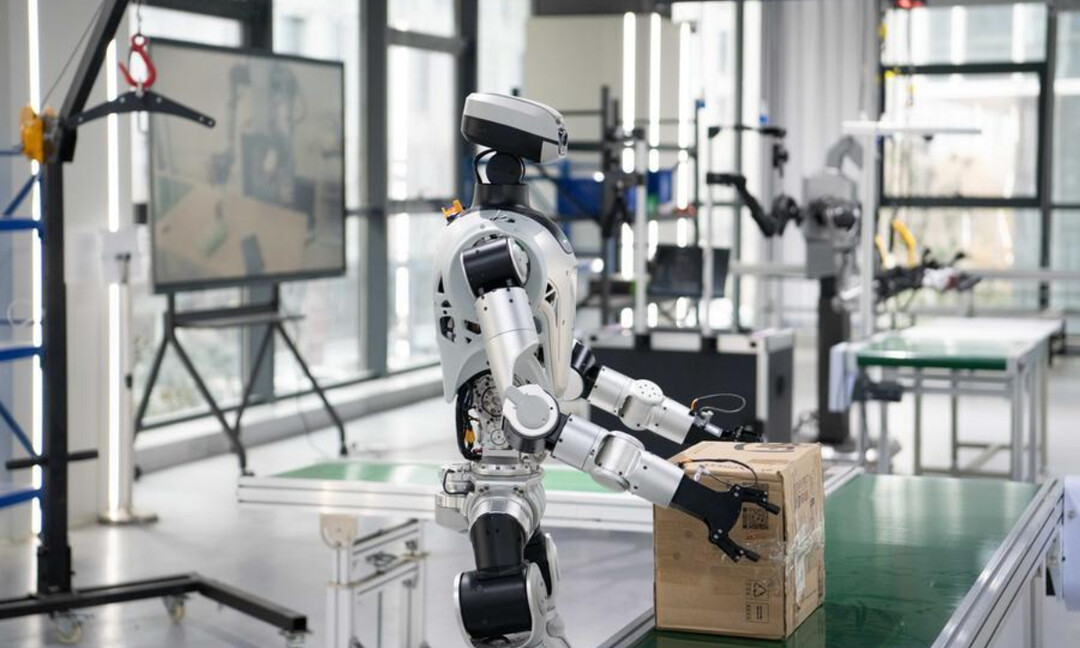
The gap was most visible at the recent CES 2026 in Las Vegas. While global crowds once flocked to Korean booths, the spotlight has shifted to Chinese firms like Unitree and Engine AI. Their humanoid robots—capable of backflips, sparring with humans, and engaging in complex dialogue—demonstrated that China has moved beyond mere manufacturing into advanced AI integration.

According to KIET, while Korea maintains a razor-thin lead in fundamental R&D and design for industrial robots, China has seized the upper hand in supply chain procurement, production, and global market creation. "China’s aggressive state-led support has pushed humanoid robots into the commercialization stage," the report notes, adding that Chinese service robots for cleaning, serving, and logistics already dominate the global market.

EVs and Batteries: A Strategic Shift
The battle for the road is also tilting in Beijing's favor. While Korea still holds a slight edge in after-sales service and global marketing, China leads in almost every other segment of the EV value chain. The synergy between China's massive internal market and its total control over the battery supply chain has created a formidable barrier.

In the realm of autonomous driving, the verdict was even more definitive. Experts agree that China’s lead is "clear and overwhelming," fueled by vast troves of real-world testing data, superior AI algorithms, and a robust software ecosystem that Korea currently struggles to match.

The Semiconductor Paradox
Perhaps most surprising is the shift in semiconductors. While Korea remains the undisputed king of Memory Chips, China has carved out a superior position in Non-memory (System) Semiconductors. From AI chip architecture to sophisticated semiconductor design platforms, Chinese firms are increasingly outperforming their Korean counterparts in innovation and agility.

Strategic Recommendations: Beyond Competition
How should Seoul respond? Park Sang-su, a senior researcher at KIET, suggests a paradigm shift. "Since 2015, the Chinese government has provided surgical, goal-oriented support for every link in the value chain," Park stated. "Korea must now move beyond viewing China as a mere rival to be overtaken."

The report outlines three critical strategic pillars:

Specialized Strategy: Identify niche, "Korea-only" specialized technologies where Korea can maintain a unique edge.
Strategic Collaboration: Acknowledge China as a manufacturing powerhouse and find ways to integrate Korean tech into China's massive domestic demand.
Real-world Verification: Scale up government-led "demonstration and distribution" projects to allow Korean robots and AI to be tested in real-world environments, bridging the gap between labs and markets.
As the tech landscape shifts, the KIET report serves as a wake-up call. The era of Korean technological hegemony in the East is being challenged, requiring a total overhaul of national industrial policy to ensure survival in a China-centric tech era.

[Copyright (c) Global Economic Times. All Rights Reserved.]
  • #Korea
  • #Seoul
  • #Hallyu
  • #USA
  • #Economy
  • #Busoness
  • #Global
  • #World
  • #Consumer
  • #Export
  • #Import
  • #Hanguel
  • #Travel
  • #Tour
  • #Food
Kim Sungmoon Reporter

Popular articles

  • "Chasing Samsung & SK Hynix": Semiconductor ETFs Soar While Inverse Products Plunge

  • The Unstoppable Semiconductor Rally: Why This 'Crazy' Surge Might Last Longer Than Expected Despite Overheating Fears

  • Nexon Cancels Three Projects in Major Restructuring, Pivots Focus to Global Hits

I like it
Share
  • Facebook
  • X
  • Kakaotalk
  • LINE
  • BAND
  • NAVER
  • https://globaleconomictimes.kr/article/1065565834826458 Copy URL copied.
Comments >

Comments 0

Weekly Hot Issue

  • Samsung Electronics Super-Enterprise Union Loses Majority Status Amid Backlash Over Bonus Disparities
  • Samsung to Embed Vital Signs and Heart Health Scores in Upcoming Galaxy Watch9 Lineup
  • Apple Honors Digital Excellence: 12 Exceptional Apps and Games Celebrated at the 2026 Design Awards
  • Nexon Revamps Signature Youth Coding Competition into AI-Driven 'Nexon Young Programmers Cup'
  • Tech University of Korea Gathers 200 Game and AI Researchers to Discuss Industrial Expansion
  • Major Korean Telcos Trim Online-Exclusive Plans by Up to 50% Amid Shift to Unified Mobile Tariffs

Most Viewed

1
From a moment of collective sacrifice to a moment of collective democracy: The Timing of the Election in Ethiopia and Korea
2
U.S. Holds Off on Immediate Comprehensive Semiconductor Tariffs, but Pressure Mounts for Samsung and SK Hynix to Accelerate Domestic Investments
3
[Interview] "Halal is Not a Religious Regulation, but a 'Trust Infrastructure'… Creating a Premium 'K-Halal' Centered on Data and Platforms"
4
‘600 Million Won Bonus’ at Samsung Electronics Triggers Deep Sense of Relative Deprivation Among Korean Workers
5
Musk’s SpaceX Secures Space Hegemony with Flawless Starship V3 Recovery Ahead of Historic IPO
광고문의
임시1
임시3
임시2

Hot Issue

Murata Unveils Next-Gen Resin Electrode MLCC for Automotive Applications

Samsung to Embed Vital Signs and Heart Health Scores in Upcoming Galaxy Watch9 Lineup

L&F Plus Secures KRW 220 Billion from National Growth Fund to Anchor South Korea’s First Mass LFP Cathode Production

Samsung Electronics Super-Enterprise Union Loses Majority Status Amid Backlash Over Bonus Disparities

Fashion Runway Show 2026

Global Economic Times
korocamia@naver.com
CEO : LEE YEON-SIL
Publisher : KO YONG-CHUL
Registration number : Seoul, A55681
Registration Date : 2024-10-24
Youth Protection Manager: KO YONG-CHUL
Singapore Headquarters
5A Woodlands Road #11-34 The Tennery. S'677728
Korean Branch
Phone : +82(0)10 4724 5264
#304, 6 Nonhyeon-ro 111-gil, Gangnam-gu, Seoul
Copyright © Global Economic Times All Rights Reserved
  • 에이펙2025
  • APEC2025가이드북TV
  • 반달곰 프로젝트
Search
Category
  • All articles
  • Synthesis
  • World
  • Business
  • Industry
  • ICT
  • Distribution Economy
  • Well+Being
  • Travel
  • Eco-News
  • Education
  • Korean Wave News
  • Opinion
  • Arts&Culture
  • Sports
  • People & Life 
    • 전체
    • International Student Report
    • With Ambassador
  • Column 
    • 전체
    • Cho Kijo Column
    • Cherry Garden Story
    • Ko Yong-chul Column
    • Kim Seul-Ong Column
    • Lee Yeon-sil Column
  • Photo News
  • New Book Guide
  • Multicultural News
  • Jobs & Workers