• 2026.01.21 (Wed)
  • All articles
  • LOGIN
  • JOIN
Global Economic Times
APEC2025KOREA가이드북
  • Synthesis
  • World
  • Business
  • Industry
  • ICT
  • Distribution Economy
  • Well+Being
  • Travel
  • Eco-News
  • Education
  • Korean Wave News
  • Opinion
  • Arts&Culture
  • Sports
  • People & Life
  • Column
    • Cho Kijo Column
    • Lee Yeon-sil Column
    • Ko Yong-chul Column
    • Cherry Garden Story
  • Photo News
  • New Book Guide
MENU
 
Home > Synthesis

South Korea's "Rich" Threshold Climbs to 3.3 Billion Won Amidst Growing Asset Disparity

Yim Kwangsoo Correspondent / Updated : 2025-03-01 07:21:05
  • -
  • +
  • Print

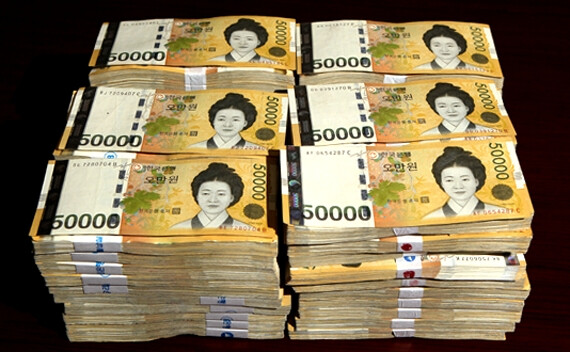
SEOUL – A recent survey conducted by Korea Gallup reveals a significant shift in South Koreans' perception of wealth, with the average threshold for being considered "rich" now standing at 3.3 billion won (approximately $2.4 million USD). This marks a substantial increase from 2.4 billion won just five years ago, reflecting the nation's evolving economic landscape.

The survey highlights a growing disparity in wealth perception, influenced by soaring housing prices and increased financial asset accumulation. Notably, residents of Seoul reported a significantly higher threshold of 4.4 billion won, underscoring the impact of the capital's inflated real estate market.

Survey Findings

The distribution of responses reveals that while 23% of participants considered 1 billion won sufficient to be deemed wealthy, a significant portion, 14% each, cited 2, 3, or 5 billion won. 12% of respondents considered 10 Billion won to be the threshold. This data highlights a wide range of opinions.

Demographic variations further illustrate these trends. Individuals in their 40s, a demographic often heavily invested in real estate and financial markets, reported an average of 3.9 billion won. Those who perceive themselves as living an upper-middle to upper-class lifestyle cited 4.1 billion won.

Economic Factors Driving the Change

Korea Gallup attributes this rising wealth threshold to several factors, primarily the widening gap in housing prices between the Seoul metropolitan area and other regions. The COVID-19 pandemic also played a role, fueling a surge in domestic and international stock investments, which in turn exacerbated financial asset disparity.

"The dramatic increase in housing prices, particularly in Seoul, has undoubtedly shifted people's perception of wealth," stated a Korea Gallup spokesperson. "Coupled with the surge in stock market participation, we've seen a clear divergence in asset accumulation."

Supporting Economic Data

According to Statistics Korea, the top 1% of wealthy individuals in South Korea possess a net worth of 3.28 billion won, closely aligning with the survey's findings. However, the average household net worth, as reported by the 2024 Statistics Korea Household Finance Welfare Survey, is 450 million won, revealing a substantial gap between the average citizen and the perceived "wealthy."

Historical Context

The evolution of wealth perception is evident when compared to historical data. In 1993, the average threshold was 1.3 billion won, with 75% of respondents considering 1 billion won or less as "rich." By 2019, this figure had risen to 2.4 billion won, with 40% citing 1 billion won or less. The current 3.3 billion won average and only 31% citing 1 billion or less, illustrates the rapid change.

Implications

The increasing wealth threshold and widening asset disparity raise concerns about social mobility and economic inequality in South Korea. As housing prices continue to climb and financial markets remain volatile, the perception of "wealth" is likely to evolve further.

This survey underscores the need for policies that address housing affordability and promote equitable asset distribution to mitigate the growing gap between the wealthy and the average citizen.

[Copyright (c) Global Economic Times. All Rights Reserved.]
  • #globaleconomictimes
  • #글로벌이코노믹타임즈
  • #한국
  • #중기청
  • #재외동포청
  • #외교부
  • #micorea
  • #mykorea
  • #newsk
  • #nammidonganews
  • #singaporenewsk
Yim Kwangsoo Correspondent

Popular articles

  • Samsung Biologics Acquires GSK’s U.S. Plant to Bypass Tariff Barriers

  • Seoul Apartment Prices Hit 19-Year High in 2025, Surpassing Previous Peak

  • Samsung Biologics Employee Indicted for Smuggling 2,800 Secret Blueprints Hidden Under Clothes

I like it
Share
  • Facebook
  • X
  • Kakaotalk
  • LINE
  • BAND
  • NAVER
  • https://globaleconomictimes.kr/article/1065565126501922 Copy URL copied.
Comments >

Comments 0

Weekly Hot Issue

  • “$3.20 for Coffee, 15 Cents for the Cup”: New Pricing Policy Leaves Café Owners Exhausted
  • “HBM Semiconductor Tech Stolen”: China Remains Top Destination for South Korea’s Leaked Technology
  • KOSPI Hits Historic 4,900 Mark After 12-Day Rally; Hyundai Motor Soars to 3rd in Market Cap
  • S. Korea Braces for Longest, Most Intense Cold Wave of the Season: Feels-like Temps to Plummet to -20°C
  • Trump Escalates Atlantic Tensions with ‘Greenland Tariffs’ Targeting European Allies
  • Wealthy Individuals Value Time Over Money: Insights into the "Rich Mindset"

Most Viewed

1
“The Answer Lies in the Field”... Incheon Superintendent Do Seong-hun Bets on ‘Educational Innovation’ for 2026
2
Territorial Plundering in the 21st Century: The Catastrophe Awaited by Trump’s ‘Order Through Force’
3
From 'Maduro Gray' to 'Hwang Hana Parka': Why Negative News Drives Fashion Consumption
4
Actress Goo Hye-sun Fast-tracks Master’s Degree at KAIST, Eyes Doctorate Next
5
South Korean Rebar Defies 50% Tariffs: A Strategic Pivot to the U.S. Amid Domestic Stagnation
광고문의
임시1
임시3
임시2

Hot Issue

KOSPI Hits Historic 4,900 Mark After 12-Day Rally; Hyundai Motor Soars to 3rd in Market Cap

“HBM Semiconductor Tech Stolen”: China Remains Top Destination for South Korea’s Leaked Technology

Hyundai’s ‘Atlas’ Shakes Up CES 2026: A Formidable Rival to Tesla’s Optimus

Long Queues in Sub-zero Temperatures: Hello Kitty Meets Jisoo as MZ Generation Flocks to Pop-up Store

Let’s recycle the old blankets in Jeju Island’s closet instead of incinerating them.

Global Economic Times
korocamia@naver.com
CEO : LEE YEON-SIL
Publisher : KO YONG-CHUL
Registration number : Seoul, A55681
Registration Date : 2024-10-24
Youth Protection Manager: KO YONG-CHUL
Singapore Headquarters
5A Woodlands Road #11-34 The Tennery. S'677728
Korean Branch
Phone : +82(0)10 4724 5264
#304, 6 Nonhyeon-ro 111-gil, Gangnam-gu, Seoul
Copyright © Global Economic Times All Rights Reserved
  • 에이펙2025
  • APEC2025가이드북TV
  • 독도는우리땅
Search
Category
  • All articles
  • Synthesis
  • World
  • Business
  • Industry
  • ICT
  • Distribution Economy
  • Well+Being
  • Travel
  • Eco-News
  • Education
  • Korean Wave News
  • Opinion
  • Arts&Culture
  • Sports
  • People & Life
  • Column 
    • 전체
    • Cho Kijo Column
    • Lee Yeon-sil Column
    • Ko Yong-chul Column
    • Cherry Garden Story
  • Photo News
  • New Book Guide
  • Multicultural News
  • Jobs & Workers