• 2026.04.21 (Tue)
  • All articles
  • LOGIN
  • JOIN
Global Economic Times
fashionrunwayshow2026
  • Synthesis
  • World
  • Business
  • Industry
  • ICT
  • Distribution Economy
  • Well+Being
  • Travel
  • Eco-News
  • Education
  • Korean Wave News
  • Opinion
  • Arts&Culture
  • Sports
  • People & Life
    • International Student Report
    • With Ambassador
  • Column
    • Cho Kijo Column
    • Cherry Garden Story
    • Ko Yong-chul Column
    • Kim Seul-Ong Column
    • Lee Yeon-sil Column
  • Photo News
  • New Book Guide
MENU
 
Home > Distribution Economy

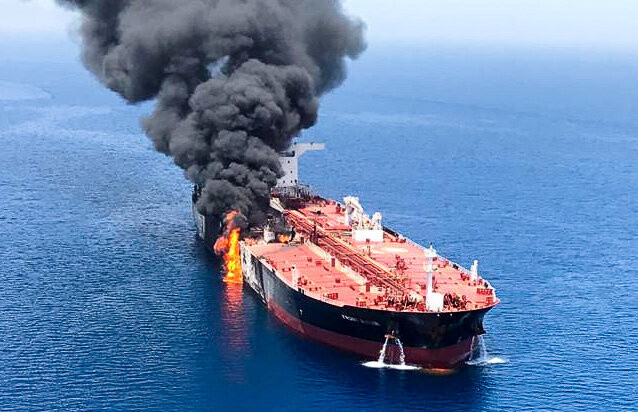
Oil Hits $130 Amid Prolonged Hormuz Blockade: How Will Global Markets React?

Kim Sungmoon Reporter / Updated : 2026-03-02 06:54:14
  • -
  • +
  • Print

(C) PBS


SEOUL — The global energy and financial sectors are bracing for a massive seismic shift as geopolitical tensions in the Middle East escalate into a full-scale maritime crisis. With the Strait of Hormuz effectively paralyzed following military confrontations between the U.S., Israel, and Iran, analysts warn that Brent crude could soon soar past $130 per barrel, triggering a domino effect across international stock markets and central bank policies.

The Chokehold on Global Energy
The Strait of Hormuz is the world’s most critical oil artery, accounting for approximately 20% to 30% of global seaborne petroleum liquids. Following a military exercise and subsequent blockade by the Islamic Revolutionary Guard Corps (IRGC) on February 28, vessel traffic through the passage has plummeted by a staggering 70%.

"The immediate evaporation of liquidity in the physical oil market is unprecedented," noted Dimitris Ampatzidis, an analyst at MarineTraffic. While Brent crude had already climbed 20% this year due to rising tensions, closing at $72.48 on February 27, the blockade has pushed forecasts into uncharted territory. JPMorgan warns that a total, prolonged shutdown could drive prices to the $120–$130 range.

In a pre-emptive strike against supply shortages, OPEC+ (V8) announced an emergency production hike of 206,000 barrels per day starting in April—surpassing the market expectation of 137,000. However, experts remain skeptical that increased production can offset the logistical nightmare of a closed Hormuz.

Inflationary Pressures and the Fed’s Dilemma
The surge in energy costs arrives at a delicate moment for the U.S. Federal Reserve. William Jackson, Chief Emerging Markets Economist at Capital Economics, estimates that a $100+ oil environment could add 0.6 to 0.7 percentage points to global inflation.

This "inflation tax" complicates the Fed's planned pivot to lower interest rates. While safe-haven demand initially pushed the 10-year Treasury yield down to 3.97%, the long-term outlook is clouded. If high energy prices become entrenched, the Fed may be forced to delay rate cuts to combat persistent CPI growth, potentially leading to a "stagflationary" drag on the economy.

Stock Market: Volatility vs. Resilience
Despite the grim headlines, history suggests that equity markets often possess a "war-hardened" resilience. Analysis of the four previous Arab-Israeli conflicts shows that while the S&P 500 typically dips during the onset of hostilities (averaging a 4.0% decline), it tends to recover within a month, posting an average gain of 2.5% regardless of whether the conflict has officially ended.

"The shock value of geopolitical conflict tends to diminish over time as the market prices in the 'new normal'," said Han Ji-young, a strategist at Kiwoom Securities.

In South Korea, the impact might be even more buffered. With a massive "dry powder" reserve of 120 trillion won in investor deposit accounts, retail investors are expected to engage in aggressive "buy the dip" strategies, viewing the geopolitical correction as a long-term entry point.

[Copyright (c) Global Economic Times. All Rights Reserved.]

  • #Korea
  • #Seoul
  • #Hallyu
  • #USA
  • #Economy
  • #Busoness
  • #Global
  • #World
  • #Consumer
  • #Export
  • #Import
  • #Hanguel
  • #Travel
  • #Tour
  • #Food
Kim Sungmoon Reporter

Popular articles

  • Google Gemini to Import Rival AI Chat Histories: Battle for User Retention Intensifies

  • South Korean Automakers Defy Middle East Tensions with Robust March Sales Growth

  • GIST Unveils 'Virtual Battery' Framework to Turn Thousands of EVs into a Unified Power Resource

I like it
Share
  • Facebook
  • X
  • Kakaotalk
  • LINE
  • BAND
  • NAVER
  • https://globaleconomictimes.kr/article/1065563578686400 Copy URL copied.
Comments >

Comments 0

Weekly Hot Issue

  • The cherry blossoms at Gakwonsa Temple in Cheonan are in full bloom, attracting tourists to the area.
  • The cherry blossoms at Gakwonsa Temple in Cheonan are in full bloom, making the area beautiful.
  • Pope Leo XIV Slams ‘Handful of Tyrants’ for Ravaging the World Amid Tensions with Trump
  • South Korea Visionary Plan: Transforming Into a Global “UN AI Hub”
  • 60-Year-Old Man Sentenced to 27 Years in Prison for Killing Wife Immediately After Restraining Order Expired
  • El Salvador Imposes Life Sentences for 12-Year-Olds: A Stark Contrast to South Korea's Juvenile Laws

Most Viewed

1
From the Alps to Seoul: Life in the Heart of Europe
2
BOK Holds Rate Steady for Seventh Consecutive Meeting, Signaling End of Easing Cycle
3
$2 Million Per Ship: Iran’s "Hormuz Toll" Emerges as Chokepoint in Peace Talks
4
BYD Hits 10,000-Unit Milestone in South Korea Within One Year, Eyes Exclusive "10,000 Club" Entry
5
Republican Party Faces "Total Crisis" as War and Inflation Cloud Midterm Outlook
광고문의
임시1
임시3
임시2

Hot Issue

Hormuz Impasse: Reclosure of Strategic Strait Clouds Hopes for Second Peace Peace Talks

The AI Tsunami: Meta to Slash 10% of Workforce Amid Global Tech Purge

Woori Bank Tightens Reins on Dormant Corporate Accounts to Combat Financial Fraud

K-Innovation Hits Record High: Over 27,000 Public Ideas Flood the ‘Everyone’s Idea’ Project

Fashion Runway Show 2026

Global Economic Times
korocamia@naver.com
CEO : LEE YEON-SIL
Publisher : KO YONG-CHUL
Registration number : Seoul, A55681
Registration Date : 2024-10-24
Youth Protection Manager: KO YONG-CHUL
Singapore Headquarters
5A Woodlands Road #11-34 The Tennery. S'677728
Korean Branch
Phone : +82(0)10 4724 5264
#304, 6 Nonhyeon-ro 111-gil, Gangnam-gu, Seoul
Copyright © Global Economic Times All Rights Reserved
  • 에이펙2025
  • APEC2025가이드북TV
  • 반달곰 프로젝트
Search
Category
  • All articles
  • Synthesis
  • World
  • Business
  • Industry
  • ICT
  • Distribution Economy
  • Well+Being
  • Travel
  • Eco-News
  • Education
  • Korean Wave News
  • Opinion
  • Arts&Culture
  • Sports
  • People & Life 
    • 전체
    • International Student Report
    • With Ambassador
  • Column 
    • 전체
    • Cho Kijo Column
    • Cherry Garden Story
    • Ko Yong-chul Column
    • Kim Seul-Ong Column
    • Lee Yeon-sil Column
  • Photo News
  • New Book Guide
  • Multicultural News
  • Jobs & Workers