• 2026.03.06 (Fri)
  • All articles
  • LOGIN
  • JOIN
Global Economic Times
fashionrunwayshow2026
  • Synthesis
  • World
  • Business
  • Industry
  • ICT
  • Distribution Economy
  • Well+Being
  • Travel
  • Eco-News
  • Education
  • Korean Wave News
  • Opinion
  • Arts&Culture
  • Sports
  • People & Life
    • International Student Report
    • With Ambassador
  • Column
    • Cho Kijo Column
    • Cherry Garden Story
    • Ko Yong-chul Column
    • Kim Seul-Ong Column
    • Lee Yeon-sil Column
  • Photo News
  • New Book Guide
MENU
 
Home > Arts&Culture

Public Supports Tripling Royal Palace Entry Fees After 20-Year Freeze

Kim Sungmoon Reporter / Updated : 2025-12-18 06:31:50
  • -
  • +
  • Print

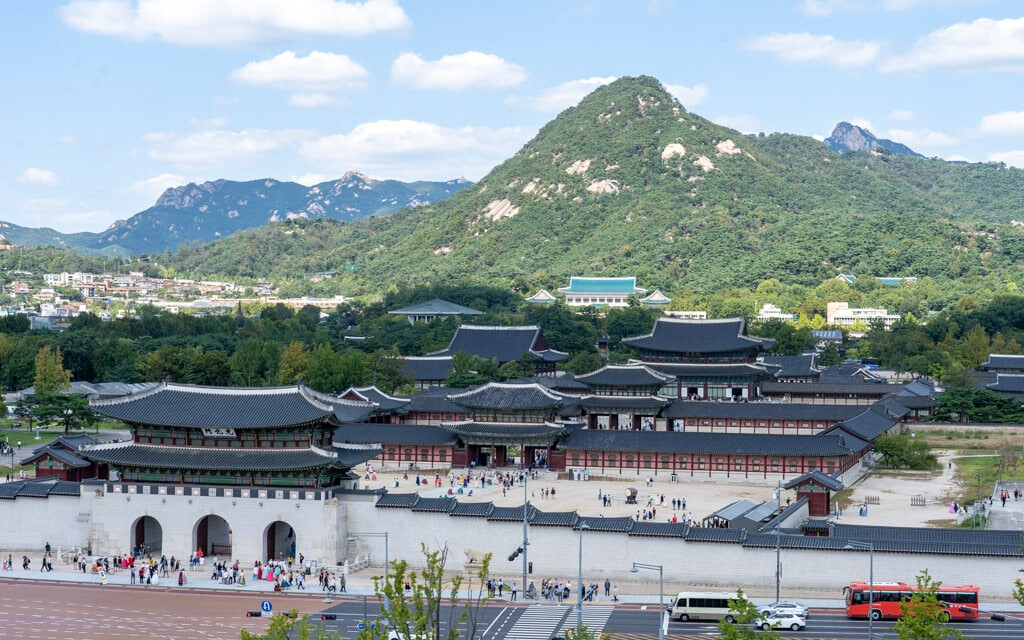
(C) The Seoul Guide


SEOUL — For the first time in two decades, South Korea is moving toward a significant hike in admission fees for its historic royal palaces and Joseon-era tombs. While the current entry fee for Gyeongbokgung Palace stands at a modest 3,000 KRW (approx. $2.20), a recent study reveals that the public is willing to pay more than three times 그 price to support the preservation of national heritage.

Surprising Survey Results: Willingness to Pay

According to a report released on December 17, 2025, by the Royal Palaces and Tombs Center of the National Heritage Administration (NHA) and the CST Institute, visitors expressed a high "willingness to pay" for access to these UNESCO-listed sites.

A survey of 2,341 visitors conducted last month showed that, on average, people are willing to pay 9,730 KRW for entry to the four major palaces (Gyeongbokgung, Changdeokgung, Changgyeonggung, and Deoksugung) and Jongmyo Shrine. Even those who had not visited in the past year suggested a fair price would be around 9,211 KRW. For the Royal Tombs of the Joseon Dynasty, the average acceptable price was cited at 8,468 KRW.

Why Now? The Economic and Fair-Share Argument

The admission fees for South Korea’s royal sites have been frozen since 2005. Proponents of the hike argue that the current prices are "unrealistically low" compared to international standards, such as the Forbidden City in Beijing or the Louvre in Paris, and do not reflect the rising costs of maintenance and specialized preservation.

President Lee Jae-myung addressed the issue during a recent NHA briefing, emphasizing the need for "cost realization."

"Currently, the general public’s taxes are covering the maintenance costs, allowing only a small group of visitors to enjoy the benefits," the President stated. "It is only fair that those who use the facilities bear a reasonable portion of the costs."

Record-Breaking Tourism and Global Comparisons

The debate comes at a time of unprecedented popularity for Korean heritage. As of November 2025, the total number of visitors to palaces and tombs reached a record 16.96 million. Foreign tourism, in particular, has surged from 2.01 million in 2023 to over 4.04 million this year.

Currently, Seoul’s palaces are among the cheapest major historical sites in the world. By comparison:

Gyeongbokgung (South Korea): 3,000 KRW (approx. $2.20)
Himeji Castle (Japan): 1,000 JPY (approx. $7.00)
The Forbidden City (China): 40-60 CNY (approx. $6.00–$8.50)

Next Steps: Balancing Accessibility and Preservation

Despite the high willingness to pay, the NHA remains cautious. Officials noted that while survey respondents supported a price hike, they also strongly favored maintaining current discount programs. Public sentiment remains firm on keeping free entry for those wearing Hanbok (traditional clothing) and for senior citizens, viewing these policies as essential for cultural promotion and social welfare.

"Adjusting the fees requires a national consensus," said Heo Min, head of the National Heritage Administration. "We will use this research and public hearing data to discuss the timing and scale of the increase with the public."

The proposed changes are expected to include a tiered pricing system that could potentially offer different rates for domestic residents and international tourists, similar to models used in many European and Southeast Asian nations.

[Copyright (c) Global Economic Times. All Rights Reserved.]
  • #Globaleconomictimes
  • #Korea
  • #Seoul
  • #Samsung
  • #LG
  • #Bitcoin
  • #Meta
  • #Business
  • #Economic
  • #The Woori Bank
Kim Sungmoon Reporter

Popular articles

  • Inha University Hospital Celebrates 200th Kidney Transplant with 97% Survival Rate Leading the Way in Regional Transplantation Excellence and Donor Honor Systems

  • K-Defense Giants and SMEs Unite to Conquer Saudi Market

  • Park Wan-suh’s Literary Sanctuary Reborn at Seoul National University

I like it
Share
  • Facebook
  • X
  • Kakaotalk
  • LINE
  • BAND
  • NAVER
  • https://globaleconomictimes.kr/article/1065562185992604 Copy URL copied.
Comments >

Comments 0

Weekly Hot Issue

  • The Illusion of a "Stress-Relieving" Smoke: Study Finds Smokers More Prone to Depression
  • From Table to Space: Japan Unveils Edible Spoons Made of Cookies
  • Luckin Coffee Shakes Up Global Market with Blue Bottle Acquisition
  • U.S. Private Sector Hiring Hits 7-Month High in February, ADP Reports
  • Self-Employed Loan Delinquency Rates Double in a Decade Amid Economic Headwinds
  • Multi-Homeowner Loan Balance Hits 103 Trillion Won; Half Concentrated in Seoul and Gyeonggi

Most Viewed

1
Adwa’s Echo in Korea: A Shared Story of Dignity and Freedom
2
2026, The Grand Year of Hangeul Celebration — The River of History Where Five Streams Converge
3
A New Milestone for Ukraine’s Post-War Reconstruction: The Birth of ISVP
4
Mexican currency and the powerful history behind its designs
5
Revised and Expanded Edition of ‘Failure of Negotiations with North Korea: Truth and Solutions’ Published
광고문의
임시1
임시3
임시2

Hot Issue

South Korean Markets Shaken by "Iran Shock": KOSPI Suffers Historic Rout Amid Soaring Oil and FX Rates

Self-Employed Loan Delinquency Rates Double in a Decade Amid Economic Headwinds

U.S. Private Sector Hiring Hits 7-Month High in February, ADP Reports

Industrial Output Dips in January Amid Semiconductor Adjustments; Middle East Tensions Loom as Wild Card

Let’s recycle the old blankets in Jeju Island’s closet instead of incinerating them.

Global Economic Times
korocamia@naver.com
CEO : LEE YEON-SIL
Publisher : KO YONG-CHUL
Registration number : Seoul, A55681
Registration Date : 2024-10-24
Youth Protection Manager: KO YONG-CHUL
Singapore Headquarters
5A Woodlands Road #11-34 The Tennery. S'677728
Korean Branch
Phone : +82(0)10 4724 5264
#304, 6 Nonhyeon-ro 111-gil, Gangnam-gu, Seoul
Copyright © Global Economic Times All Rights Reserved
  • 에이펙2025
  • APEC2025가이드북TV
  • 독도는우리땅
Search
Category
  • All articles
  • Synthesis
  • World
  • Business
  • Industry
  • ICT
  • Distribution Economy
  • Well+Being
  • Travel
  • Eco-News
  • Education
  • Korean Wave News
  • Opinion
  • Arts&Culture
  • Sports
  • People & Life 
    • 전체
    • International Student Report
    • With Ambassador
  • Column 
    • 전체
    • Cho Kijo Column
    • Cherry Garden Story
    • Ko Yong-chul Column
    • Kim Seul-Ong Column
    • Lee Yeon-sil Column
  • Photo News
  • New Book Guide
  • Multicultural News
  • Jobs & Workers