• 2026.03.08 (Sun)
  • All articles
  • LOGIN
  • JOIN
Global Economic Times
fashionrunwayshow2026
  • Synthesis
  • World
  • Business
  • Industry
  • ICT
  • Distribution Economy
  • Well+Being
  • Travel
  • Eco-News
  • Education
  • Korean Wave News
  • Opinion
  • Arts&Culture
  • Sports
  • People & Life
    • International Student Report
    • With Ambassador
  • Column
    • Cho Kijo Column
    • Cherry Garden Story
    • Ko Yong-chul Column
    • Kim Seul-Ong Column
    • Lee Yeon-sil Column
  • Photo News
  • New Book Guide
MENU
 
Home > World

Hyundai’s IONIQ 5 Spearheads Global Humanitarian Efforts with UN World Food Programme

Greace Nunez Correspondent / Updated : 2025-12-21 20:57:12
  • -
  • +
  • Print

(C) WFP


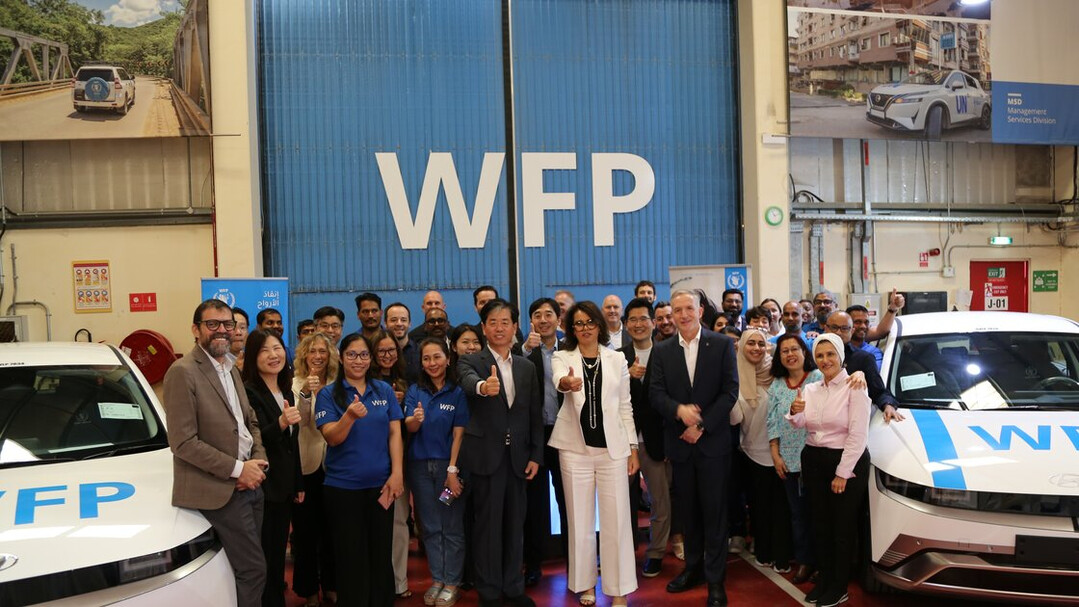
SEOUL – Hyundai Motor Company is redefining the scope of corporate social responsibility by integrating cutting-edge mobility technology into global humanitarian aid. On December 21, the South Korean automaker announced the release of a documentary highlighting the active deployment of its flagship electric vehicle, the IONIQ 5, within the United Nations World Food Programme (WFP) operations.

Following a strategic partnership signed in July 2023, Hyundai donated eight IONIQ 5 units and established comprehensive charging infrastructures across WFP’s regional offices. These vehicles were customized at the WFP Mobility Center in Dubai to meet the specific demands of diverse relief sites before being dispatched to frontline locations, including the Philippines.

A standout feature of this collaboration is the implementation of Hyundai’s world-first "Transparent Metal-Coated Heated Glass." This technology uses a 20-layer metallic coating to rapidly remove frost or humidity and block up to 60% of solar energy, ensuring operational efficiency in extreme climates. Furthermore, the IONIQ 5’s Vehicle-to-Load (V2L) function has proven critical in disaster zones, providing emergency power to communication devices and medical refrigerators when local grids fail.

Beyond vehicle donation, Hyundai has financed the installation of 14 solar power systems in 12 countries. These facilities allow WFP offices to self-sustain approximately 84% of their electricity needs, reducing annual operational costs by an estimated $520,000. This shift from diesel generators to renewable energy significantly lowers the carbon footprint of relief operations.

"Our commitment goes beyond simple donation; it is about transforming how people and goods move through sustainable technology," stated Sung Kyu-kim, President of Hyundai Motor Group. By bridging the gap between innovation and humanitarian necessity, Hyundai aims to ensure that aid workers reach vulnerable populations faster, safer, and more sustainably.

[Copyright (c) Global Economic Times. All Rights Reserved.]

  • #Globaleconomictimes
  • #Korea
  • #Seoul
  • #Samsung
  • #LG
  • #Bitcoin
  • #Meta
  • #Business
  • #Economic
  • #The Woori Bank
  • #Elon Musk
Greace Nunez Correspondent

Popular articles

  • The Race for the 'AI Factory' Standard: NVIDIA and Dassault Systèmes Aim to Seize the Industrial OS Market

  • Gucci Faces Backlash Over AI-Generated Campaign Ahead of Milan Fashion Week

  • Global Smartphone Market Braces for 10-Year Low as AI Memory Hunger Starves Mobile Industry

I like it
Share
  • Facebook
  • X
  • Kakaotalk
  • LINE
  • BAND
  • NAVER
  • https://globaleconomictimes.kr/article/1065614137215732 Copy URL copied.
Comments >

Comments 0

Weekly Hot Issue

  • The Death of the Architect's Draft? New AI Engine 'Nano Banana 2' Turns Rough Sketches into Professional 3D Walk-throughs
  • President Lee Celebrates Milestone for ‘The Man Living with the King,’ Pledges to Bolster Cultural Pride
  • Namyangju Targets Gwacheon Racecourse Relocation: A Vision for a "Blue-Green" Mega-Complex Linked to GTX and 3rd Generation New Towns
  • Korean Air Extends Suspension of Incheon–Dubai Route Through March 15 Amid Ongoing Disruptions
  • Genetic 'Molecular Mirror': Blood Tests Challenge Biopsy Limits in Ovarian Cancer Diagnosis
  • Samsung to Revolutionize Health Tracking: Galaxy Watch to Adopt Contact-Based Temperature Sensors for Enhanced Precision

Most Viewed

1
Adwa’s Echo in Korea: A Shared Story of Dignity and Freedom
2
2026, The Grand Year of Hangeul Celebration — The River of History Where Five Streams Converge
3
A New Milestone for Ukraine’s Post-War Reconstruction: The Birth of ISVP
4
Mexican currency and the powerful history behind its designs
5
Revised and Expanded Edition of ‘Failure of Negotiations with North Korea: Truth and Solutions’ Published
광고문의
임시1
임시3
임시2

Hot Issue

The $100 Oil Threshold: Wall Street Braces for a Paradigm Shift as Middle East Conflict Drags On

The Death of the Architect's Draft? New AI Engine 'Nano Banana 2' Turns Rough Sketches into Professional 3D Walk-throughs

Oppo Bridges the Great Divide: Find X9 to Support AirDrop Connectivity

China’s Strategic Gold Rush: Beijing Amasses Reserves for 16th Straight Month Amid Dollar Uncertainty

Let’s recycle the old blankets in Jeju Island’s closet instead of incinerating them.

Global Economic Times
korocamia@naver.com
CEO : LEE YEON-SIL
Publisher : KO YONG-CHUL
Registration number : Seoul, A55681
Registration Date : 2024-10-24
Youth Protection Manager: KO YONG-CHUL
Singapore Headquarters
5A Woodlands Road #11-34 The Tennery. S'677728
Korean Branch
Phone : +82(0)10 4724 5264
#304, 6 Nonhyeon-ro 111-gil, Gangnam-gu, Seoul
Copyright © Global Economic Times All Rights Reserved
  • 에이펙2025
  • APEC2025가이드북TV
  • 독도는우리땅
Search
Category
  • All articles
  • Synthesis
  • World
  • Business
  • Industry
  • ICT
  • Distribution Economy
  • Well+Being
  • Travel
  • Eco-News
  • Education
  • Korean Wave News
  • Opinion
  • Arts&Culture
  • Sports
  • People & Life 
    • 전체
    • International Student Report
    • With Ambassador
  • Column 
    • 전체
    • Cho Kijo Column
    • Cherry Garden Story
    • Ko Yong-chul Column
    • Kim Seul-Ong Column
    • Lee Yeon-sil Column
  • Photo News
  • New Book Guide
  • Multicultural News
  • Jobs & Workers