![[등록] 2026-09-01 15:48:31](/support/_updata/banner2/tl181982910_6749.png)


(C) Oregon Live
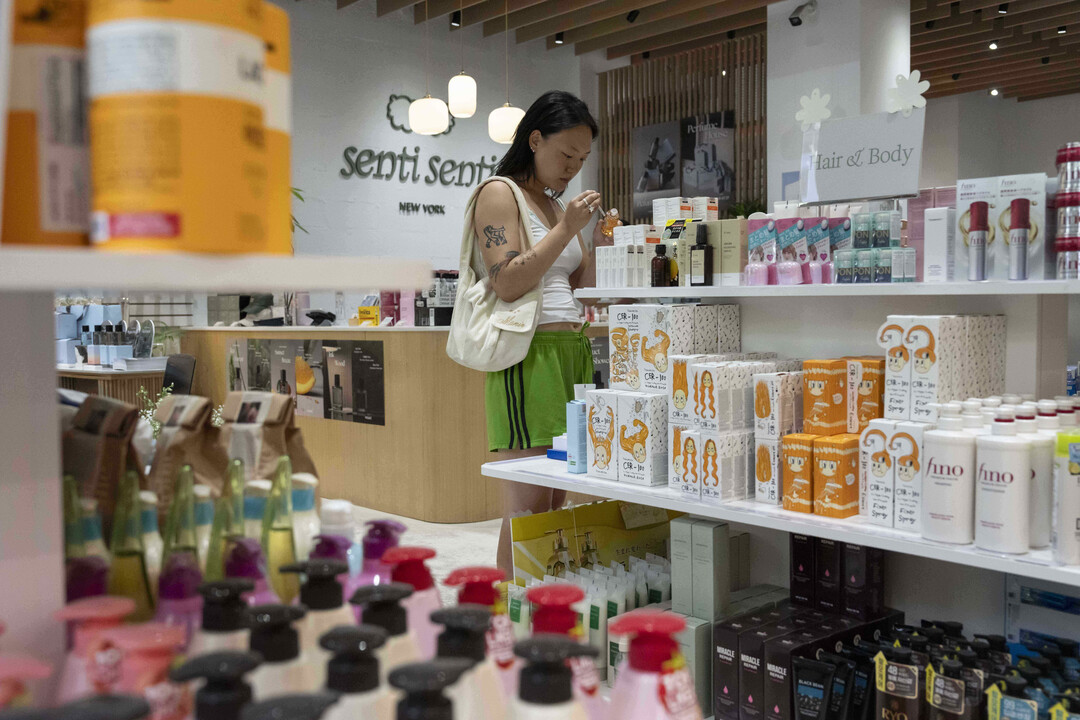
SEOUL — Amid a challenging global economic climate and softening consumer spending, South Korea’s cosmetics industry is proving its resilience. According to the latest trade data, K-Beauty has solidified its position as the leading exporter to the United States—the world’s largest beauty market—setting the stage for a potential third consecutive year at the top and a new record for annual export volume.
Widening the Gap with Global Competitors
Data released on April 8 by the U.S. International Trade Commission (U.S. ITC) DataWeb reveals that South Korea maintained a commanding lead over its traditional rivals in early 2026.
During the first two months of this year (January–February), South Korea’s cosmetics exports to the U.S. reached approximately $248 million. This figure accounts for roughly 23% of the total U.S. cosmetics import market, which saw a combined value of $1.07 billion during that period.
The ranking of top importers shows a clear hierarchy:
South Korea: $248 million (23% market share)
Canada: $190 million (18% market share)
France: $136 million (13% market share)
This early momentum suggests that Korea is on an unshakable path to defend its title. The country first made headlines in 2024 by overtaking France—the long-standing champion of luxury beauty—to claim the number one spot. After securing a 24.8% market share in 2025, the current figures indicate that the "K-Beauty Wave" is no longer a temporary trend but a structural shift in American consumer behavior.
A Shift from Luxury to Functionality
The competitive landscape of the U.S. beauty market is undergoing a significant transformation. While European nations like France and Italy continue to hold strong in the perfume and luxury segments, and Italy remains a powerhouse in color cosmetics, South Korea has carved out a massive niche in skincare and functional products.
Industry analysts point out that K-Beauty’s success stems from its ability to offer high-quality, innovative formulations at accessible price points. While Chinese exporters rely on price competitiveness and volume, the gap between Korea and China is widening. In the January–February window, Italy (10.0%) and China (8.1%) trailed Korea by double-digit margins in terms of market share, highlighting a preference for Korean "Clean Beauty" and advanced dermatological solutions.
Global Expansion and Future Outlook
The implications of dominating the U.S. market extend far beyond North America. Success in the U.S.—the most competitive arena for global brands—acts as a "quality seal" that boosts brand equity in emerging markets.
"We are seeing K-Beauty’s presence expand not only in established markets like the U.S., Japan, and Europe but also across South America and Southeast Asia," said an official from a leading Korean cosmetics exporter. "By focusing on brand power and 'mega-hit' products, we plan to expand our categories further to maintain our competitive edge."
Experts predict that if current growth rates hold, the South Korean cosmetics industry will easily surpass its previous annual export records by the end of 2026. The shift represents a move beyond "cheap and chic" to a sophisticated "value-for-money" proposition that resonates with the modern, informed consumer.
As the sun sets on the era of French dominance in the U.S. mass and mid-tier markets, the "Morning Calm" of K-Beauty is proving to be a bright and enduring dawn for the Korean economy.
[Copyright (c) Global Economic Times. All Rights Reserved.]