• 2026.03.07 (Sat)
  • All articles
  • LOGIN
  • JOIN
Global Economic Times
fashionrunwayshow2026
  • Synthesis
  • World
  • Business
  • Industry
  • ICT
  • Distribution Economy
  • Well+Being
  • Travel
  • Eco-News
  • Education
  • Korean Wave News
  • Opinion
  • Arts&Culture
  • Sports
  • People & Life
    • International Student Report
    • With Ambassador
  • Column
    • Cho Kijo Column
    • Cherry Garden Story
    • Ko Yong-chul Column
    • Kim Seul-Ong Column
    • Lee Yeon-sil Column
  • Photo News
  • New Book Guide
MENU
 
Home > Synthesis

Honda and Nissan Abort Merger Plans, Ending Hopes for a Japanese Auto Giant

Desk / Updated : 2025-02-13 20:02:48
  • -
  • +
  • Print

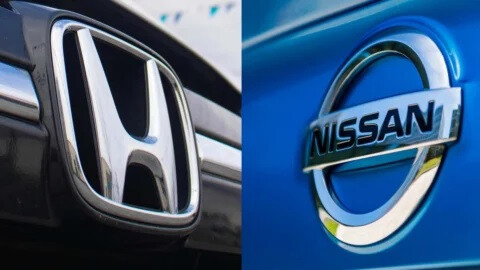
YOKOHAMA, JAPAN – In a stunning turn of events, Honda and Nissan have officially called off their proposed merger, just weeks after announcing their intention to join forces. The decision, made during separate board meetings on Tuesday, effectively ends the ambitious plan to create a Japanese automotive powerhouse that could rival global leaders like Toyota and Hyundai.

The collapse of the deal, which would have been one of the most significant automotive mergers in history, leaves both companies charting their own paths in an increasingly competitive industry. While the two automakers have pledged to continue collaborating on areas like electric vehicles, the failure to merge raises questions about their ability to compete with the likes of Tesla and BYD.

Ambitious Goals, Unresolved Differences

The initial announcement of the merger sent shockwaves through the industry, with many analysts predicting that the combined entity would become the world's third-largest automaker by sales volume. The deal was seen as a bold move to counter the rise of Chinese electric vehicle makers and the growing dominance of Tesla.

However, behind the scenes, the two companies struggled to find common ground. According to sources familiar with the negotiations, Honda was concerned about Nissan's financial struggles and its slow pace of restructuring. Honda reportedly proposed taking full control of Nissan as a subsidiary, a move that was met with strong resistance from Nissan executives who were determined to maintain their independence.

"We could not reach a consensus that would allow us to move forward together," said Toshihiro Mibe, CEO of Honda, during a press conference on Tuesday. "It is truly regrettable."

Makoto Uchida, CEO of Nissan, echoed Mibe's sentiments, saying that the company could not be certain about how much autonomy it would retain under the proposed merger structure.

A New Era of Uncertainty

The collapse of the merger leaves both Honda and Nissan facing an uncertain future. Nissan, in particular, faces significant challenges, having recently announced a restructuring plan that includes cutting 9,000 jobs and reducing its global production capacity by 20%.

Uchida acknowledged that the company expects to post a loss of 80 billion yen (approximately $753 million USD) in the current fiscal year. He emphasized that Nissan will actively seek new partnerships to improve its competitiveness.

One potential partner could be Foxconn, the Taiwanese electronics giant, which has expressed interest in collaborating with Nissan. According to reports, Foxconn Chairman Liu Yang-wei recently met with representatives from Renault, Nissan's largest shareholder, to discuss potential areas of cooperation.

For Honda, the failed merger means that it will have to redouble its efforts to address its own challenges, including declining profitability in some areas and a sharp drop in sales in the Chinese market. The company will need to find new ways to innovate and compete in an industry that is rapidly transforming.

The Road Ahead

While the collapse of the Honda-Nissan merger is a setback for both companies, it also underscores the challenges of navigating the rapidly changing automotive landscape. As the industry shifts towards electric vehicles and new technologies, automakers will need to find creative ways to collaborate and compete. The future remains uncertain, but one thing is clear: the road ahead will be anything but smooth.

[Copyright (c) Global Economic Times. All Rights Reserved.]

  • #globaleconomictimes
  • #글로벌이코노믹타임즈
  • #한국
  • #중기청
  • #재외동포청
  • #외교부
  • #micorea
  • #mykorea
  • #newsk
  • #nammidonganews
  • #singaporenewsk
Desk
Desk

Popular articles

  • Samsung TV Plus Surpasses 100 Million Monthly Active Users, Solidifying Leadership in Global FAST Market

  • South Korean Conglomerates Pledge 270 Trillion Won for Regional Investment to Boost Jobs and Growth

  • Mixed U.S. Employment Data Sparks Wall Street Retreat; Fed Shifts Focus to Inflation

I like it
Share
  • Facebook
  • X
  • Kakaotalk
  • LINE
  • BAND
  • NAVER
  • https://globaleconomictimes.kr/article/1065610894278039 Copy URL copied.
Comments >

Comments 0

Weekly Hot Issue

  • L’Oréal Korea and Naver Forge Strategic Partnership to Revolutionize AI-Driven Beauty Commerce
  • Domino’s Korea Embraces "Authentic Stateside Flavors" with New American Classic Pizza Duo
  • K-Inner Beauty Dominates Japan: Sales Surge 90% on Qoo10 Japan
  • Sempio and KFRI Join Forces to Pioneer High-Value Food Technologies
  • LG H&H Expands Japanese Footprint: Vegan Brand 'Freshian' Debuts at Biople by CosmeKitchen
  • 29CM’s '29HOME WEEK' Shatters Records: Home & Interior Sales Triple in 10 Days

Most Viewed

1
Adwa’s Echo in Korea: A Shared Story of Dignity and Freedom
2
2026, The Grand Year of Hangeul Celebration — The River of History Where Five Streams Converge
3
A New Milestone for Ukraine’s Post-War Reconstruction: The Birth of ISVP
4
Mexican currency and the powerful history behind its designs
5
Revised and Expanded Edition of ‘Failure of Negotiations with North Korea: Truth and Solutions’ Published
광고문의
임시1
임시3
임시2

Hot Issue

Hanwha Aerospace Solidifies Baltic Stronghold with $330M Defense Investment in Estonia

From $20 to $400: The Explosive "Vintage Digicam" Craze Gripping Korea’s Gen Z and Millennials

Yujin Robot Evolves Industrial Automation: Integrating Autonomous Mobility and Collaborative Robotics

SK On Slashes 37% of US Workforce Amid Global EV Slowdown

Let’s recycle the old blankets in Jeju Island’s closet instead of incinerating them.

Global Economic Times
korocamia@naver.com
CEO : LEE YEON-SIL
Publisher : KO YONG-CHUL
Registration number : Seoul, A55681
Registration Date : 2024-10-24
Youth Protection Manager: KO YONG-CHUL
Singapore Headquarters
5A Woodlands Road #11-34 The Tennery. S'677728
Korean Branch
Phone : +82(0)10 4724 5264
#304, 6 Nonhyeon-ro 111-gil, Gangnam-gu, Seoul
Copyright © Global Economic Times All Rights Reserved
  • 에이펙2025
  • APEC2025가이드북TV
  • 독도는우리땅
Search
Category
  • All articles
  • Synthesis
  • World
  • Business
  • Industry
  • ICT
  • Distribution Economy
  • Well+Being
  • Travel
  • Eco-News
  • Education
  • Korean Wave News
  • Opinion
  • Arts&Culture
  • Sports
  • People & Life 
    • 전체
    • International Student Report
    • With Ambassador
  • Column 
    • 전체
    • Cho Kijo Column
    • Cherry Garden Story
    • Ko Yong-chul Column
    • Kim Seul-Ong Column
    • Lee Yeon-sil Column
  • Photo News
  • New Book Guide
  • Multicultural News
  • Jobs & Workers