![[등록] 2026-09-01 15:48:31](/support/_updata/banner2/tl181982910_6749.png)


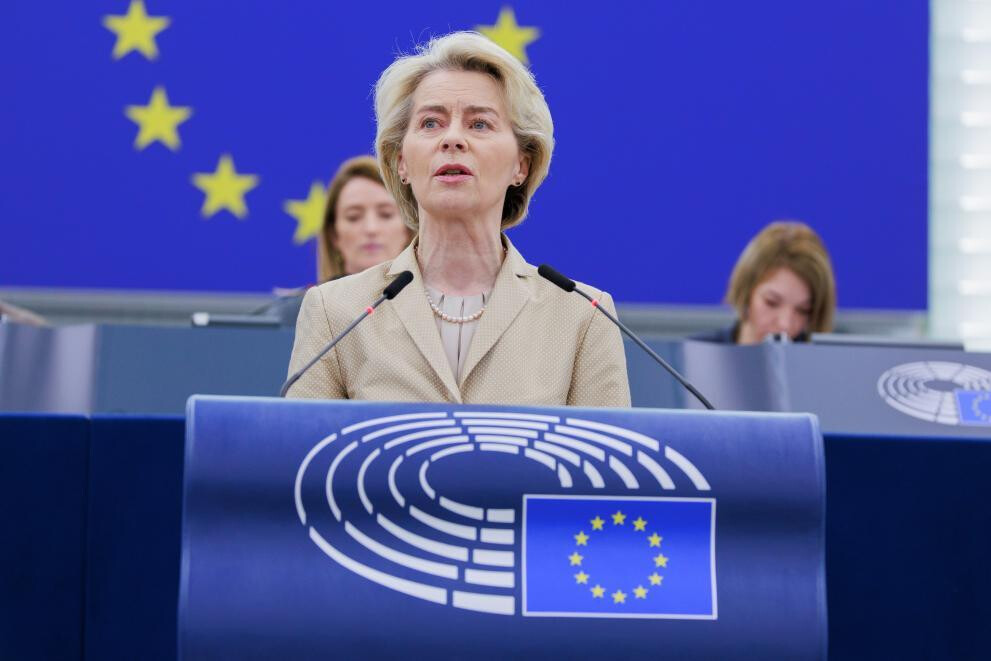
(C) European Union
In a bold move to safeguard the European Union’s economic sovereignty, Stéphane Séjourné, the EU Commissioner for Prosperity and Industrial Strategy, has called for a rigorous "Made in Europe" mandate. This push comes just weeks before the highly anticipated unveiling of the Industrial Acceleration Act (IAA), a legislative package designed to bolster domestic manufacturing against the influx of low-cost imports, particularly from China.
In an op-ed published on Sunday (local time) across major European newspapers, Commissioner Séjourné issued a stark warning: "Without an ambitious, effective, and pragmatic industrial policy, the European economy risks becoming nothing more than a playground for our global competitors." He further emphasized the need to "finally establish a true 'European Preference' principle in our most strategic sectors."
The "Industrial Acceleration Act": A New Economic Shield
The European Commission is set to officially introduce the IAA later this month. According to leaked drafts, the act aims to prioritize European-made products in public procurement and strategic supply chains. Notably, the proposal includes a provision to cap foreign investment at 49% in energy-intensive and automotive sectors—industries deemed vital to the EU’s green and digital transitions. Additionally, any foreign investment exceeding €100 million (approx. $108 million) would be subject to mandatory prior screening.
This legislative push mirrors the global trend of "economic nationalism," following the footsteps of the U.S. "Buy American" provisions within the Inflation Reduction Act (IRA) and China’s "Made in China 2025" initiative. "If other economic powers prioritize their strategic assets, why shouldn't we?" Séjourné argued, insisting that "wherever European public funds are spent, they must contribute to production and high-quality jobs within Europe."
A Divided Union: Protectionism vs. Free Trade
Despite the Commissioner’s conviction, the IAA has sparked intense debate among EU member states. Countries like France, Séjourné’s home nation, are strong proponents of the "European Preference" rule, viewing it as essential for survival in a fragmented global market.
However, nations with a traditional focus on free trade, such as Sweden and the Czech Republic, have voiced concerns. Critics argue that such protectionist measures could stifle foreign investment, drive up costs for public tenders, and ultimately weaken Europe’s global competitiveness. The Swedish government, for instance, maintains that existing foreign investment screening regulations are sufficient to protect national interests without the need for new, rigid mandates.
Corporate Backing Amidst Industry Shifts
The Commissioner’s call for action was bolstered by a joint statement signed by over 1,100 European CEOs and entrepreneurs. Heavyweights from various sectors—including ArcelorMittal and ThyssenKrupp (steel), Novo Nordisk and Sanofi (pharmaceuticals), and Air France-KLM (aviation)—have signaled their support for the strategy. Interestingly, the automotive industry was notably absent from the list of signatories, reflecting the complex global supply chain interdependencies that car manufacturers must navigate.
As the EU prepares to release the final version of the IAA, the continent stands at a crossroads. The "Made in Europe" strategy represents a fundamental shift from a market-openness-first approach to a more assertive, state-led industrial defense. Whether this shift will rejuvenate European industry or alienate global trade partners remains the central question for Brussels in 2026.
[Copyright (c) Global Economic Times. All Rights Reserved.]